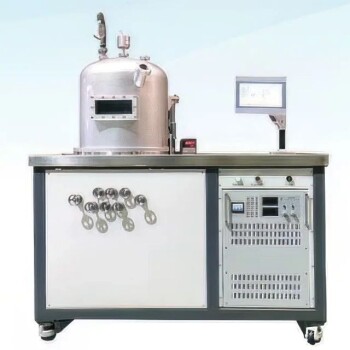
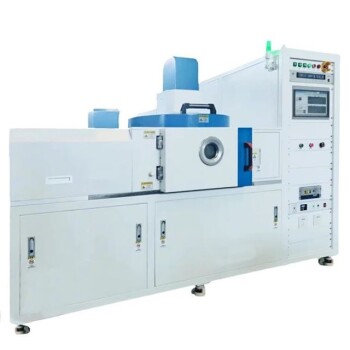
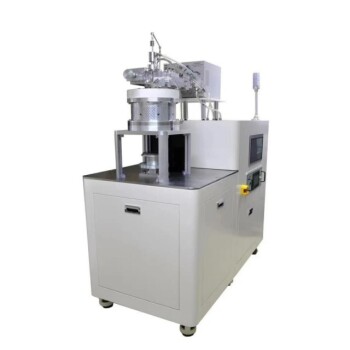
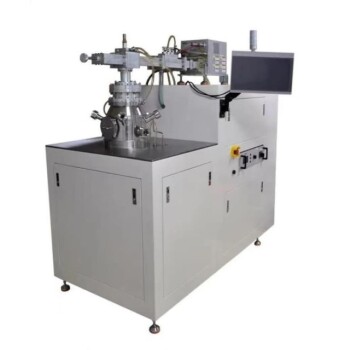
High-temperature CVD systems ensure interface quality by maintaining a stable thermal environment—typically near 1100°C—to facilitate the uniform precipitation of carbon atoms and the conformal wrapping of graphene around metallic structures. By leveraging a controlled gas-phase atmosphere, these systems eliminate impurities and create a high-purity, tight bond between the graphene and the metal substrate. This precise interface is the critical factor in preventing crack propagation and improving the mechanical fatigue resistance of the composite film.
The excellence of a metal-graphene interface in CVD systems depends on the synergy between precise thermal control and gas-phase purity. This combination ensures that graphene bonds conformally to the metal, transforming a simple coating into a structural reinforcement that halts mechanical failure.
The Role of Thermal Precision in Interface Formation
Precise Precipitation at 1100°C
The system maintains a rigorous thermal environment, usually at 1100°C, which is the optimal temperature for carbon atom precipitation. This heat ensures that carbon moves consistently through or across the metal, preventing the clusters or voids that weaken the interface.
Creating Thermal Uniformity
A stable temperature profile across the entire reaction chamber prevents localized defects. This uniformity is essential for ensuring the graphene layer grows at a consistent rate, resulting in a seamless bond with the metallic grid.
Gas-Phase Dynamics and Material Purity
Eliminating Contamination
The CVD process operates within a controlled atmosphere, which is vital for preventing oxidation or the introduction of foreign particles. By shielding the reaction from ambient air, the system ensures the purity of the thin film is maintained at a molecular level.
Optimized Reactant Mixing
Because the reaction occurs in the gas phase, reactants are fully mixed before they reach the metal surface. This allows for the creation of a dense and high-purity material that lacks the structural inconsistencies found in liquid or solid-state processing.
Conformal Wrapping and Mechanical Integrity
Conformal Edge Bonding
One of the most critical functions of a high-temperature system is allowing graphene to wrap conformally around the edges of the metallic grid. This "shrink-wrap" effect creates a mechanical interlock that is significantly stronger than a simple surface-level coating.
Resistance to Crack Propagation
The tight interface created by this conformal wrapping acts as a barrier to mechanical fatigue. When the thin film is under stress, the graphene reinforcement absorbs energy and prevents cracks from moving through the metallic structure.
Understanding the Trade-offs and Challenges
Substrate Thermal Limits
While 1100°C is ideal for graphene quality, it exceeds the melting or softening points of many common industrial metals. Engineers must carefully select metallic grids that can withstand these extreme temperatures without losing their structural shape.
Complexity of Reaction Control
Achieving "ideal" film quality requires extremely accurate control over gas flow rates and cooling cycles. Minor fluctuations in pressure or temperature can lead to non-uniform graphene layers, which compromises the fatigue resistance of the final product.
Optimizing the CVD Process for Your Objectives
How to Apply This to Your Project
To achieve the best results with high-temperature CVD reinforced films, you must align your system parameters with your specific performance requirements.
- If your primary focus is mechanical durability: Prioritize systems that maximize conformal wrapping around the metallic grid to stop crack propagation.
- If your primary focus is material purity: Ensure the system has a hermetically sealed reaction chamber to prevent any gas-phase contamination during the 1100°C cycle.
- If your primary focus is film density: Focus on the gas-phase mixing ratios of the reactants to ensure a uniform, hole-free graphene layer.
By mastering the thermal and atmospheric variables of the CVD process, you can produce metal-graphene composites that redefine the limits of thin-film strength and longevity.
Summary Table:
| Key Feature | Functional Role in Interface Quality | Impact on Thin Film |
|---|---|---|
| Thermal Precision (1100°C) | Ensures uniform carbon atom precipitation | Eliminates voids and clusters |
| Controlled Atmosphere | Prevents oxidation and impurity introduction | Maintains high molecular purity |
| Gas-Phase Dynamics | Provides optimized reactant mixing | Creates dense, consistent material |
| Conformal Wrapping | Facilitates mechanical interlocking at edges | Stops crack propagation & fatigue |
Elevate Your Thin-Film Research with KINTEK Precision
Unlock the full potential of your metal-graphene composites with high-temperature CVD systems engineered for perfection. Backed by expert R&D and manufacturing, KINTEK offers specialized CVD systems, Muffle, Tube, Rotary, and Vacuum furnaces—all fully customizable to meet your specific research or industrial needs.
Our systems provide the 1100°C thermal stability and atmospheric control necessary to ensure conformal wrapping and superior mechanical integrity for your reinforced films. Don't let interface defects compromise your materials.
Contact KINTEK today to discuss your custom furnace solution!
References
- Kaihao Zhang, Sameh Tawfick. Ultrathin damage-tolerant flexible metal interconnects reinforced by in-situ graphene synthesis. DOI: 10.1038/s41528-024-00300-8
This article is also based on technical information from Kintek Furnace Knowledge Base .
Related Products
- HFCVD Machine System Equipment for Drawing Die Nano Diamond Coating
- 915MHz MPCVD Diamond Machine Microwave Plasma Chemical Vapor Deposition System Reactor
- RF PECVD System Radio Frequency Plasma Enhanced Chemical Vapor Deposition
- MPCVD Machine System Reactor Bell-jar Resonator for Lab and Diamond Growth
- Custom Made Versatile CVD Tube Furnace Chemical Vapor Deposition CVD Equipment Machine
People Also Ask
- What is Hot-filament Chemical Vapor Deposition (HFCVD)? Achieve High-Quality Thin Films with Precision Control
- What are the equipment for chemical vapor deposition? A Guide to the 5 Essential Components
- What is the significance of the vacuum pressure control system in the CVD coating process for powders?
- What is the function of high-purity Argon (Ar) gas during CVD? Optimize Your Thin Film Uniformity and Purity
- What are the advantages of using Chemical Vapor Deposition (CVD) for coating turbine blades? Enhance Life & Performance