
Ultrasonic cleaning with acetone is the mandatory preparatory step that ensures the stainless steel surface is microscopically pristine before it enters a high-temperature furnace. By utilizing high-frequency vibrations to create cavitation, this process aggressively strips away cutting fluids, oils, and organic residues that would otherwise physically block oxygen from reacting with the metal, ensuring a uniform and durable oxide layer.
Core Takeaway Thermal oxidation relies on unimpeded contact between oxygen and the metal substrate. Ultrasonic acetone cleaning eliminates invisible barriers—such as oils and grinding debris—that disrupt the nucleation process, preventing the formation of patchy, non-adherent, or aesthetically flawed oxide films.
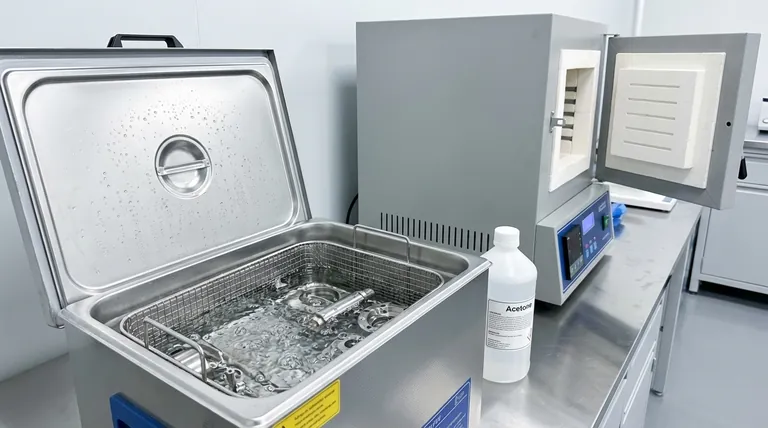
The Mechanics of Decontamination
The Power of Cavitation
The core of this cleaning method is the cavitation effect. High-frequency vibrations travel through the acetone, creating millions of microscopic bubbles that rapidly expand and implode.
Removing Stubborn Residues
When these bubbles collapse against the steel surface, they release intense localized energy. This physical force dislodges stubborn contaminants like grinding debris and cutting fluids that simple rinsing cannot remove.
The Role of Acetone
Acetone acts as a powerful solvent for organic materials. It dissolves oils and greases, breaking down the chemical bonds that hold debris to the metal surface.
The Impact on Thermal Oxidation
Enabling Direct Oxygen Contact
For thermal oxidation to work, oxygen must interact directly with the iron and chromium on the stainless steel surface. Any remaining layer of oil or dirt acts as an insulator or barrier.
Ensuring Uniform Nucleation
The quality of the oxide film depends on uniform nucleation. If the surface is clean, the oxide crystals begin growing at the same rate across the entire piece.
Promoting Adhesion
A chemically clean surface allows the oxide film to bond tightly to the substrate. Impurities at the interface create weak points, leading to poor adhesion and potential delamination.
Understanding the Risks of Inadequate Cleaning
Visual Inconsistency
If contaminants are left on the surface, they interfere with the growth of the oxide film. This results in a blotchy, uneven appearance rather than a high-quality decorative finish.
Structural Weakness
Impurities trapped under or within the oxide layer compromise its integrity. A film grown on a dirty surface is more likely to crack or flake off under stress.
Optimizing Your Cleaning Protocol
To ensure the highest quality results in your thermal oxidation process, consider your specific objectives:
- If your primary focus is Adhesion: Prioritize the removal of solid particulates and grinding debris, as these create physical gaps between the metal and the oxide layer.
- If your primary focus is Aesthetics: Ensure the complete removal of oils and cutting fluids, as even a thin organic film will cause discoloration and uneven oxidation rates.
The longevity and beauty of a thermal oxide finish are determined not in the furnace, but in the cleaning tank that precedes it.
Summary Table:
| Feature | Mechanism | Benefit for Oxidation |
|---|---|---|
| Ultrasonic Cavitation | High-frequency bubble implosion | Removes stubborn grinding debris & particulates |
| Acetone Solvent | Dissolves organic compounds | Breaks down oils, greases, and cutting fluids |
| Surface Preparation | Microscopic decontamination | Enables uniform nucleation & oxygen contact |
| Final Result | Enhanced chemical bonding | Prevents flaking, delamination, and blotchiness |
Elevate Your Material Integrity with KINTEK
Don't let surface contaminants compromise your thermal oxidation results. At KINTEK, we understand that high-performance heat treatment starts long before the furnace door closes. Backed by expert R&D and precision manufacturing, we provide a full suite of Muffle, Tube, Rotary, Vacuum, and CVD systems, all fully customizable to meet your specific research or industrial requirements.
Whether you are aiming for superior oxide adhesion or a flawless aesthetic finish, our high-temperature lab furnaces deliver the thermal precision your projects demand. Contact us today to find the perfect thermal solution for your laboratory and see how KINTEK's expertise can optimize your workflow.
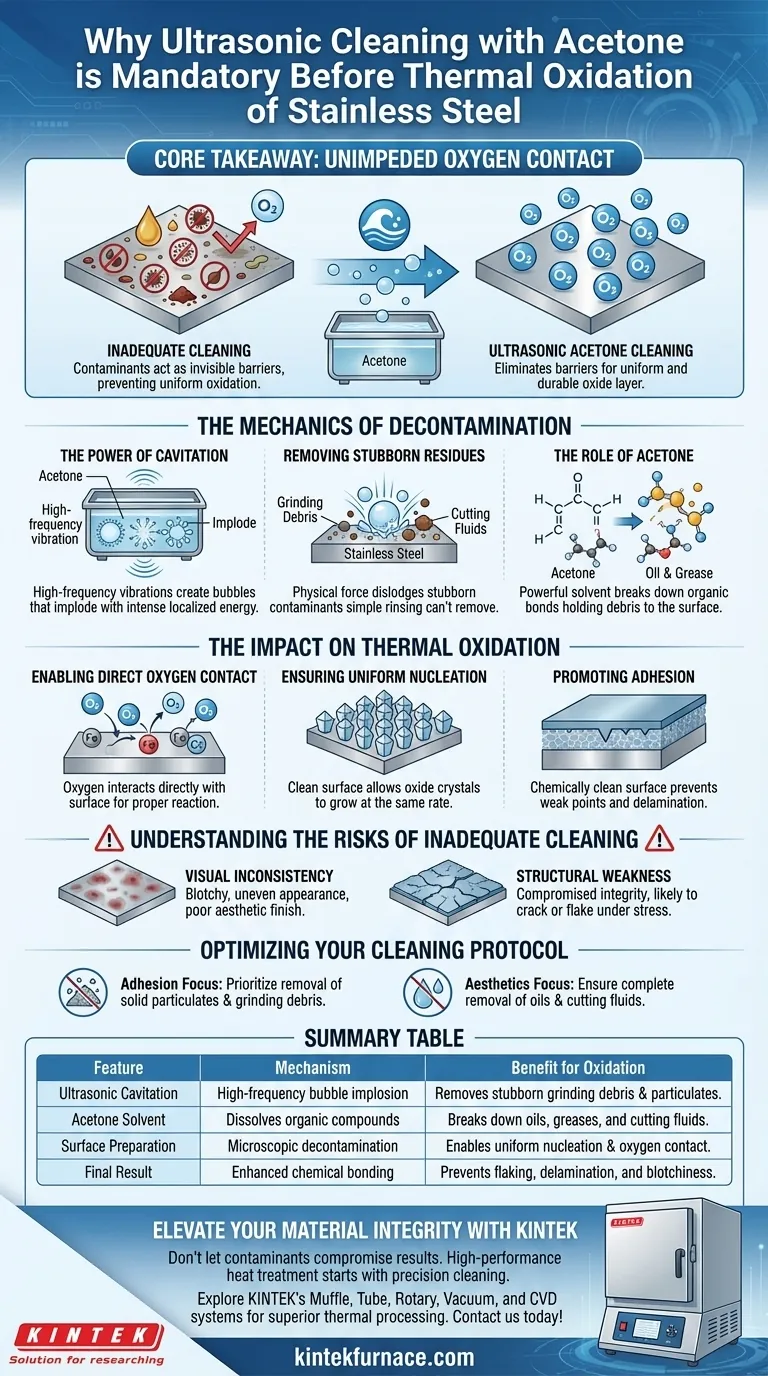
Visual Guide
References
- T. Borowski, Bogusława Adamczyk‐Cieślak. Wear and Corrosion Resistance of Thermally Formed Decorative Oxide Layers on Austenitic Steel. DOI: 10.3390/met15070707
This article is also based on technical information from Kintek Furnace Knowledge Base .
Related Products
- 1200℃ Muffle Oven Furnace for Laboratory
- High Temperature Muffle Oven Furnace for Laboratory Debinding and Pre Sintering
- 1400℃ High Temperature Laboratory Tube Furnace with Alumina Tube
- 1700℃ High Temperature Laboratory Tube Furnace with Alumina Tube
- Laboratory Muffle Oven Furnace with Bottom Lifting
People Also Ask
- What is the primary function of a high-temperature laboratory muffle furnace in chemical synthesis? Achieve Precision.
- How does a high-temperature laboratory muffle furnace affect material properties? Transform Anodic Oxide Films Fast
- How is a laboratory muffle furnace used in 3D-printed PP-CF cross-linking? Achieve Thermal Stability at 150 °C
- What role does a muffle furnace play in plant bark mineral analysis? Essential for Precise Dry Ashing & Trace Extraction
- What is the role of a laboratory high-temperature muffle furnace in iron analysis? Key to Precise Sample Mineralization



















