Precise environmental control is the single most critical factor in this synthesis. A high vacuum pumping system is required to lower the internal pressure of the reaction vessel to 10⁻³ Pa. This specific pressure threshold is necessary to exclude oxygen and water vapor, effectively preventing the oxidation of reactive neodymium while simultaneously suppressing the evaporation of volatile selenium.
The synthesis of Bi₂Se₃-Nd₂Se₃ alloys relies on high vacuum to solve two competing challenges: preventing the rapid oxidation of rare earth elements and containing the volatility of selenium to ensure the alloy's chemical ratio remains exact.
The Chemistry of the Challenge
Preventing Rare Earth Oxidation
The inclusion of Neodymium (Nd) introduces significant chemical sensitivity to the process.
Neodymium is a rare earth element with a high affinity for oxygen. At the elevated temperatures required for alloying, it reacts aggressively with any oxygen present.
Without a high vacuum environment, neodymium will rapidly form oxides rather than integrating into the selenide lattice. This compromises the structural integrity and properties of the final material.
Managing Component Volatility
Selenium (Se) poses a different challenge due to its high volatility.
Unlike the metallic components, selenium has a high vapor pressure and easily transitions to a gaseous state when heated.
A controlled, evacuated environment is required to manage this characteristic. It ensures the selenium remains available for the reaction rather than escaping as a vapor or reacting with atmospheric gases.
Eliminating Contaminants
The vacuum system does more than just lower pressure; it actively removes contaminants.
Water vapor and atmospheric oxygen must be evacuated to reach the 10⁻³ Pa standard.
Removing these impurities is essential to prevent the formation of unwanted secondary phases that would dilute the purity of the Bi₂Se₃-Nd₂Se₃ system.
Consequences of Insufficient Vacuum
Non-Stoichiometric Loss
The primary risk of a poor vacuum is the "non-stoichiometric loss" of components.
Stoichiometry refers to the precise ratio of elements in a chemical formula. Because selenium is volatile, it is the most likely element to be lost.
If the vacuum is insufficient, the final alloy will be selenium-deficient. This alters the material's phase composition, resulting in a product that does not match the intended formula.
Phase Impurity
Failure to reach 10⁻³ Pa results in a dirty reaction environment.
Oxygen remaining in the vessel allows the formation of neodymium oxides or bismuth oxides.
These impurities act as defects within the crystal structure, potentially ruining the electronic or thermoelectric performance of the alloy.
Ensuring Process Integrity
To achieve a successful direct alloying process, your approach to vacuum generation determines the quality of the final material.
- If your primary focus is Phase Purity: Ensure the system reaches and maintains at least 10⁻³ Pa to completely exclude oxygen and prevent rare earth oxidation.
- If your primary focus is Compositional Accuracy: Rely on the vacuum seal to suppress the volatilization of selenium, ensuring the final ratio matches your initial calculations.
By treating the vacuum system as a reagent as vital as the elements themselves, you guarantee the precise phase composition required for high-performance Bi₂Se₃-Nd₂Se₃ systems.
Summary Table:
| Key Challenge | Vacuum Function (10⁻³ Pa) | Consequence of Failure |
|---|---|---|
| Rare Earth Oxidation | Excludes O2 and water vapor | Neodymium oxide formation and lattice defects |
| Selenium Volatility | Manages vapor pressure and containment | Non-stoichiometric loss (Selenium deficiency) |
| Purity Control | Removes atmospheric contaminants | Formation of unwanted secondary phases |
| Structural Integrity | Ensures precise phase composition | Ruined electronic/thermoelectric performance |
Elevate Your Material Synthesis with KINTEK Precision
Achieving the rigorous 10⁻³ Pa environment required for Bi2Se3-Nd2Se3 systems demands high-performance equipment. Backed by expert R&D and manufacturing, KINTEK offers a comprehensive range of Muffle, Tube, Rotary, Vacuum, and CVD systems, as well as other lab high-temperature furnaces—all fully customizable to meet your unique research needs.
Don't let oxidation or non-stoichiometric loss compromise your results. Partner with KINTEK to ensure absolute phase purity and process integrity in your lab. Contact our technical experts today to find your custom vacuum solution!
Visual Guide

References
- PHASE FORMATION IN THE TRINARY SYSTEM NdBi-Te ACCORDING TO THE SECTION Bi2Se3-Nd2Se3. DOI: 10.30546/209501.201.2024.1.04.035
This article is also based on technical information from Kintek Furnace Knowledge Base .
Related Products
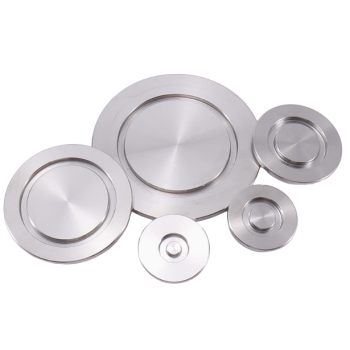
- Stainless Steel KF ISO Vacuum Flange Blind Plate for High Vacuum Systems
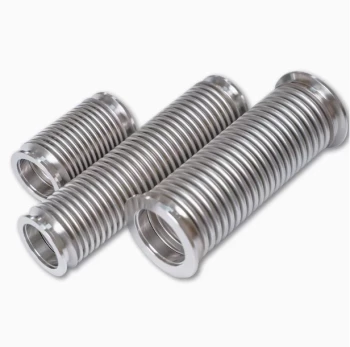
- High Performance Vacuum Bellows for Efficient Connection and Stable Vacuum in Systems
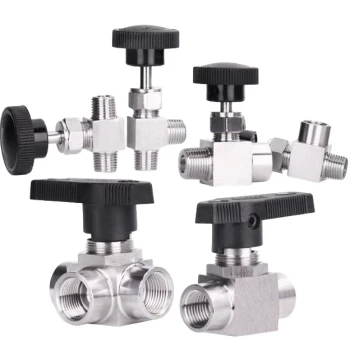
- 304 316 Stainless Steel High Vacuum Ball Stop Valve for Vacuum Systems
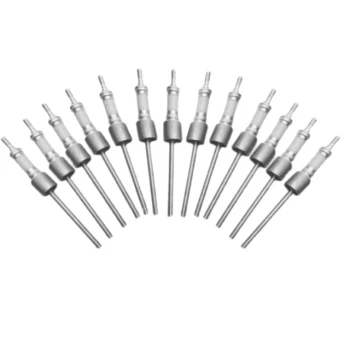
- Ultra Vacuum Electrode Feedthrough Connector Flange Power Lead for High Precision Applications
- Ultra-High Vacuum Flange Aviation Plug Glass Sintered Airtight Circular Connector for KF ISO CF
People Also Ask
- What is the function of PTFE sealing rings in plastic pyrolysis? Ensure Safe, Anaerobic Material Decomposition
- What role does a closed pressure vessel play during the carbonation of gamma-C2S? Unlock Rapid Mineralization
- Why are flexible graphite gaskets utilized for sealing in LiF-BeF2 molten salt experiments? High-Resilience Solutions
- What type of pump is used in water circulating vacuum pumps and how is it installed? Discover Robust Fluid-Based Vacuum Solutions
- What is the function of sealed quartz ampoules in Se80In5Te6Sb9 synthesis? Ensure Purity and Precision