
In short, a high-purity graphite crucible is essential because it is one of the few materials that can withstand the extreme heat and vacuum required for magnesium distillation without chemically reacting with the molten magnesium. This unique combination of thermal stability and chemical inertness is critical for preventing contamination and ensuring the final product achieves the desired level of purity.
The core challenge in vacuum distillation of magnesium is finding a container that can endure temperatures over 650°C without melting, degrading, or tainting the metal. High-purity graphite is the definitive solution because its fundamental properties—inertness, heat resistance, and thermal conductivity—perfectly align with these demanding process requirements.
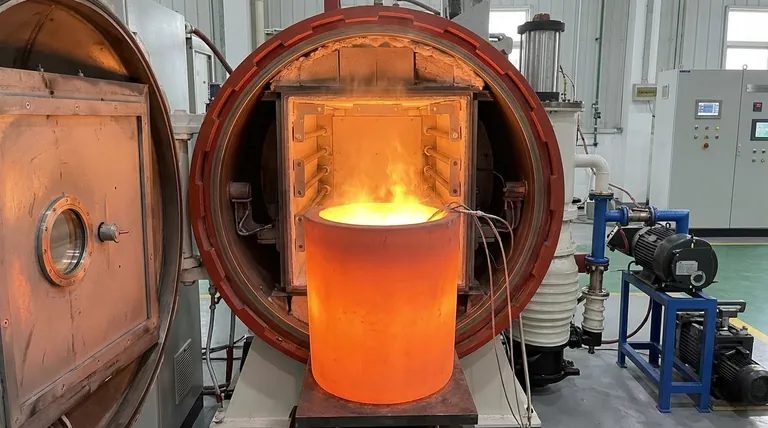
The Pillars of Graphite's Suitability
To understand why graphite is the industry standard, we must look at three specific material properties that make it uniquely qualified for this high-stakes process. Failure in any of these areas would compromise the entire operation.
Unwavering Chemical Stability
The primary goal of distillation is purification. A graphite crucible is fundamentally inert in the presence of molten magnesium and magnesium vapor.
This non-reactive nature is paramount. It ensures that no atoms from the crucible wall leach into the molten metal, which would introduce secondary contamination and defeat the purpose of the purification process.
Extreme High-Temperature Resistance
The vacuum distillation of magnesium occurs at exceptionally high temperatures, often exceeding 650°C.
Under these conditions, most materials would melt, soften, or degrade. Graphite, however, maintains its structural integrity, providing a stable and reliable vessel that will not fail mid-process.
Superior Thermal Conductivity
A successful distillation relies on a stable and consistent rate of evaporation. This requires uniform heating of the crude magnesium charge.
Graphite's high thermal conductivity is a key advantage. It allows heat from the furnace to transfer evenly and efficiently through the crucible walls, promoting a homogeneous reaction and a predictable, stable distillation rate.
Understanding the Operational Risks
Choosing the wrong material or a lower-grade graphite introduces significant risks that directly impact product quality and process safety. The use of high-purity graphite is a deliberate strategy to mitigate these specific failure points.
The Critical Threat of Contamination
If a crucible material were to react with the magnesium, it would introduce impurities directly into the final product. For example, many ceramic oxides would be reduced by the highly reactive molten magnesium, contaminating it with other elements.
This makes graphite's chemical inertness a non-negotiable requirement for achieving high-purity magnesium.
Why "High-Purity" Graphite is Specified
Using a lower-grade graphite crucible would be self-defeating. The impurities present within the graphite itself (such as ash content) could leach into the molten magnesium at high temperatures.
Specifying high-purity graphite ensures that the container itself is not a source of the very contamination the process is designed to remove.
The Role of the Vacuum Environment
The process is conducted under a vacuum to lower the boiling point of magnesium and prevent oxidation. In this low-pressure environment, materials can behave differently.
Graphite remains stable, whereas other materials might outgas or degrade, interfering with the vacuum and potentially contaminating the magnesium vapor.
Making the Right Choice for Your Goal
Selecting the right crucible is the foundation for a successful and efficient distillation process. Your primary objective will dictate your material specification.
- If your primary focus is achieving maximum product purity: Demand the highest-grade graphite available to eliminate any risk of contamination from the crucible itself.
- If your primary focus is process efficiency and consistency: Leverage graphite's superior thermal conductivity to ensure stable evaporation rates and predictable yields.
- If your primary focus is operational safety and reliability: Rely on graphite's exceptional thermal stability to guarantee the crucible maintains its structural integrity under extreme process conditions.
Ultimately, the choice of a high-purity graphite crucible is a foundational engineering decision that directly enables the production of high-quality magnesium.
Summary Table:
| Property | Why It's Essential for Magnesium Distillation |
|---|---|
| Chemical Inertness | Prevents reaction with molten magnesium, eliminating secondary contamination. |
| High-Temperature Resistance | Maintains structural integrity at temperatures exceeding 650°C. |
| Superior Thermal Conductivity | Ensures uniform heating for a stable and predictable distillation rate. |
| Vacuum Stability | Does not outgas or degrade, preserving the vacuum environment's integrity. |
Ready to Ensure Uncompromised Purity in Your Metal Distillation Processes?
The right crucible is the foundation of a successful high-purity metal production run. Backed by expert R&D and manufacturing, KINTEK offers high-purity graphite crucibles and a full range of lab high-temperature furnaces (including Muffle, Tube, Rotary, Vacuum, and CVD systems), all customizable for your unique operational needs.
Contact us today via our [#ContactForm] to discuss how our solutions can enhance your process efficiency, safety, and final product quality.
Visual Guide

Related Products
- Magnesium Extraction and Purification Condensing Tube Furnace
- 2200 ℃ Graphite Vacuum Heat Treat Furnace
- Vacuum Induction Melting Furnace
People Also Ask
- What are the advantages of using a condensing tube furnace for magnesium extraction? Achieve High Purity and Efficient Metal Recovery
- What are the three main types of tube furnaces? Choose the Right One for Your Lab
- How does a two-stage heating process in a laboratory tube furnace contribute to the structural formation of SiCN(Ni)/BN?
- Why are high-temperature laboratory furnaces necessary for Cu/In2O3 catalysts? Achieve Superior Catalyst Performance
- How do tube furnaces contribute to transport reactions and crystal production? Master High-Purity Synthesis with Precision Control


