Knowledge Why is a laboratory vacuum drying oven utilized for recovered carbon black? Preserve rCB Integrity and Pore Structure
Author avatar

Tech Team · Kintek Furnace

Updated 1 day ago

Why is a laboratory vacuum drying oven utilized for recovered carbon black? Preserve rCB Integrity and Pore Structure


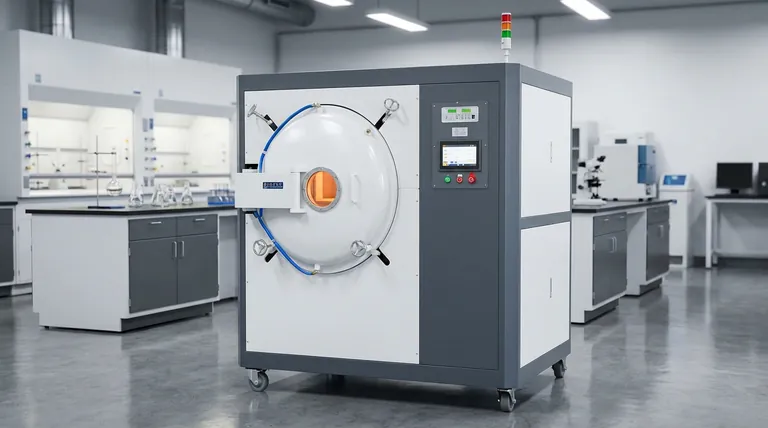
A laboratory vacuum drying oven is utilized primarily to completely remove moisture and solvent residues from recovered carbon black (rCB) without compromising its chemical structure. By creating a low-pressure environment, the oven lowers the boiling point of liquids, allowing for evaporation at significantly reduced temperatures compared to standard atmospheric drying.

Core Takeaway The critical value of vacuum drying lies in its ability to prevent oxidation. By removing oxygen and heat stress from the equation, it preserves the original physicochemical characteristics of the carbon black, ensuring the material remains stable and reactive for subsequent activation processes.
Why is a laboratory vacuum drying oven utilized for recovered carbon black? Preserve rCB Integrity and Pore Structure

The Mechanism of Preservation

Preventing Chemical Oxidation

Recovered carbon black is highly susceptible to chemical changes when exposed to heat in the presence of air. Standard drying methods can trigger unnecessary oxidation reactions.

By maintaining a vacuum state, the oven removes the oxygen required for these reactions. This ensures that the surface functional groups of the rCB remain intact rather than degrading before the material is put to use.

Low-Temperature Dehydration

Under normal atmospheric pressure, water requires 100°C to boil. In a vacuum drying oven, the internal pressure is reduced via a vacuum pump.

This pressure drop allows moisture and organic solvents to volatilize at much lower temperatures (often around 80°C). This "gentle" drying prevents thermal stress that could alter the material's properties.

Structural Integrity and Pore Access

Deep Pore Cleaning

Carbon black is a porous material. Moisture and solvents can become trapped deep within these internal structures.

Vacuum drying is particularly effective at drawing out these physically adsorbed molecules from deep within the pores. This creates a "clean slate" surface, which is essential for accurate testing or further chemical treatment.

Avoiding Pore Collapse

High-temperature drying at atmospheric pressure carries the risk of physical deformation. It can cause the shrinkage of the material or the collapse of active pores.

Using a vacuum oven ensures the structural framework of the rCB is maintained. This preservation is critical for ensuring the material performs correctly during electrochemical testing or surface area analysis (such as BET testing).

Risks of Alternative Drying Methods

The "Trade-off" of Atmospheric Drying

While standard ovens are common, they present significant risks for sensitive materials like rCB. The primary trade-off is often speed versus quality.

Subjecting rCB to high temperatures in a standard oven may dry the material, but it often leads to performance degradation. The heat can destroy organic functional groups and block active pores, rendering the rCB less effective for downstream applications like activation or catalysis.

Making the Right Choice for Your Goal

To maximize the utility of your recovered carbon black, align your drying protocol with your end goal.

  • If your primary focus is Surface Chemistry: Prioritize the vacuum environment to prevent oxidation and protect sensitive surface functional groups.
  • If your primary focus is Structural Analysis: Use vacuum drying to prevent pore collapse and ensure accurate measurement of surface area and pore volume.

By utilizing a laboratory vacuum drying oven, you ensure the physicochemical integrity of the rCB is preserved, providing a reliable foundation for all subsequent activation and testing steps.

Summary Table:

Feature Vacuum Drying Benefit for rCB Atmospheric Drying Risk
Oxidation Prevention Removes oxygen to keep functional groups intact High risk of degradation and surface oxidation
Temperature Control Volatilizes moisture/solvents at lower temperatures High heat stress can alter material properties
Pore Preservation Deep cleans pores without structural collapse Risk of pore shrinkage and surface area loss
Material Stability Maintains physicochemical integrity for testing Likely performance degradation and poor reactivity

Elevate Your Carbon Black Processing with KINTEK

Maximize the potential of your recovered carbon black with precision heating solutions. Backed by expert R&D and world-class manufacturing, KINTEK offers high-performance Vacuum Drying Ovens, along with Muffle, Tube, Rotary, and CVD systems—all fully customizable to meet your unique lab requirements.

Don't compromise your material's structural integrity. Contact KINTEK today to find the perfect high-temperature solution for your research!

References

  1. M. M. El-Maadawy, Ahmed Taha. Conversion of carbon black recovered from waste tires into activated carbon <i>via</i> chemical/microwave methods for efficient removal of heavy metal ions from wastewater. DOI: 10.1039/d4ra00172a

This article is also based on technical information from Kintek Furnace Knowledge Base .

Related Products

People Also Ask

Related Products

Vacuum Heat Treat Furnace with Ceramic Fiber Liner

Vacuum Heat Treat Furnace with Ceramic Fiber Liner

KINTEK's Vacuum Furnace with Ceramic Fiber Lining offers precise high-temperature processing up to 1700°C, ensuring uniform heat distribution and energy efficiency. Ideal for labs and production.

Vacuum Heat Treat Sintering Furnace with Pressure for Vacuum Sintering

Vacuum Heat Treat Sintering Furnace with Pressure for Vacuum Sintering

KINTEK's Vacuum Pressure Sintering Furnace offers 2100℃ precision for ceramics, metals, and composites. Customizable, high-performance, and contamination-free. Get a quote now!

Vacuum Heat Treat Sintering and Brazing Furnace

Vacuum Heat Treat Sintering and Brazing Furnace

KINTEK Vacuum Brazing Furnaces deliver precision, clean joints with superior temperature control. Customizable for diverse metals, ideal for aerospace, medical, and thermal applications. Get a quote!

Molybdenum Vacuum Heat Treat Furnace

Molybdenum Vacuum Heat Treat Furnace

High-performance molybdenum vacuum furnace for precise 1400°C heat treatment. Ideal for sintering, brazing, and crystal growth. Durable, efficient, and customizable.

Split Chamber CVD Tube Furnace with Vacuum Station CVD Machine

Split Chamber CVD Tube Furnace with Vacuum Station CVD Machine

Split Chamber CVD Tube Furnace with Vacuum Station - High precision 1200°C lab furnace for advanced materials research. Customizable solutions available.

Vacuum Heat Treat Sintering Furnace Molybdenum Wire Vacuum Sintering Furnace

Vacuum Heat Treat Sintering Furnace Molybdenum Wire Vacuum Sintering Furnace

KINTEK's Vacuum Molybdenum Wire Sintering Furnace excels in high-temperature, high-vacuum processes for sintering, annealing, and material research. Achieve precise 1700°C heating with uniform results. Custom solutions available.

High Pressure Laboratory Vacuum Tube Furnace Quartz Tubular Furnace

High Pressure Laboratory Vacuum Tube Furnace Quartz Tubular Furnace

KINTEK High Pressure Tube Furnace: Precision heating up to 1100°C with 15Mpa pressure control. Ideal for sintering, crystal growth, and lab research. Customizable solutions available.

2200 ℃ Graphite Vacuum Heat Treat Furnace

2200 ℃ Graphite Vacuum Heat Treat Furnace

2200℃ Graphite Vacuum Furnace for high-temperature sintering. Precise PID control, 6*10⁻³Pa vacuum, durable graphite heating. Ideal for research & production.

Vacuum Hot Press Furnace Machine Heated Vacuum Press Tube Furnace

Vacuum Hot Press Furnace Machine Heated Vacuum Press Tube Furnace

Discover KINTEK's advanced Vacuum Tube Hot Press Furnace for precise high-temperature sintering, hot pressing, and material bonding. Customizable solutions for labs.

High Temperature Muffle Oven Furnace for Laboratory Debinding and Pre Sintering

High Temperature Muffle Oven Furnace for Laboratory Debinding and Pre Sintering

KT-MD Debinding & Pre-Sintering Furnace for ceramics - precise temperature control, energy-efficient design, customizable sizes. Boost your lab efficiency today!

600T Vacuum Induction Hot Press Vacuum Heat Treat and Sintering Furnace

600T Vacuum Induction Hot Press Vacuum Heat Treat and Sintering Furnace

600T Vacuum Induction Hot Press Furnace for precise sintering. Advanced 600T pressure, 2200°C heating, vacuum/atmosphere control. Ideal for research & production.

1400℃ High Temperature Laboratory Tube Furnace with Quartz and Alumina Tube

1400℃ High Temperature Laboratory Tube Furnace with Quartz and Alumina Tube

KINTEK's Tube Furnace with Alumina Tube: Precision high-temperature processing up to 2000°C for labs. Ideal for material synthesis, CVD, and sintering. Customizable options available.

Laboratory Vacuum Tilt Rotary Tube Furnace Rotating Tube Furnace

Laboratory Vacuum Tilt Rotary Tube Furnace Rotating Tube Furnace

KINTEK Laboratory Rotary Furnace: Precision heating for calcination, drying, sintering. Customizable solutions with vacuum & controlled atmosphere. Enhance research now!

Vacuum Hot Press Furnace Machine for Lamination and Heating

Vacuum Hot Press Furnace Machine for Lamination and Heating

KINTEK Vacuum Lamination Press: Precision bonding for wafer, thin-film & LCP applications. 500°C max temp, 20-ton pressure, CE certified. Custom solutions available.

1400℃ Controlled Inert Nitrogen Atmosphere Furnace

1400℃ Controlled Inert Nitrogen Atmosphere Furnace

KT-14A Controlled Atmosphere Furnace for labs & industry. 1400°C max temp, vacuum sealing, inert gas control. Customizable solutions available.

Vacuum Sealed Continuous Working Rotary Tube Furnace Rotating Tube Furnace

Vacuum Sealed Continuous Working Rotary Tube Furnace Rotating Tube Furnace

Precision rotary tube furnace for continuous vacuum processing. Ideal for calcination, sintering, and heat treatment. Customizable up to 1600℃.

Magnesium Extraction and Purification Condensing Tube Furnace

Magnesium Extraction and Purification Condensing Tube Furnace

Magnesium purification tube furnace for high-purity metal production. Achieve ≤10Pa vacuum, dual-zone heating. Ideal for aerospace, electronics, and lab research.

1200℃ Split Tube Furnace Laboratory Quartz Tube Furnace with Quartz Tube

1200℃ Split Tube Furnace Laboratory Quartz Tube Furnace with Quartz Tube

Discover KINTEK's 1200℃ Split Tube Furnace with quartz tube for precise high-temperature lab applications. Customizable, durable, and efficient. Get yours now!

1700℃ Controlled Inert Nitrogen Atmosphere Furnace

1700℃ Controlled Inert Nitrogen Atmosphere Furnace

KT-17A Controlled Atmosphere Furnace: Precise 1700°C heating with vacuum & gas control. Ideal for sintering, research & material processing. Explore now!

Vacuum Dental Porcelain Sintering Furnace for Dental Laboratories

Vacuum Dental Porcelain Sintering Furnace for Dental Laboratories

KinTek Vacuum Porcelain Furnace: Precision dental lab equipment for high-quality ceramic restorations. Advanced firing control & user-friendly operation.


Leave Your Message

