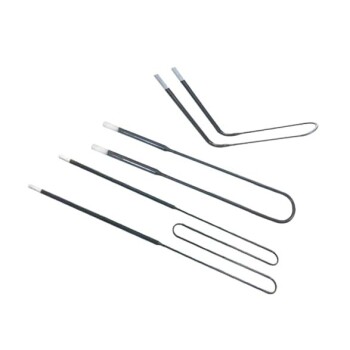
A high-precision Tungsten-Rhenium thermocouple is the critical diagnostic component used to establish the Pressure-Temperature (P-T) boundary for boron nitride phase transitions. By providing real-time, in-situ thermal monitoring within high-pressure cavities, these sensors allow researchers to pinpoint the exact moment wurtzite boron nitride (wBN) transforms into cubic boron nitride (cBN). This precise feedback is necessary because the transformation is highly sensitive to thermal fluctuations, making accurate data essential for achieving specific phase compositions and ensuring the repeatability of the sintering process.
Core Takeaway: To accurately map the phase boundary between wBN and cBN, researchers must capture instantaneous temperature data in extreme environments. Tungsten-Rhenium thermocouples provide the high-temperature stability and real-time feedback required to define these P-T limits and control the kinetics of the transformation.
Establishing the P-T Boundary for Phase Stability
Defining the Transition Threshold
The primary role of the thermocouple is to map the specific Pressure-Temperature (P-T) coordinates where wBN becomes unstable and shifts to the cBN phase. Because this transition is exceptionally temperature-dependent, even minor inaccuracies in thermal readings can lead to an incorrect definition of the phase boundary. The sensor provides the empirical data necessary to validate theoretical stability models.
Managing High-Temperature Sintering Kinetics
During the sintering process, the thermocouple monitors the actual temperatures within the high-pressure cavity rather than relying on external furnace settings. This is vital for achieving the desired phase composition, as the energy required for the wBN-to-cBN shift must be precisely maintained to avoid unintended grain growth or incomplete transformation.
Ensuring Process Repeatability
In industrial and laboratory settings, repeatability is the benchmark for success. The high-precision feedback from the Tungsten-Rhenium sensor ensures that every experimental run adheres to the same thermal profile, allowing for consistent production of high-purity cubic boron nitride.
Performance in Extreme Thermal Environments
Capturing Instantaneous Thermal Peaks
Certain synthesis methods, such as Self-propagating High-temperature Synthesis (SHS), generate extreme instantaneous temperatures that can exceed 2300°C. Tungsten-Rhenium (W/Re) alloys are selected specifically for their high melting points and stability, allowing them to survive and record these rapid combustion fronts.
Tracking Real-Time Temperature Distribution
The thermocouple captures the dynamic movement of heat as the reaction front passes through the material. This real-time distribution data allows researchers to estimate maximum combustion temperatures and analyze kinetic processes, such as carbon loss or internal chemical reactions, that occur during the phase change.
Understanding the Trade-offs
Mechanical Fragility and Recrystallization
While Tungsten-Rhenium is robust at high temperatures, it becomes extremely brittle after a single heating cycle due to recrystallization. This makes the sensors difficult to reuse or reposition once an experiment has begun, often necessitating fresh sensors for every high-pressure run.
Sensitivity to Oxidation
Tungsten and Rhenium are highly susceptible to oxidation at elevated temperatures. If the high-pressure cavity is not properly sealed or if an inert environment is compromised, the thermocouple will degrade rapidly, leading to "drift" in the temperature readings and potentially failing before the phase transition is complete.
How to Apply This to Your Project
Selecting the Right Approach for Phase Studies
- If your primary focus is defining a new P-T boundary: Prioritize the placement of the thermocouple bead as close to the wBN sample as possible to minimize thermal gradients.
- If your primary focus is high-volume production repeatability: Use Tungsten-Rhenium sensors to calibrate your press power-to-temperature curves, then use those curves to maintain consistency across batches.
- If your primary focus is SHS or rapid combustion reactions: Select a high-speed data acquisition system to pair with your W/Re-20 thermocouple to ensure the 2300°C+ peaks are captured accurately.
The integration of high-precision thermal monitoring is not merely an enhancement but a fundamental requirement for the accurate study and synthesis of cubic boron nitride.
Summary Table:
| Key Role | Function in Phase Transformation | Technical Impact |
|---|---|---|
| P-T Mapping | Establishes coordinates for wBN to cBN shift | Validates theoretical stability models |
| In-situ Monitoring | Real-time tracking of internal heat peaks | Controls sintering kinetics and grain growth |
| High-Temp Stability | Operates at temperatures exceeding 2300°C | Enables analysis of SHS and rapid reactions |
| Process Calibration | Provides feedback for repeatable runs | Ensures consistent high-purity cBN production |
Optimize Your Phase Transformation Research with KINTEK
Precision is paramount when defining the Pressure-Temperature boundaries of advanced materials like cubic boron nitride. KINTEK specializes in high-performance laboratory equipment and consumables, offering a comprehensive range of customizable high-temperature furnaces, including muffle, tube, rotary, vacuum, CVD, atmosphere, dental, and induction melting systems.
Our thermal solutions are designed to provide the stability and accuracy required for even the most demanding high-pressure environments. Whether you are mapping new phase boundaries or scaling high-purity production, KINTEK brings the technical expertise to ensure your results are consistent and repeatable.
Enhance your lab’s precision and efficiency—contact our experts today to find the ideal furnace configuration for your research!
References
- Yinjuan Liu, Xiao Li. Hardness of Polycrystalline Wurtzite Boron Nitride (wBN) Compacts. DOI: 10.1038/s41598-019-46709-4
This article is also based on technical information from Kintek Furnace Knowledge Base .
Related Products
- Silicon Carbide SiC Thermal Heating Elements for Electric Furnace
- Multi Zone Laboratory Quartz Tube Furnace Tubular Furnace
- Vertical Laboratory Quartz Tube Furnace Tubular Furnace
- Small Vacuum Heat Treat and Tungsten Wire Sintering Furnace
- 2200 ℃ Tungsten Vacuum Heat Treat and Sintering Furnace
People Also Ask
- How do the different types of silicon carbide heating elements compare in terms of applications? Find the Best Fit for Your High-Temp Needs
- What are the temperature capabilities and mounting options for silicon carbide heating elements? Unlock High-Temp Flexibility and Durability
- What are the advantages of using silicon carbide heating elements in industrial furnaces? Boost Efficiency and Durability
- How do silicon carbide heating elements enhance the heat treatment of alloys? Achieve Superior Temperature Control
- What are the unique properties of silicon carbide heating elements? Key Benefits for High-Temp Performance