The primary purpose of using high-purity quartz tubes and vacuum sealing is to establish a controlled, inert environment for synthesis. In the preparation of Cu13Se52Bi35 alloy, this equipment combination isolates the raw materials from the external atmosphere. By evacuating the tube to a pressure of 10^-5 Torr, the process prevents the chemical degradation that would otherwise occur during high-temperature melting.
Core Takeaway: The successful synthesis of Cu13Se52Bi35 relies on creating a "micro-reaction chamber" via vacuum encapsulation. This ensures the final alloy represents a pure interaction of its elements, free from oxidation or environmental contamination.
Establishing the Reaction Environment
Inert Containment
High-purity quartz tubes function as the physical vessel for the raw elemental materials (Copper, Selenium, and Bismuth).
Unlike standard glass or metal containers, high-purity quartz is chemically inert. This ensures that the container itself does not react with the melt or leach impurities into the developing alloy.
The Vacuum Standard
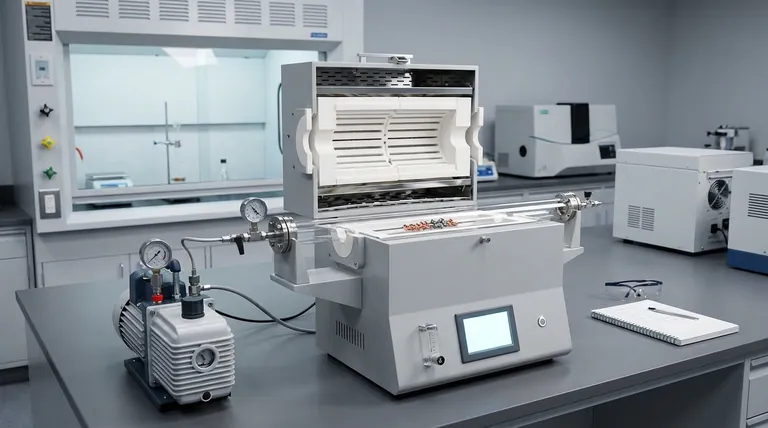
To prepare the alloy, the quartz tube is not just sealed; it is evacuated using specialized vacuum equipment.
The target internal pressure for this process is 10^-5 Torr. Achieving this specific level of vacuum is critical to removing the vast majority of air particles from the tube prior to heating.
Protection During High-Temperature Melting
Preventing Oxidation
The most significant threat to the Cu13Se52Bi35 alloy during the melt-quenching process is oxidation.
If oxygen were present during the high-temperature melting phase, the raw elements would react with the air rather than each other. The vacuum seal removes this variable, forcing the elements to bond strictly according to their intended stoichiometric ratio.
Excluding External Impurities
The melt-quenching process requires a pristine physicochemical environment to ensure the alloy's performance.
The sealed quartz tube acts as a barrier against environmental contaminants. This setup guarantees that no foreign dust, moisture, or gases are introduced during the volatile melting stage.
Understanding the Process Constraints
Reliance on Initial Purity
It is important to note that this system is a preservation mechanism, not a purification method.
The vacuum-sealed quartz tube prevents new impurities from entering, but it cannot remove impurities already present in low-quality raw materials. The quality of the final alloy is capped by the purity of the elemental ingredients you start with.
Seal Integrity is Absolute
The physics of this preparation method allows for zero margin of error regarding the seal.
If the vacuum seal is imperfect, or if the quartz acts as anything less than a hermetic barrier, the internal pressure will rise above 10^-5 Torr. This immediately compromises the oxidation resistance of the entire batch.
Ensuring Alloy Quality
To maximize the success of your Cu13Se52Bi35 preparation, consider these strategic priorities:
- If your primary focus is Stoichiometric Accuracy: Verify that your vacuum equipment can consistently maintain a pressure of 10^-5 Torr to eliminate oxidation variables.
- If your primary focus is Defect Reduction: Ensure the quartz tubes are of the highest purity to prevent container-induced contamination during the high-heat phase.
By strictly controlling the atmosphere, you ensure the physical characteristics of the material are defined solely by its chemistry, not its environment.
Summary Table:
| Component/Process | Requirement | Purpose in Alloy Synthesis |
|---|---|---|
| Vessel Material | High-Purity Quartz | Chemically inert; prevents leaching of impurities |
| Vacuum Level | 10^-5 Torr | Removes oxygen to prevent elemental oxidation |
| Sealing Method | Hermetic Vacuum Seal | Creates a pristine, isolated micro-reaction chamber |
| Primary Goal | Stoichiometric Purity | Ensures elements bond without environmental interference |
Elevate Your Material Synthesis with KINTEK Precision
Achieving a perfect 10^-5 Torr vacuum and maintaining chemical inertness is critical for the synthesis of advanced alloys like Cu13Se52Bi35. KINTEK provides the specialized equipment needed to secure your research outcomes.
Backed by expert R&D and world-class manufacturing, we offer:
- High-Purity Quartz & Tube Systems: For contamination-free melting.
- Advanced Vacuum Solutions: To ensure absolute oxidation resistance.
- Customizable Lab Furnaces: Including Muffle, Tube, Rotary, and CVD systems tailored to your unique stoichiometric requirements.
Don't let environmental contamination compromise your alloy quality. Contact KINTEK today to find the perfect high-temperature solution for your laboratory.
References
- Abduelwhab B. Alwany, Abdulnasser Abdulrahman Alfaqeer. Effect of annealing temperature on the structural and optical properties of vacuum evaporated Cu13Se52Bi35 thin films. DOI: 10.15251/cl.2024.211.99
This article is also based on technical information from Kintek Furnace Knowledge Base .
Related Products
- High Pressure Laboratory Vacuum Tube Furnace
- Vertical Laboratory Quartz Tube Furnace Tubular Furnace
- 1200℃ Split Tube Furnace Laboratory Quartz Tube Furnace with Quartz Tube
- Laboratory Quartz Tube Furnace RTP Heating Tubular Furnace
- Multi Zone Laboratory Quartz Tube Furnace Tubular Furnace
People Also Ask
- What role does a high vacuum tube furnace play in Co-Al sintering? Master High-Purity Porous Material Synthesis
- What are the different types of tube furnaces available? Find the Perfect Fit for Your Lab's Needs
- What are the main advantages of vacuum tube furnaces in the market? Achieve Purity and Precision in Material Processing
- What is the role of a vacuum tube furnace during the final thermal treatment stage of Fe3O4@CSAC catalysts?
- What conditions do tube furnaces provide for Au-Seeded TiO2 nanowires? Master Precision Thermal Synthesis