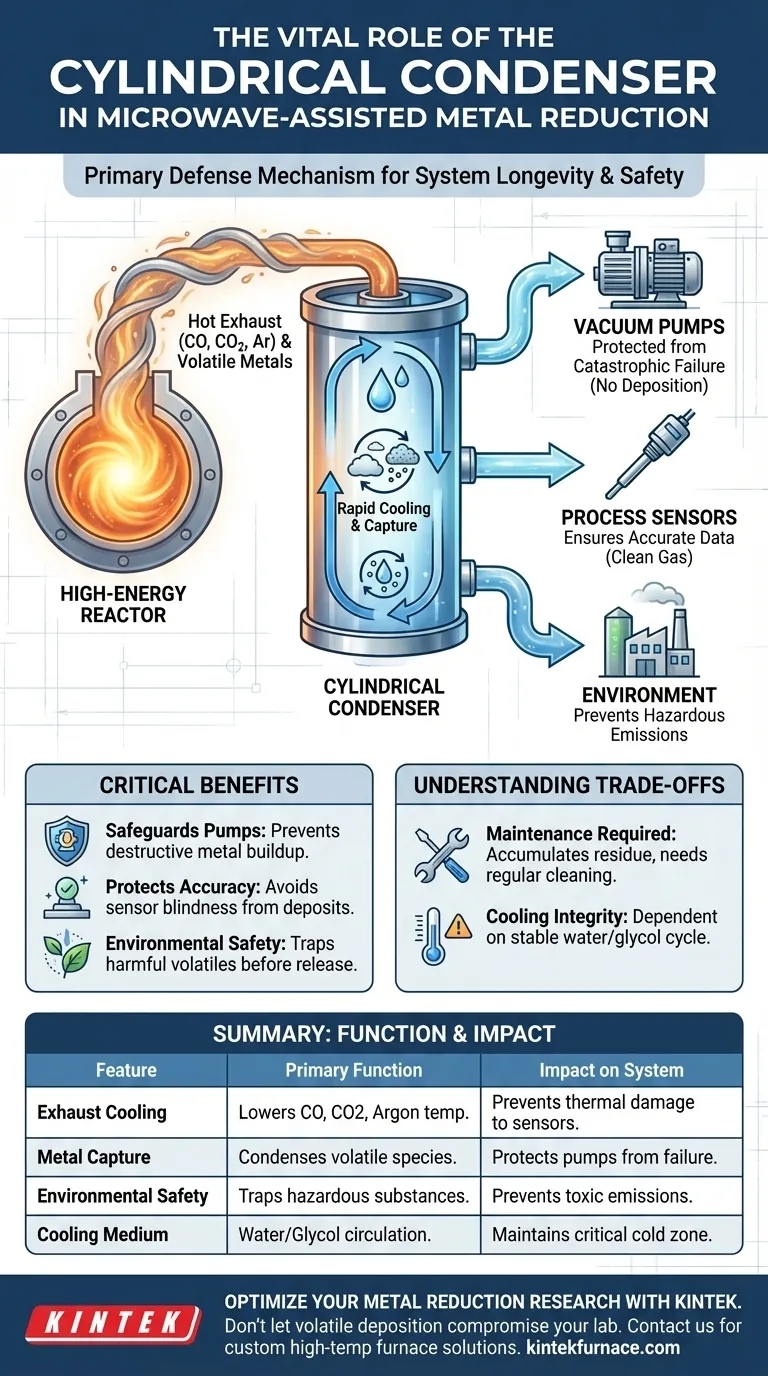
A cylindrical condenser acts as the primary defense mechanism within a microwave-assisted metal reduction system, standing between the high-energy reactor and sensitive downstream components. Its necessity is defined by its ability to rapidly cool high-temperature exhaust gases—specifically carbon monoxide, carbon dioxide, and argon—to force volatile metallic species to condense before they exit the system.
By utilizing a water or glycol cooling cycle, the condenser performs two critical functions: it prevents destructive metal deposition on vacuum pumps and sensors, and it blocks the release of harmful volatile substances into the environment.
The Mechanics of Protection
Cooling High-Temperature Exhaust
The reduction process generates significant heat and exhaust gases, including carbon monoxide, carbon dioxide, and argon.
A cylindrical condenser is installed directly above the reactor to intercept this gas stream.
Using a circulating cooling medium, typically water or glycol, it rapidly lowers the temperature of the exhaust as it exits the reaction zone.
Capturing Volatile Metallic Species
In plasma-enhanced reactions, metallic species often become volatile and enter the gas phase.
If these species remain hot, they stay gaseous and travel through the system.
The condenser creates a cold zone that forces these volatiles to phase-change back into solids or liquids, effectively trapping them inside the condenser unit.
Critical Downstream Benefits
Safeguarding Vacuum Pumps
Vacuum pumps are essential for maintaining the pressure environment required for microwave-assisted reduction.
However, these pumps are extremely sensitive to particulate contamination.
Without a condenser, volatile metals would enter the pump, solidify on internal mechanisms, and cause catastrophic mechanical failure.
Protecting Sensor Accuracy
Process sensors located downstream rely on clean gas streams to provide accurate data.
Metallic deposition on sensor probes creates interference, leading to false readings or total sensor blindness.
The condenser ensures that only "clean," cooled gas reaches these delicate instruments.
Environmental and Safety Implications
Preventing Hazardous Emissions
The reduction process involves substances that can be harmful if inhaled or released into the atmosphere.
The condenser serves as a containment filter for these hazardous volatile substances.
By trapping these materials within the system, it prevents the emission of toxic pollutants into the laboratory or the external environment.
Understanding the Trade-offs
Maintenance Requirements
Because the condenser is designed to "capture" material, it inevitably accumulates solid residue over time.
This buildup can restrict gas flow or reduce heat transfer efficiency if not managed.
Operators must plan for regular cleaning cycles to remove condensed metallic species and maintain system performance.
Dependence on Cooling Cycle Integrity
The protection offered by the condenser is entirely dependent on the stability of the water or glycol cycle.
If the cooling medium flow is interrupted or the temperature rises, volatiles will bypass the trap.
This creates an immediate risk to downstream equipment, requiring robust monitoring of the cooling loop.
Ensuring System Integrity
To maximize the lifespan and safety of your microwave-assisted metal reduction system, consider the following regarding your condenser setup:
- If your primary focus is Equipment Longevity: Ensure the condenser is sized correctly to handle the maximum thermal load, guaranteeing that no volatile metals bypass the trap to damage vacuum pumps.
- If your primary focus is Environmental Safety: Implement strict monitoring of the glycol or water cooling cycle to prevent thermal failures that could allow harmful emissions to escape.
The cylindrical condenser is not merely an accessory; it is the essential interface that allows high-energy plasma reactions to occur without destroying the equipment that supports them.
Summary Table:
| Feature | Primary Function | Impact on System |
|---|---|---|
| Exhaust Cooling | Lowers CO, CO2, and Argon temperatures | Prevents thermal damage to downstream sensors |
| Metal Capture | Condenses volatile metallic species | Protects vacuum pumps from catastrophic failure |
| Environmental Safety | Traps hazardous volatile substances | Prevents toxic emissions in laboratory settings |
| Cooling Medium | Water or Glycol circulation | Maintains the critical cold zone for phase change |
Optimize Your Metal Reduction Research with KINTEK
Don’t let volatile deposition compromise your high-temp research. KINTEK provides industry-leading solutions backed by expert R&D and precision manufacturing. Whether you need Muffle, Tube, Rotary, Vacuum, or CVD systems, our laboratory high-temp furnaces are fully customizable to meet your unique metallurgical challenges. Ensure system longevity and peak performance with equipment designed for durability and precision.
Ready to upgrade your lab’s thermal processing capabilities? Contact KINTEK today for a custom consultation!
Visual Guide
References
- Ansan Pokharel, Terence Musho. Microwave-assisted recycling of tantalum and manganese from end-of-life tantalum capacitors. DOI: 10.1038/s41598-025-96574-7
This article is also based on technical information from Kintek Furnace Knowledge Base .
Related Products
People Also Ask
- How does MPCVD achieve stable temperature control during diamond growth? Master Precise Thermal Management
- What are the essential components of an MPCVD reactor system? Build a Pristine Environment for High-Purity Materials
- How does pressure affect the MPCVD growth process? Master Plasma Control for Superior Film Quality
- How do carbon-containing groups contribute to diamond growth in the MPCVD method? Unlock High-Quality Diamond Synthesis
- What factors influence the quality of diamond deposition in the MPCVD method? Master the Critical Parameters for High-Quality Diamond Growth