
A dry oxygen thermal oxidation furnace serves as a critical processing tool designed to enhance the electrical performance of PERT solar cells through high-temperature surface treatment. Its primary function is to expose silicon wafers to a strictly controlled oxygen atmosphere, facilitating the growth of an ultra-thin, high-density silicon dioxide (SiO2) layer. This specific oxide layer acts as a passivation barrier, fundamental to the cell's ability to convert light into electricity efficiently.
The core value of this furnace lies in its ability to significantly reduce the density of dangling bonds on the silicon surface. By minimizing these defects, the process reduces surface recombination, thereby extending the minority carrier lifetime and directly increasing the overall efficiency of the solar cell.
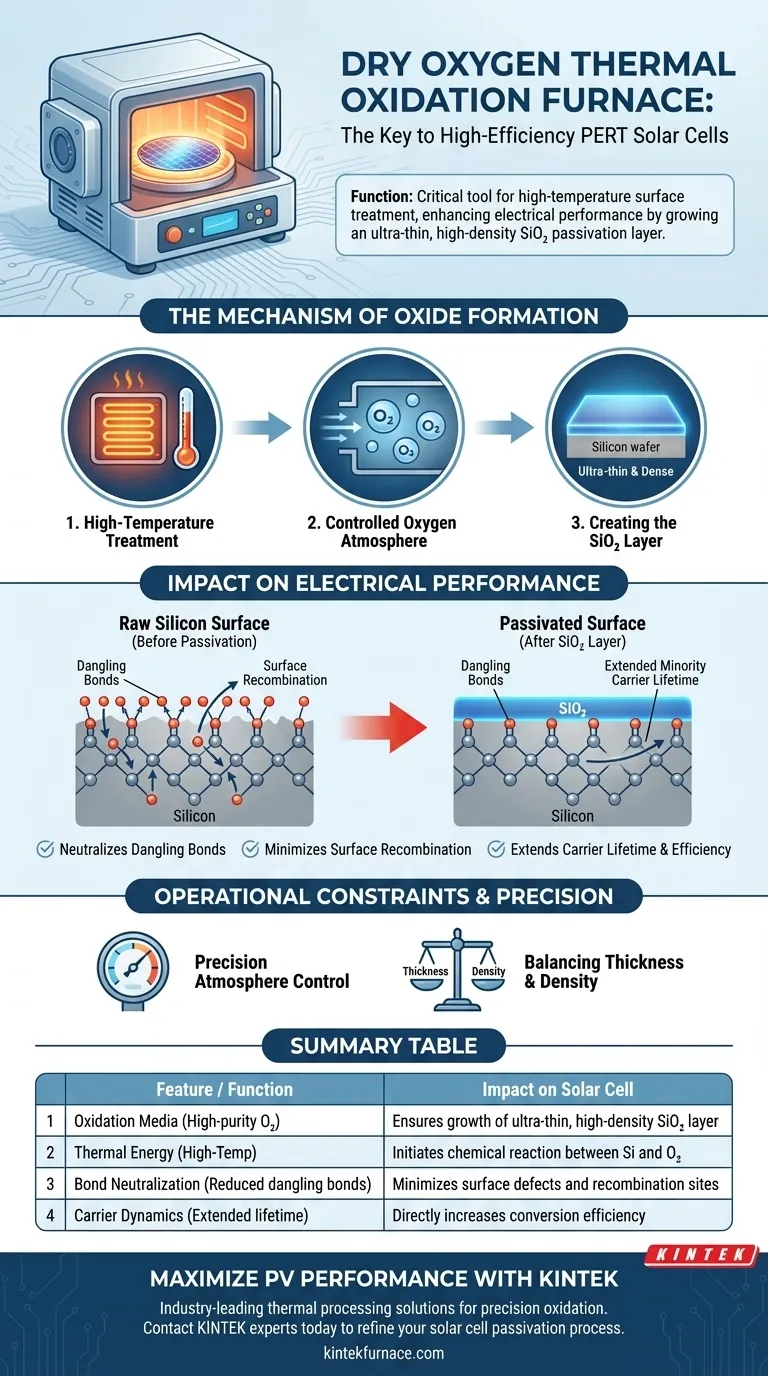
The Mechanism of Oxide Formation
High-Temperature Treatment
The furnace operates by subjecting the silicon wafers to a high-temperature treatment. This thermal energy is the catalyst required to initiate the oxidation reaction on the wafer's surface.
Controlled Oxygen Atmosphere
Crucial to this process is the environment within the furnace. It utilizes a controlled oxygen atmosphere, ensuring that pure oxygen reacts with the silicon surface in a predictable and uniform manner.
creating the SiO2 Layer
The combination of heat and oxygen results in the formation of a silicon dioxide (SiO2) passivation layer. This layer is described as ultra-thin and dense, physical characteristics that are essential for its effectiveness as an electrical barrier.
Impact on Electrical Performance
Neutralizing Dangling Bonds
A raw silicon surface is riddled with "dangling bonds"—incomplete chemical bonds that act as traps for electrical carriers. The thermal oxidation process provided by the furnace effectively reduces the density of these dangling bonds.
Minimizing Surface Recombination
By neutralizing surface defects, the SiO2 layer prevents surface recombination. This is the phenomenon where generated electrons and holes recombine and are lost before they can be collected as current.
Extending Carrier Lifetime
The direct consequence of reduced recombination is an increase in minority carrier lifetime. A longer lifetime means charge carriers exist longer within the silicon, increasing the likelihood they will contribute to the cell's power output.
Operational Constraints and Precision
The Necessity of Atmosphere Control
The effectiveness of the passivation layer relies entirely on the precision of the oxygen atmosphere. As the reference notes, the atmosphere must be "controlled" to ensure the resulting oxide layer achieves the necessary density; a fluctuating environment could compromise layer quality.
Balancing Thickness and Density
The goal is not just any oxide layer, but one that is ultra-thin and dense. The furnace must operate within specific parameters to achieve this balance, as a layer that is too porous or of incorrect thickness may fail to adequately passivate the surface defects.
Making the Right Choice for Your Goal
To maximize the benefits of dry oxygen thermal oxidation in your PERT cell production:
- If your primary focus is Cell Efficiency: Prioritize the furnace's ability to create a dense SiO2 layer, as this directly correlates to increased minority carrier lifetime.
- If your primary focus is Defect Management: Ensure the thermal treatment parameters are optimized to maximize the reduction of dangling bonds on the silicon surface.
The ultimate utility of the dry oxygen thermal oxidation furnace is its ability to turn a defect-prone silicon surface into a high-performance electrical interface.
Summary Table:
| Feature | Function in PERT Passivation | Impact on Solar Cell |
|---|---|---|
| Oxidation Media | High-purity dry oxygen atmosphere | Ensures growth of ultra-thin, high-density SiO2 layer |
| Thermal Energy | High-temperature treatment catalyst | Initiates the chemical reaction between Si and O2 |
| Bond Neutralization | Reducing dangling bond density | Minimizes surface defects and recombination sites |
| Carrier Dynamics | Extending minority carrier lifetime | Directly increases the conversion efficiency of the cell |
Maximize Your Photovoltaic Performance with KINTEK
Ready to elevate your PERT solar cell efficiency? KINTEK provides industry-leading high-temperature thermal processing solutions tailored for precision oxidation. Backed by expert R&D and world-class manufacturing, we offer a comprehensive range of Muffle, Tube, Rotary, Vacuum, and CVD systems, all customizable to meet your specific lab or production requirements.
Our thermal oxidation furnaces ensure the perfect balance of oxide density and thickness to minimize surface recombination and maximize carrier lifetime. Contact KINTEK experts today to discuss your unique needs and discover how our advanced furnace technology can refine your solar cell passivation process.
Visual Guide
References
- Hakim Korichi, Ahmed Baha-Eddine Bensdira. Investigating the influence of boron diffusion temperature on the performance of n-type PERT monofacial solar cells with reduced thermal steps. DOI: 10.35784/iapgos.6599
This article is also based on technical information from Kintek Furnace Knowledge Base .
Related Products
People Also Ask
- Why is it necessary to maintain a high vacuum environment during the SPS of SiC? Key to High-Density Ceramics
- How does the heating mechanism of Spark Plasma Sintering (SPS) function? Enhance TiC/SiC Composite Fabrication
- What are the technical advantages of using an SPS sintering furnace? Elevate Al2O3-TiC Material Performance
- What are the steps in the discharge plasma sintering process? Master Fast, High-Density Material Consolidation
- What are the advantages of spark plasma sintering (SPS) over traditional forging? Precision Microstructural Control

