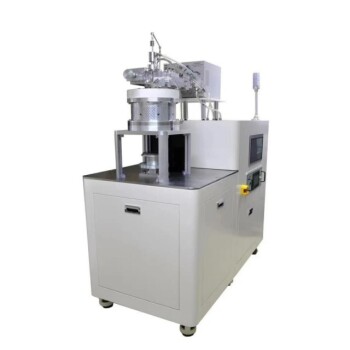
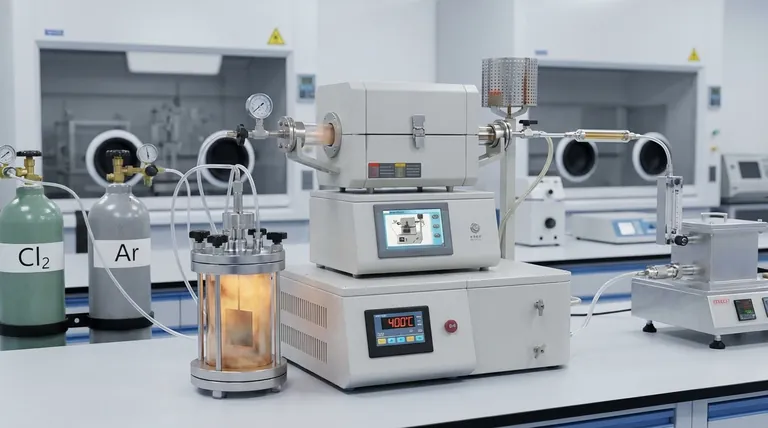
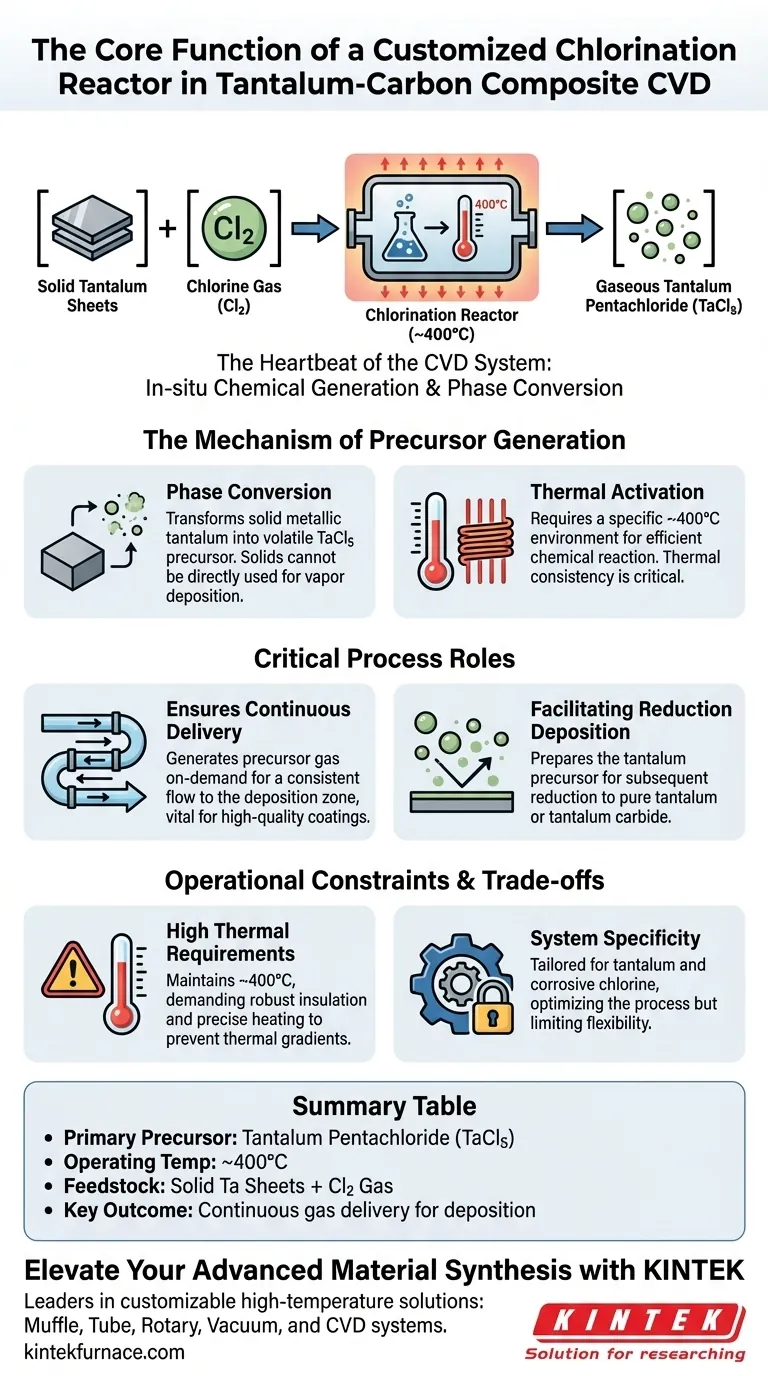
The core function of a customized chlorination reactor is to act as an in-situ chemical generator that converts solid metallic tantalum into a usable gaseous precursor. By reacting tantalum sheets with chlorine gas in a controlled environment at approximately 400°C, the system synthesizes tantalum pentachloride (TaCl5), the essential volatile compound required to initiate the Chemical Vapor Deposition (CVD) process.
The chlorination reactor bridges the gap between raw material storage and deposition by chemically transforming stable, solid metal into a reactive gas stream. This conversion is the prerequisite for achieving a continuous, controlled flow of material for the creation of tantalum-carbon composites.
The Mechanism of Precursor Generation
Phase Conversion
The primary technical challenge in this CVD process is that the source material, metallic tantalum, exists as a solid sheet. Solids cannot be directly used for vapor deposition.
The chlorination reactor solves this by facilitating a chemical reaction that alters the physical state of the material. It facilitates the interaction between the solid tantalum and chlorine gas to produce tantalum pentachloride (TaCl5).
Thermal Activation
This chemical conversion is not spontaneous at room temperature; it requires significant thermal energy to proceed efficiently.
The reactor is engineered to maintain a specific, high-temperature environment, typically around 400°C. This thermal consistency is critical to ensure the reaction proceeds at a rate that matches the demand of the deposition process.
Critical Process Roles
Ensuring Continuous Delivery
Consistency is vital for high-quality CVD coatings. Fluctuations in precursor supply can lead to defects or uneven thickness in the final composite.
The customized reactor allows for continuous gas delivery. By generating the precursor gas on-demand from a solid stock, the system maintains a steady flow of reactants to the deposition zone.
Facilitating Reduction Deposition
The generation of TaCl5 is only the first step; it is an intermediate compound designed to be reduced later.
By creating this specific chloride precursor, the reactor prepares the tantalum for the subsequent reduction deposition process. The TaCl5 gas is chemically ready to be stripped of its chlorine atoms and deposited as pure tantalum or tantalum carbide downstream.
Operational Constraints and Trade-offs
High Thermal Requirements
While essential for the reaction, maintaining a 400°C environment introduces energy overhead and material stress.
The system requires robust insulation and precise heating elements to prevent thermal gradients. A drop in temperature could stall the generation of TaCl5, while excessive heat could damage reactor components.
System Specificity
The reactor is described as "customized," indicating it is tailored specifically for the geometry of tantalum sheets and the corrosive nature of chlorine gas.
This customization optimizes the process but limits flexibility. The equipment is purpose-built for this specific chemical pathway and may not be easily adaptable to other precursors or metals without significant modification.
Making the Right Choice for Your Process
Understanding the role of the chlorination reactor allows you to optimize your CVD system for efficiency and quality.
- If your primary focus is Process Stability: Prioritize the thermal control of the reactor to ensure the 400°C setpoint never fluctuates, guaranteeing a steady stream of TaCl5.
- If your primary focus is Precursor Yield: Ensure the reactor design maximizes the surface area contact between the chlorine gas and the metallic tantalum sheets.
A well-tuned chlorination reactor is the heartbeat of the CVD system, turning static metal into the dynamic flow required for advanced composite manufacturing.
Summary Table:
| Feature | Function in Chlorination Reactor |
|---|---|
| Primary Precursor | Tantalum Pentachloride (TaCl5) |
| Operating Temp | Approximately 400°C |
| Feedstock Material | Solid Tantalum Sheets + Chlorine Gas |
| Key Outcome | Continuous gas delivery for vapor deposition |
| Process Role | In-situ chemical generation & phase conversion |
Elevate Your Advanced Material Synthesis with KINTEK
Precise precursor generation is the backbone of high-quality CVD coatings. As a leader in laboratory high-temperature solutions, KINTEK provides the expert R&D and manufacturing excellence your facility requires. We offer a comprehensive range of Muffle, Tube, Rotary, Vacuum, and CVD systems, all of which are fully customizable to meet the specific thermal and chemical demands of your unique research.
Whether you are developing tantalum-carbon composites or exploring new chemical pathways, our engineers are ready to help you optimize your process stability and yield.
Ready to design your custom CVD solution? Contact us today to speak with a specialist!
Visual Guide
References
- Junyu Zhu, Haohong Jiang. Fabrication and mechanical properties of porous tantalum carbon composites by chemical vapor deposition. DOI: 10.1038/s41598-025-86680-x
This article is also based on technical information from Kintek Furnace Knowledge Base .
Related Products
- Inclined Rotary Plasma Enhanced Chemical Deposition PECVD Tube Furnace Machine
- Slide PECVD Tube Furnace with Liquid Gasifier PECVD Machine
- Inclined Rotary Plasma Enhanced Chemical Deposition PECVD Tube Furnace Machine
- Laboratory Quartz Tube Furnace RTP Heating Tubular Furnace
- MPCVD Machine System Reactor Bell-jar Resonator for Lab and Diamond Growth
People Also Ask
- What are the main advantages of PECVD tube furnaces compared to CVD tube furnaces? Lower Temp, Faster Deposition, and More
- What is plasma in the context of PECVD? Unlock Low-Temperature Thin Film Deposition
- What are the typical conditions for plasma-enhanced CVD processes? Achieve Low-Temperature Thin Film Deposition
- What plasma source is used in PE-CVD tube furnaces? Unlock Low-Temperature, High-Quality Deposition
- How does the temperature control system work in a rotary tube furnace? Achieve Precise Thermal Processing for Your Materials