The reduction in yield strength and micro-hardness of heat-treated, additively manufactured 316L stainless steel is primarily driven by the thermal annihilation of its high dislocation density and the subsequent coarsening of its unique cellular microstructure. When the as-built part is heated, the dense network of dislocations that gave it exceptional strength rapidly degrades. At higher temperatures, the fine cellular walls dissolve completely, and grain growth takes over, further softening the material according to the Hall-Petch relationship. However, this is not a one-way street—specific low-temperature heat treatments can actually increase strength through controlled precipitation.
The core challenge in optimizing 316L is managing a thermal tug-of-war: you must eliminate harmful residual stress without destroying the dislocation substructures that provide strength. Precision laboratory furnaces are the essential tool for hitting the exact temperature windows where dislocation recovery, precipitation hardening, or recrystallization can be balanced to meet your exact engineering requirements.
The Microstructural Origin of Strength in As-Built 316L
The exceptional strength of additively manufactured 316L in its as-printed state is not from bulk alloying chemistry. It is a microstructural gift from the process itself.
A Network of High-Energy Cells
Selective laser melting (SLM) creates ultra-fine cellular substructures—typically 0.5-2 µm in size—surrounded by dense dislocation walls. This network forms during extreme rapid solidification, trapping a massive dislocation density that acts as a powerful barrier to plastic deformation. The result is a yield strength often exceeding 600 MPa, far above wrought annealed 316L.
The Hall-Petch Foundation
This strength is further reinforced by a fine grain structure. As described by the Hall-Petch relationship, smaller grain sizes inherently yield higher strength because grain boundaries impede dislocation motion. The as-built cellular and columnar grains provide this dual strengthening effect: dislocations are pinned both inside cells and at sub-grain boundaries.
How Heat Treatment Unravels These Strengthening Mechanisms
When you introduce thermal energy in a furnace, you are essentially giving those trapped dislocations the mobility to escape. The degree to which this happens is a direct function of temperature and time.
Dislocation Annihilation and Cellular Dissolution
The primary cause of the strength and hardness drop is the decrease in dislocation density within the cellular microstructure. Starting at moderate temperatures (~400°C-600°C), dislocations begin to annihilate and rearrange via recovery. The cellular networks persist but lose their high-energy, high-strength character.
Above approximately 800°C, the thermal energy is sufficient to fully dissolve the fine cellular features. The melt-pool boundaries become imperceptible, and the dislocation-rich walls vanish, causing a steep decline in both yield strength and micro-hardness. This progression is precisely why micro-hardness can drop from over 240 HV to as low as 190 HV after a 1,100°C treatment.
Grain Coarsening and the Hall-Petch Effect
Once the cellular substructures are erased, the material is left with a recrystallized grain structure. At temperatures like 1,100°C, full recrystallization and coarse grain growth occur. According to the Hall-Petch relationship, larger grains offer fewer obstacles to dislocations, leading to a further reduction in yield strength—often settling near 415 MPa, which is comparable to conventional annealed 316L. This fully removes the AM-specific strength bonus.
The Counterintuitive Strengthening at Low Temperatures
The narrative of “heat treatment always softens” has a critical exception. At specific low-to-moderate temperatures around 400°C to 600°C, you can actually trigger an increase in yield strength and micro-hardness. Micro-hardness values have been observed rising from 252 HV to 291 HV in this window. This strengthening occurs because the thermal energy promotes the formation of newly generated silicate precipitates and fine carbides, which act as additional barriers to dislocation motion, overriding the slight recovery softening.
Precision Laboratory Furnaces: The Key to Controlled Property Optimization
Hitting these exact microstructural targets is impossible without hardware that offers tight process control. A general shop furnace cannot deliver the results.
Exact Thermal Profiles for Phase Control
The transition from recovery to cellular dissolution to grain coarsening is temperature-dependent and kinetically driven. High-temperature laboratory furnaces provide precise ramp rates, soak times, and temperature uniformity (often within ±5°C). This allows a metallurgist to “park” the material at, for instance, 450°C to maximize precipitation hardening without entering the dislocation annihilation regime that begins at higher temperatures.
Atmosphere Management
Vacuum or inert atmosphere laboratory furnaces prevent oxidation and surface degradation during treatment. This ensures the thermal effect is purely microstructural, not a surface chemistry compromise, which is essential for sensitive AM components where surface quality directly impacts fatigue life.
Targeting Specific Property Windows
By controlling the furnace, you can deliberately choose your microstructural endpoint. Do you want minimal change for stress relief? Soak at ~600°C, where melt pools remain visible. Do you need a homogenous, ductile structure? A 1,100°C recrystallization anneal will completely erase the printed history and provide maximum ductility with lower strength.
Understanding the Trade-offs: Strength vs. Ductility
Using a furnace to optimize properties is fundamentally an exercise in balancing competing goals. Every heat treatment choice involves a trade-off.
The high dislocation density that gives AM 316L its strength makes it relatively brittle and prone to residual stress. Full recrystallization removes both the strength and the stress, delivering excellent ductility and corrosion resistance, but at the cost of the AM-specific mechanical advantage. The low-temperature precipitation window adds strength but typically reduces ductility further if overdone. A two-step heat treatment (e.g., a precipitation hold followed by a controlled coarsening step) can be designed, but it requires iterative testing with a precise furnace. The primary pitfall is selecting a temperature that is too high, unintentionally collapsing the dislocation network and losing strength without gaining the full benefit of grain uniformity.
Making the Right Choice for Your Application
Your goal dictates the thermal recipe. Use a high-precision laboratory furnace to execute your chosen path with certainty.
- If your primary focus is maximizing yield strength and hardness: Target the low-temperature aging window (~400°C-500°C). This will induce precipitation strengthening while preserving the cellular dislocation network, potentially raising hardness above the as-built value.
- If your primary focus is relieving residual stress with minimal strength loss: Use a short soak at or below 600°C. The microstructure will see only minor recovery, leaving the melt pool and cellular features largely intact.
- If your primary focus is achieving maximum ductility and structural homogenization: Choose a full recrystallization anneal at 1,050°C-1,100°C. The cellular substructures and dislocations will be completely erased, yielding a coarse-grained, low-strength, highly ductile material.
- If your primary focus is a balanced strength-ductility profile: Design a controlled ramp to an intermediate temperature (~850°C) to dissolve cellular boundaries and initiate recrystallization, but stop the process before excessive grain coarsening sets in. This requires the precise time-at-temperature control only a laboratory furnace can provide.
The thermal post-processing of AM 316L is not a simple reset button; it is a re-engineering step that lets you dial in the exact mechanical character you need, provided you can control the heat with scientific precision.
Summary Table:
| Heat Treatment Temp | Microstructural Mechanism | Yield Strength & Hardness | Application Goal |
|---|---|---|---|
| 400°C – 500°C | Carbide/silicate precipitation; cells retained | Increases (Peak Hardness) | Maximize yield strength & hardness |
| ≤ 600°C | Minor recovery; cellular walls intact | Minor decrease (High Strength) | Stress relief with minimal softening |
| ~850°C | Cellular wall dissolution & partial recrystallization | Moderate decrease | Balanced strength-ductility profile |
| 1,050°C – 1,100°C | Full recrystallization & grain coarsening | Significant drop (Wrought level) | Maximum ductility & stress relief |
Master Your AM Thermal Post-Processing with KINTEK
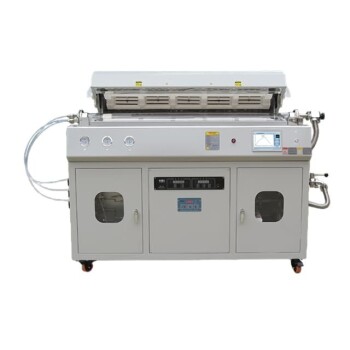
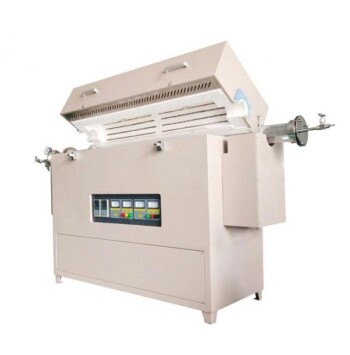
Unlock the full potential of your additively manufactured components with precise microstructural control. KINTEK specializes in high-performance laboratory equipment and high-temperature furnaces—including vacuum, controlled atmosphere, tube, muffle, and customizable lab furnaces engineered for exact thermal profiles.
Whether you need to achieve targeted precipitation hardening, stress relief, or full recrystallization for 316L stainless steel, KINTEK provides the precise temperature uniformity and atmosphere management your materials require.
Ready to elevate your metallurgy and research performance? Contact KINTEK today to consult with our laboratory furnace experts!
Related Products
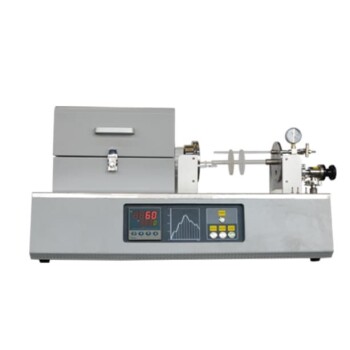
- Laboratory Quartz Tube Furnace RTP Heating Tubular Furnace
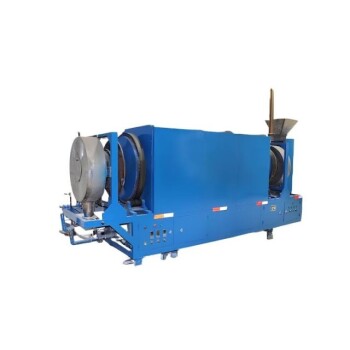
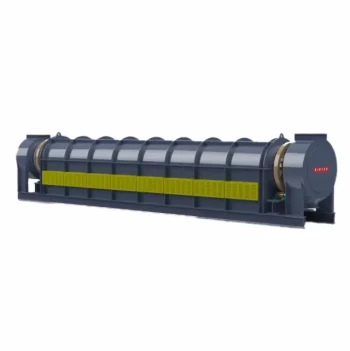
- Electric Rotary Kiln Continuous Working Small Rotary Furnace Kiln for Pyrolysis Plant Heating
- 1200℃ Muffle Oven Furnace for Laboratory
- 1400℃ Muffle Oven Furnace for Laboratory
- 1800℃ High Temperature Muffle Oven Furnace for Laboratory
People Also Ask
- What physical conditions does a laboratory Tube Furnace provide for SOEC? Precision Heat for Solid Oxide Characterization
- What are the main features and functions of a laboratory tube furnace? Unlock Precise High-Temp Control for Your Lab
- Why is a laboratory tube furnace necessary for BiVO4/RGO synthesis? Achieve Precise Nano-Structure Control
- What conditions does a tube furnace provide for post-ion-implantation? Achieve Precise Microstructural Repair
- What role does a laboratory tube furnace play in geological and mineralogical research? Unlock Earth's Secrets with Precision