
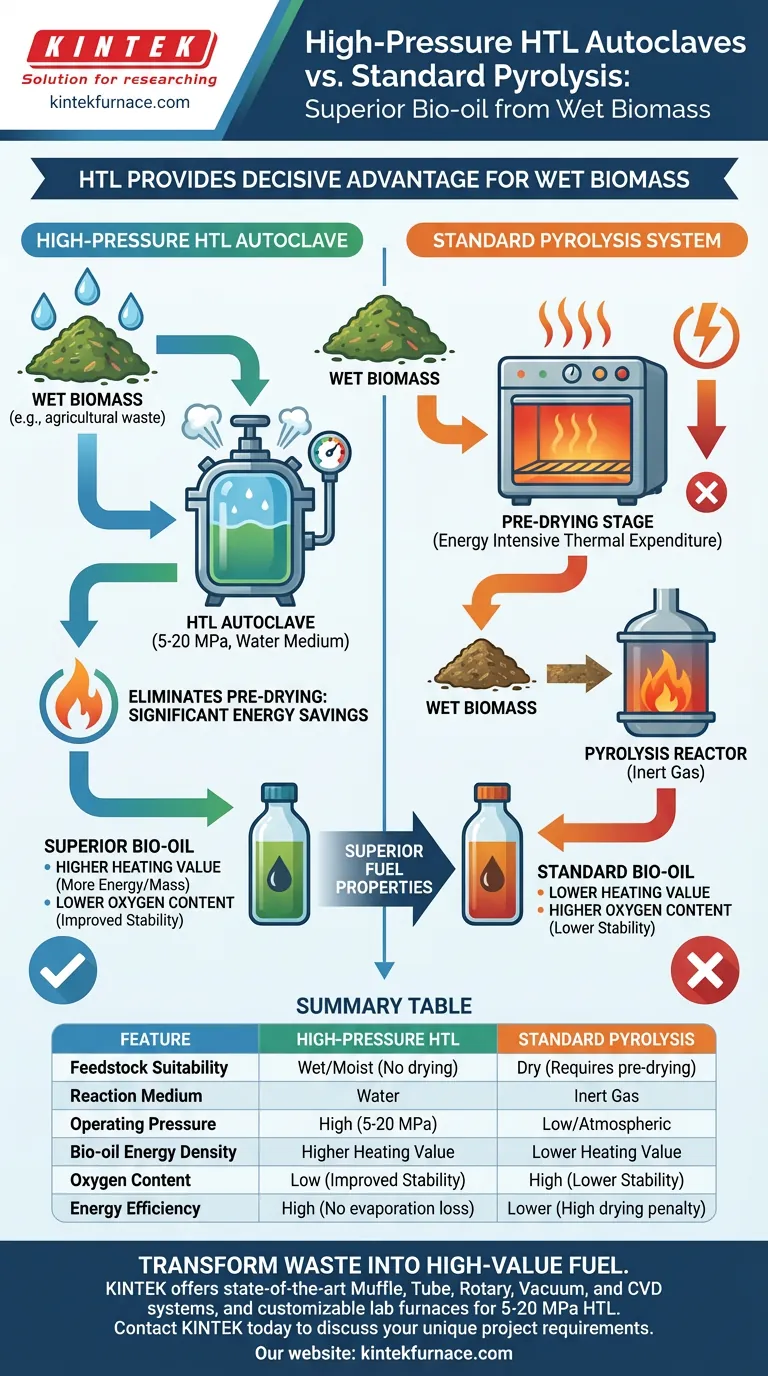
High-pressure autoclaves provide a decisive advantage when processing wet biomass by eliminating the pre-drying stage required by standard pyrolysis. Operating at pressures between 5 and 20 MPa with water as the reaction medium, these systems significantly reduce energy consumption and yield a bio-oil with superior fuel properties.
The strategic value of Hydrothermal Liquefaction (HTL) lies in its ability to turn moist agricultural waste into high-quality fuel without the energy penalty of drying, resulting in bio-oil with higher heating values and lower oxygen content.
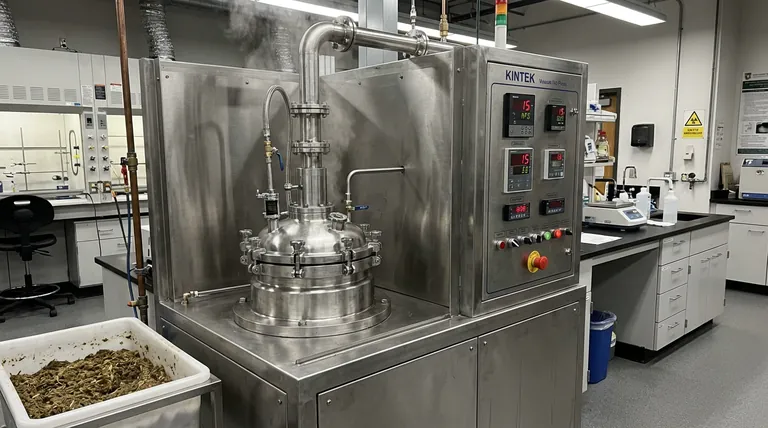
Energy Efficiency and Feedstock Flexibility
Eliminating the Pre-Drying Step
Standard pyrolysis systems generally require dry biomass to function effectively. In contrast, HTL autoclaves utilize water as the primary reaction medium. This allows you to process wet feedstocks, such as moist agricultural waste, directly without strictly reducing moisture content first.
Reducing Energy Consumption
Because the pre-drying phase is eliminated, the overall energy footprint of the conversion process drops significantly. You avoid the substantial thermal energy expenditure typically needed to evaporate water from the biomass before processing begins.
The Role of High Pressure
To maintain water in the liquid phase at elevated temperatures, these autoclaves operate at substantial pressures, specifically between 5 and 20 MPa. This high-pressure environment facilitates the chemical breakdown of biomass within the aqueous medium.
Product Quality Improvements
Higher Heating Value
The output of HTL autoclaves is chemically distinct from standard pyrolysis oil. The bio-oil produced in these high-pressure systems typically features a higher heating value. This means the fuel produced contains more energy per unit of mass, making it a more potent energy source.
Lower Oxygen Content
Bio-oil stability and quality are often inversely related to oxygen levels. HTL produces bio-oil with a lower oxygen content compared to pyrolysis oil. This reduction in oxygen generally correlates with improved stability and compatibility for fuel applications.
Understanding the Operational Requirements
Managing High-Pressure Environments
While HTL offers product and efficiency benefits, it requires robust equipment management. The system must reliably sustain pressures of 5 to 20 MPa to function. This operational requirement dictates the need for specialized reactor design capable of handling high-stress conditions safely.
Making the Right Choice for Your Project
The decision between HTL and standard pyrolysis largely depends on your input material and your quality targets.
- If your primary focus is processing wet biomass: Choose HTL to bypass the energy-intensive drying process and reduce operational costs.
- If your primary focus is final fuel quality: Choose HTL to secure a bio-oil with higher energy density (heating value) and lower oxygen content.
By aligning your reactor choice with the moisture content of your feedstock, you maximize both energy efficiency and product value.
Summary Table:
| Feature | High-Pressure HTL Autoclave | Standard Pyrolysis System |
|---|---|---|
| Feedstock Suitability | Wet/Moist Biomass (No drying) | Dry Biomass (Requires pre-drying) |
| Reaction Medium | Water (Subcritical/Supercritical) | Inert Gas |
| Operating Pressure | High (5 - 20 MPa) | Low/Atmospheric |
| Bio-oil Energy Density | Higher Heating Value (HHV) | Lower Heating Value |
| Oxygen Content | Low (Improved Stability) | High (Lower Stability) |
| Energy Efficiency | High (No evaporation loss) | Lower (High drying penalty) |
Transform Your Waste into High-Value Fuel
Maximize your energy efficiency and fuel quality with KINTEK’s advanced high-pressure solutions. Backed by expert R&D and manufacturing, KINTEK offers state-of-the-art Muffle, Tube, Rotary, Vacuum, and CVD systems, along with customizable lab high-temperature furnaces designed to handle the rigorous 5-20 MPa demands of Hydrothermal Liquefaction.
Whether you are processing moist agricultural waste or developing next-generation biofuels, our engineering team provides the specialized reactor designs you need for safety and performance. Contact KINTEK today to discuss your unique project requirements!
Visual Guide
References
- Jean de Dieu Marcel Ufitikirezi, Luboš Smutný. Agricultural Waste Valorization: Exploring Environmentally Friendly Approaches to Bioenergy Conversion. DOI: 10.3390/su16093617
This article is also based on technical information from Kintek Furnace Knowledge Base .
Related Products
- Vacuum Hot Press Furnace Machine for Lamination and Heating
- High Pressure Laboratory Vacuum Tube Furnace
- 9MPa Air Pressure Vacuum Heat Treat and Sintering Furnace
- High Temperature Muffle Oven Furnace for Laboratory Debinding and Pre Sintering
People Also Ask
- What are the primary components of a vacuum hot press furnace? Master the Core Systems for Precise Material Processing
- What safety features are incorporated in vacuum hot press furnaces? Ensure Operator and Equipment Protection
- What are the benefits of the vacuum environment system in a vacuum hot press furnace? Unlock High-Density Sintering
- What industries benefit from the use of vacuum hot press furnaces? Unlock High-Performance Materials for Your Industry
- How does the uniaxial pressure applied by a vacuum hot press furnace affect the microstructure of ZrC-SiC materials?



