
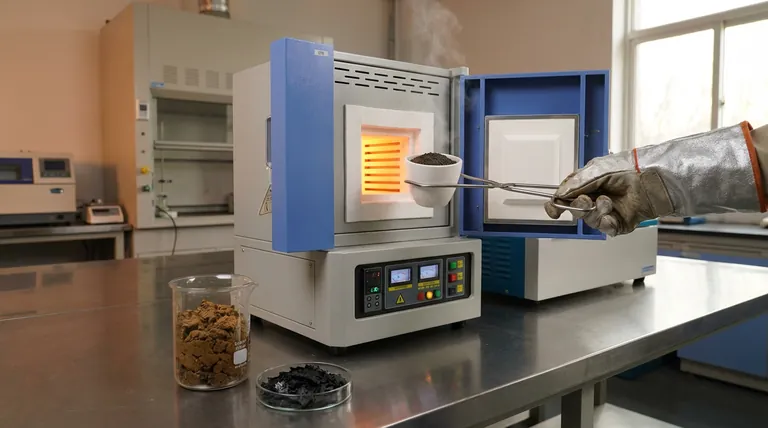
The selection of a ceramic crucible is foundational to the successful preparation of biomass carbon catalysts. It acts as the critical containment vessel that withstands the rigorous conditions of high-temperature pyrolysis up to 600°C. By providing exceptional thermal stability and chemical inertness, the crucible prevents reactions between the container and the chicken manure, ensuring the structural integrity and purity of the final product.
Ceramic crucibles serve as a neutral, heat-resistant barrier, enabling the transformation of raw biomass into high-purity carbon nanosheets without introducing contaminants or suffering thermal failure.
The Critical Role of Thermal Stability
Withstanding Extreme Temperatures
The synthesis of biomass carbon catalysts requires subjecting raw materials to intense heat within a muffle furnace.
Ceramic crucibles are selected specifically for their ability to endure temperatures reaching 600°C. This resistance is non-negotiable for maintaining the vessel's integrity throughout the process.
Supporting Multi-Stage Processing
The preparation process involves several distinct phases, including dehydration, pyrolysis, and carbonization.
A ceramic vessel remains stable across all these stages. It ensures that the transition from raw chicken manure to carbonized material happens within a controlled, consistent physical environment.
Preserving Chemical Purity
Ensuring Chemical Inertness
The primary danger during pyrolysis is the potential for the containment vessel to react chemically with the biomass.
Ceramic crucibles possess a vital property known as chemical inertness. This characteristic ensures that no chemical reaction occurs between the crucible walls and the raw chicken manure, even under high thermal stress.
Protecting the Catalyst Structure
The goal of this process is to produce Resourceful Carbon Nanosheets (RCM NSs).
Any interaction between the vessel and the biomass would introduce impurities, compromising the quality of the nanosheets. The use of ceramic guarantees that the resulting catalyst remains pure and effective.
Common Pitfalls to Avoid
The Risk of Reactive Materials
Using a vessel that lacks the specific inert properties of ceramic can lead to contamination.
If a container interacts with the biomass during carbonization, the chemical composition of the final catalyst will be altered. This defeats the purpose of the synthesis, rendering the carbon nanosheets less effective.
Thermal Failure Points
Attempting to use materials with lower thermal resistance than ceramic introduces the risk of structural failure.
At 600°C, inferior materials may deform or degrade. The stability of the ceramic crucible is the only safeguard against the collapse of the containment system during the critical heating phases.
Making the Right Choice for Your Goal
To ensure the successful synthesis of carbon catalysts from chicken manure, consider these functional priorities:
- If your primary focus is High Purity: Select a ceramic crucible to guarantee complete chemical inertness and prevent the leaching of contaminants into your Resourceful Carbon Nanosheets.
- If your primary focus is Process Integrity: Rely on ceramic materials to maintain structural stability through the dehydration, pyrolysis, and carbonization stages up to 600°C.
The correct vessel selection is not merely a logistical detail; it is the control variable that secures the quality of your final carbon material.
Summary Table:
| Feature | Benefit for Biomass Carbon Catalyst Preparation |
|---|---|
| Thermal Stability | Withstands temperatures up to 600°C during dehydration and carbonization. |
| Chemical Inertness | Prevents reactions between the vessel and chicken manure to ensure material purity. |
| Structural Integrity | Resists deformation and thermal failure throughout multi-stage processing. |
| Contamination Control | Guarantees the synthesis of high-quality Resourceful Carbon Nanosheets (RCM NSs). |
Elevate Your Material Synthesis with KINTEK Precision
Precision in biomass carbonization begins with the right equipment. Backed by expert R&D and manufacturing, KINTEK offers high-performance Muffle, Tube, Rotary, Vacuum, and CVD systems, along with premium ceramic vessels tailored for your specific research needs. Whether you are producing carbon nanosheets or advanced catalysts, our customizable lab high-temp furnaces provide the thermal stability and control your project demands.
Ready to optimize your pyrolysis process? Contact KINTEK today for expert solutions and ensure the purity of your results.
References
- Yingtao Sun, Lai Lyu. Fast elimination of emerging contaminates in complicated water environment medium over the resource conversion product of chicken manure biochar triggered by peroxymonosulfate. DOI: 10.1007/s44246-023-00096-8
This article is also based on technical information from Kintek Furnace Knowledge Base .
Related Products
- Chairside Dental Porcelain Zirconia Sintering Furnace with Transformer for Ceramic Restorations
- Dental Porcelain Zirconia Sintering Ceramic Vacuum Press Furnace
People Also Ask
- What factors determine the quality of sintered zirconia restorations? Master Material, Equipment, and Technique
- How do conventional vs rapid sintering in dental furnaces affect zirconia? Optimize Efficiency Without Sacrificing Strength
- What industries use zirconia sintering furnaces? Beyond Dental and Jewelry Applications
- What type of heating elements are preferred for zirconia sintering and why? Choose SiC or MoSi2 for Optimal Results
- Why is a zirconia sintering furnace considered essential for dental laboratories and clinics? Unlock Precision and Durability

