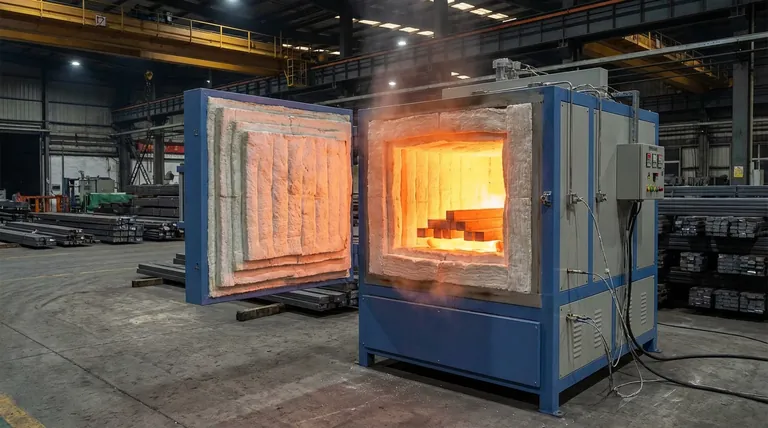
High-performance furnace lining insulation fundamentally acts as a thermal barrier that restricts the flow of heat from the furnace chamber to the outside environment. By minimizing this irreversible heat dissipation, the insulation ensures that a significantly larger portion of the fuel’s chemical energy is utilized to heat the steel billets rather than heating the surrounding air. This direct retention of thermal energy is the primary driver for improved energy utilization and overall exergy efficiency.
By effectively blocking heat escape, high-performance insulation converts what would be wasted energy into effective heat for the steel billets. This mechanism not only reduces fuel demand but maximizes the useful work (exergy) extracted from every unit of fuel consumed.
The Mechanics of Thermal Conservation
Creating a Robust Thermal Barrier
The primary function of high-performance lining is to separate the extreme internal temperatures of the furnace from the external environment.
This material acts as a resistor to heat flow. It ensures the thermal energy generated by combustion remains contained within the processing chamber.
Minimizing Irreversible Dissipation
Heat lost through furnace walls is referred to as "irreversible heat dissipation." Once this heat escapes to the surroundings, it is permanently lost and cannot be recovered for the process.
High-performance insulation drastically reduces the rate of this dissipation. This shifts the furnace's energy balance, preventing the wasteful bleed of expensive thermal energy.
Optimizing Energy Conversion
Increasing Effective Heat Transfer
The goal of any reheating furnace is to transfer energy from the fuel to the product (the steel billets).
When insulation is poor, a significant percentage of fuel energy is consumed simply maintaining the furnace temperature against losses.
With high-performance lining, that energy is redirected. It becomes "effective heat," directly increasing the temperature of the steel billets rather than compensating for losses.
Enhancing Exergy Efficiency
Efficiency is not just about the quantity of energy saved, but the quality of the energy used (exergy).
By maintaining higher internal temperatures with less fuel input, the system improves its exergy efficiency. This means the furnace is extracting the maximum possible utility from the chemical potential of the fuel.
Critical Considerations for Implementation
The Necessity of Barrier Integrity
The efficiency gains described are entirely dependent on the continuous integrity of the insulation material.
If the high-performance lining develops cracks, gaps, or thins over time, the "thermal barrier" is compromised. Even small breaches can lead to disproportionate heat dissipation, negating the expected efficiency gains.
Balancing Material Cost vs. Energy Savings
High-performance materials often come with a higher initial implementation cost compared to standard linings.
While the reduction in heat loss is significant, operators must calculate the return on investment based on fuel prices and furnace duty cycles. The material is only "efficient" if the fuel savings over its lifespan outweigh the procurement and installation costs.
Making the Right Choice for Your Goal
To maximize the benefits of furnace insulation, align your material choice with your specific operational targets:
- If your primary focus is Reducing Operational Costs: Prioritize insulation with the lowest thermal conductivity to minimize heat dissipation and directly lower fuel consumption rates.
- If your primary focus is Process Efficiency (Exergy): Focus on insulation durability and seal integrity to ensure maximum effective heat is delivered to the steel billets consistently over time.
Strategic application of high-performance insulation turns energy conservation into a competitive production advantage.
Summary Table:
| Feature | Impact on Efficiency | Benefit |
|---|---|---|
| Thermal Barrier | Restricts heat flow to the environment | Retains heat within the chamber |
| Dissipation Control | Minimizes irreversible energy loss | Reduces fuel consumption rates |
| Effective Heat | Redirects energy to the product/billet | Faster heating & higher throughput |
| Exergy Optimization | Maximizes utility of fuel potential | Improved quality of energy use |
| Integrity & Sealing | Prevents thermal leaks & bypass | Ensures long-term ROI and stability |
Optimize Your Thermal Performance with KINTEK
Don’t let valuable energy bleed through inferior insulation. At KINTEK, we specialize in high-temperature lab and industrial furnace solutions—including Muffle, Tube, Rotary, Vacuum, and CVD systems—all engineered with advanced thermal barriers for peak efficiency.
Backed by expert R&D and precision manufacturing, our customizable furnaces ensure you extract maximum exergy from every unit of fuel. Whether you need to reduce operational costs or improve process consistency, our team is ready to design a solution tailored to your unique specifications.
Ready to upgrade your efficiency? Contact KINTEK today for expert consultation and custom furnace solutions.
References
- Dijie Wang, Zeyi Jiang. Optimization of Exergy Efficiency in a Walking Beam Reheating Furnace Based on Numerical Simulation and Entropy Generation Analysis. DOI: 10.3390/pr12030451
This article is also based on technical information from Kintek Furnace Knowledge Base .
Related Products
- Silicon Carbide SiC Thermal Heating Elements for Electric Furnace
- Vacuum Heat Treat Furnace with Ceramic Fiber Liner
- Vacuum Heat Treat Sintering Furnace with Pressure for Vacuum Sintering
People Also Ask
- How do the different types of silicon carbide heating elements compare in terms of applications? Find the Best Fit for Your High-Temp Needs
- What are the temperature capabilities and mounting options for silicon carbide heating elements? Unlock High-Temp Flexibility and Durability
- How do silicon carbide heating elements enhance the heat treatment of alloys? Achieve Superior Temperature Control
- What is the recommended surface load for silicon carbide heating elements at different furnace temperatures? Maximize Lifespan & Performance
- What are the advantages of using silicon carbide heating elements in industrial furnaces? Boost Efficiency and Durability