
Precise preheating is the prerequisite for accurate material characterization and effective asphalt recycling. By using an industrial oven to achieve exact temperatures—specifically 175°C for aggregates and 165°C for Reclaimed Asphalt Pavement (RAP)—you ensure two critical outcomes: the complete removal of moisture and the necessary softening of aged asphalt binder to simulate real-world hot-mix processing.
Preheating is not merely about drying material; it is about creating the specific thermal environment required to mechanically and chemically activate aged binder components. Without this thermal precision, rejuvenators cannot effectively penetrate the material, compromising the integrity of the sample and the validity of any subsequent performance testing.
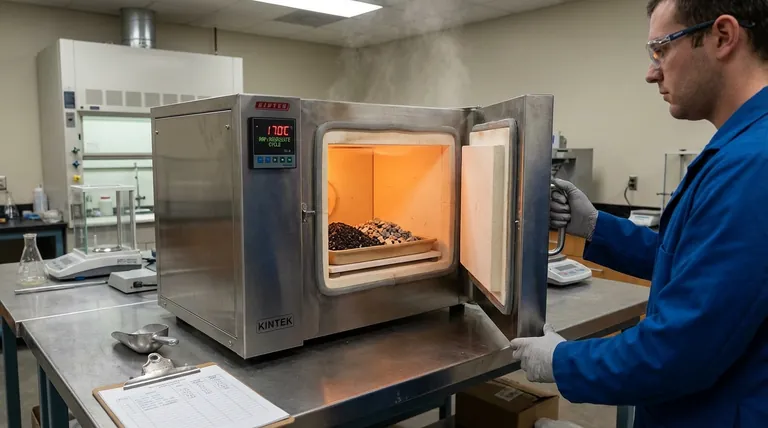
The Mechanics of Proper Sample Preparation
To understand why precision matters, you must look beyond the simple application of heat. The industrial oven acts as a simulation chamber for the harsh conditions found in asphalt production plants.
Eliminating Hidden Moisture
The first function of preheating is the removal of moisture from both virgin aggregates and RAP materials.
Moisture trapped within the aggregate structure can prevent the asphalt binder from adhering properly. By maintaining a controlled environment, you ensure that the material is completely dry before mixing begins.
Simulating Hot-Mix Processing
Laboratory results are only valuable if they predict field performance.
To achieve this, the sample preparation must replicate the thermal conditions of hot-mix processing. Precise temperature control allows the lab technician to mimic the specific heat profiles the material will encounter during large-scale manufacturing.
Softening the Aged Binder
RAP contains asphalt binder that has hardened and oxidized over time.
Before this material can be reused effectively, that hardened binder must be physically softened. Achieving the target temperature of 165°C for RAP is essential to transition the binder from a brittle solid to a workable state.
Optimizing Chemical Interactions
The most sophisticated aspect of preheating involves the chemistry of recycling. The goal is not just to melt the old asphalt, but to revitalize it.
Enabling Rejuvenator Contact
When introducing recycling agents or rejuvenators, the physical state of the old binder is the limiting factor.
If the RAP is not heated precisely to the target temperature, the binder remains too stiff. Proper preheating softens the aged asphalt enough to allow the rejuvenator to achieve full surface contact.
Ensuring Thorough Activation
Contact alone is not enough; the rejuvenator must integrate with the old asphalt.
The heat provided by the industrial oven facilitates the reaction between the additive and the aged binder. This thermal energy ensures the rejuvenator thoroughly activates the aged components, restoring flexibility and performance to the mix.
Understanding the Risks of Imprecision
While the primary reference highlights the necessity of precision, it is important to understand the consequences of failing to maintain these standards.
The Cost of Under-heating
If the oven fails to reach or maintain 165°C for RAP, the binder will not soften adequately.
This leads to "black rock" syndrome, where the RAP acts like aggregate rather than contributing binder to the mix. The rejuvenator will fail to penetrate, resulting in a dry, brittle pavement sample that underestimates the mix's potential.
The Danger of Inconsistent Temperatures
Industrial ovens are specified because standard ovens may fluctuate.
If temperatures drift too high, you risk further oxidizing the already aged binder, skewing your data. If they drift too low, moisture remains, causing stripping and adhesion failure in the final sample.
Making the Right Choice for Your Goal
Achieving a representative sample requires strictly adhering to temperature protocols based on your specific material objectives.
- If your primary focus is moisture elimination: Ensure your aggregates reach the higher threshold of 175°C to drive out pore water that disrupts adhesion.
- If your primary focus is RAP efficiency: Prioritize the 165°C setpoint to ensure the aged binder is soft enough to fully absorb and react with rejuvenators.
Consistency in your thermal conditioning process is the single most effective way to ensure your laboratory designs translate successfully to the roadway.
Summary Table:
| Material Type | Target Temperature | Primary Objective | Key Outcome |
|---|---|---|---|
| Virgin Aggregates | 175°C | Moisture Elimination | Prevents stripping; ensures binder adhesion |
| Reclaimed Asphalt (RAP) | 165°C | Binder Softening | Enables rejuvenator penetration & chemical activation |
| Mixed Samples | Variable | Production Simulation | Replicates real-world hot-mix processing conditions |
Optimize Your Material Testing with KINTEK
Precise thermal conditioning is the backbone of reliable asphalt recycling research. At KINTEK, we understand that even a minor temperature fluctuation can compromise your data. Backed by expert R&D and manufacturing, KINTEK offers high-performance industrial ovens and lab high-temp furnaces—including Muffle, Tube, Rotary, Vacuum, and CVD systems—all customizable to meet your unique asphalt and aggregate testing standards.
Ready to ensure the integrity of your samples? Contact us today to discover how our precision heating solutions can enhance your laboratory's efficiency and accuracy.
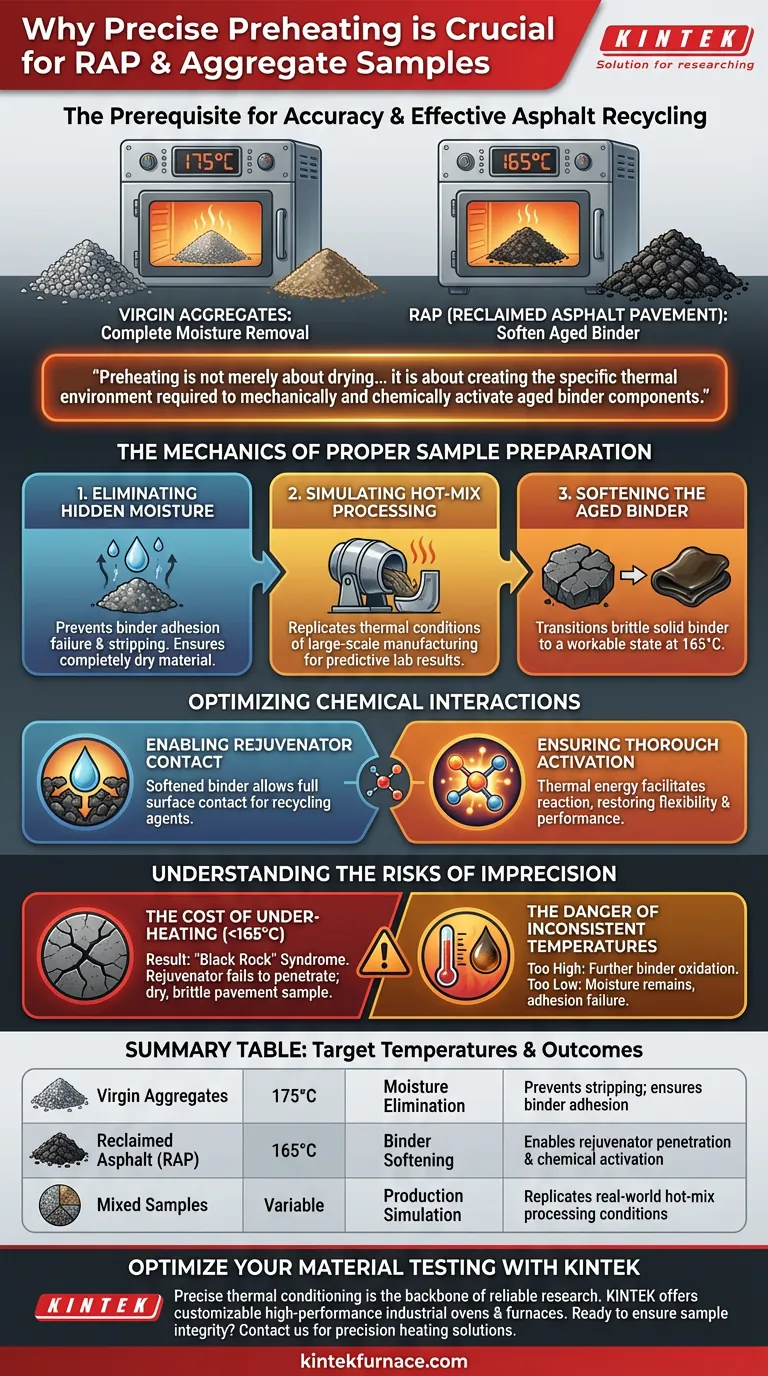
Visual Guide
References
- Peyman Sadeghi, Elham H. Fini. Carbon Sequestration via Bituminous Composites Containing Recycled High-Density Polyethylene. DOI: 10.3390/jcs8030100
This article is also based on technical information from Kintek Furnace Knowledge Base .
Related Products
- High Temperature Muffle Oven Furnace for Laboratory Debinding and Pre Sintering
- Vacuum Heat Treat Sintering and Brazing Furnace
- Electric Rotary Kiln Continuous Working Small Rotary Furnace Kiln for Pyrolysis Plant Heating
People Also Ask
- What thermal phenomena occur during polymer binder burnout in ceramic green bodies? Lab Furnace Guide
- Why is controlled heat treatment in a muffle furnace necessary for calcined clay? Achieve Optimal Pozzolanic Activity
- What role does a high-temperature muffle furnace play in STFO synthesis? Achieve Pure Perovskite Results
- How does a high-temperature muffle furnace facilitate the formation of LaNbxAl1−xO3+δ perovskite structures? Key Roles
- What role does a high-temperature muffle furnace play in the multi-stage synthesis of Li0.5MnFe1.5O4? Key to Pure Spinel


