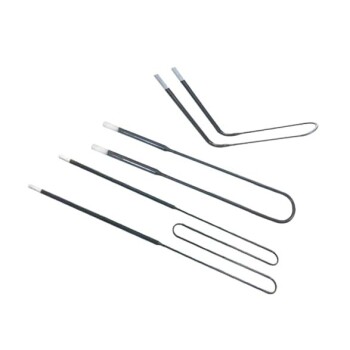
Molybdenum (Mo) is the premier choice for this application because it offers a distinct combination of extreme thermal resilience and chemical inertness. It withstands the intense heat required for electron beam evaporation without losing its structural integrity, while simultaneously ensuring the chemical composition of the NiO-doped Ga2O3 remains uncompromised.
Core Insight: The selection of Molybdenum is not just about heat tolerance; it is about maintaining a neutral environment where the crucible contains the source material without becoming part of the deposited film.
Thermal Resilience in High-Energy Environments
To successfully evaporate materials like Gallium Oxide (Ga2O3) and Nickel Oxide (NiO), the system must operate at significant temperatures.
Withstanding Extreme Melting Points
Molybdenum possesses an exceptionally high melting point of approximately 2623°C.
This property is non-negotiable for electron beam evaporation, a process that generates intense localized heat.
Because of this high threshold, the crucible remains solid and stable, avoiding the deformation that would occur with softer or lower-melting-point metals.
Structural Integrity Under Stress
During evaporation, the source material heats up rapidly, creating thermal stress.
Mo’s ability to maintain its shape ensures reliable, repeatable performance during the deposition cycle.
This prevents catastrophic failure of the containment vessel inside the vacuum chamber.
Preserving Material Purity
The secondary, yet equally critical, requirement for a crucible is that it must be chemically "invisible" to the process.
Preventing Cross-Contamination
At high temperatures, many metals become reactive and can leach atoms into the evaporation source.
Molybdenum exhibits low chemical reactivity specifically with Ga2O3 and NiO mixtures.
This inertness acts as a safeguard, preventing the crucible material from mixing with the source.
Ensuring Thin Film Quality
The ultimate goal of this process is to deposit a high-quality thin film.
By resisting chemical interaction, Mo ensures that the deposited layer consists solely of the intended NiO-doped Ga2O3.
This guarantees the high purity requisite for the film's electrical or optical performance.
Common Pitfalls in Crucible Selection
When selecting materials for high-temperature evaporation, failing to prioritize specific physical properties can lead to process failure.
The Risk of Thermal Deformation
Using a material with a lower melting point than Mo introduces the risk of the crucible warping or melting alongside the source material.
This not only ruins the specific run but can permanently damage the evaporation equipment.
The Danger of Source Leaching
If a crucible material is chemically active at high temperatures, it will react with oxides like Ga2O3.
This results in unintended doping, where crucible atoms contaminate the film, altering its fundamental properties and rendering the device defective.
Making the Right Choice for Your Goal
Selecting Molybdenum is a strategic decision to balance thermal durability with chemical passivity.
- If your primary focus is Equipment Longevity: Rely on Mo’s high melting point (2623°C) to prevent crucible deformation during repeated high-energy thermal cycles.
- If your primary focus is Film Purity: Leverage Mo’s low chemical reactivity to ensure the NiO-doped Ga2O3 layers remain free from metallic contamination.
By using Molybdenum, you effectively isolate the variables of heat and chemistry, ensuring a clean, stable, and reproducible deposition process.
Summary Table:
| Feature | Molybdenum (Mo) Performance | Benefit for Ga2O3 Deposition |
|---|---|---|
| Melting Point | ~2623°C | Prevents crucible deformation during E-beam heating |
| Chemical Reactivity | Low with Oxides | Prevents cross-contamination and ensures film purity |
| Structural Stability | High under thermal stress | Ensures repeatable performance and equipment safety |
| Inertness | High | Maintains the exact NiO-doping ratio without leaching |
Elevate Your Thin Film Precision with KINTEK
Don't let crucible contamination compromise your research. KINTEK provides high-purity Molybdenum crucibles and advanced evaporation systems engineered for the most demanding Ga2O3 applications. Backed by expert R&D and manufacturing, we offer customizable Muffle, Tube, Rotary, Vacuum, and CVD systems tailored to your unique lab requirements.
Ready to ensure the highest purity for your next deposition cycle?
Contact KINTEK Today for a Custom Solution
References
- Cheng‐Fu Yang, Shu‐Han Liao. Analyses of the Properties of the NiO-Doped Ga2O3 Wide-Bandgap Semiconductor Thin Films. DOI: 10.3390/coatings14121615
This article is also based on technical information from Kintek Furnace Knowledge Base .
Related Products
- Molybdenum Vacuum Heat Treat Furnace
- Vacuum Heat Treat Sintering Furnace Molybdenum Wire Vacuum Sintering Furnace
- Molybdenum Disilicide MoSi2 Thermal Heating Elements for Electric Furnace
People Also Ask
- How does vacuum heat treating work in terms of temperature and time control? Master Precise Material Transformations
- What is the primary application of vacuum heat treating furnaces in aerospace? Enhance Component Performance with Precision
- How does a vacuum heat treating furnace improve the condition of metal alloys? Achieve Superior Metal Performance
- What is the process of vacuum heat treating? Achieve Superior Metallurgical Properties
- Why are vacuum heat treating furnaces essential for aerospace? Ensure Superior Material Integrity for High-Stakes Applications