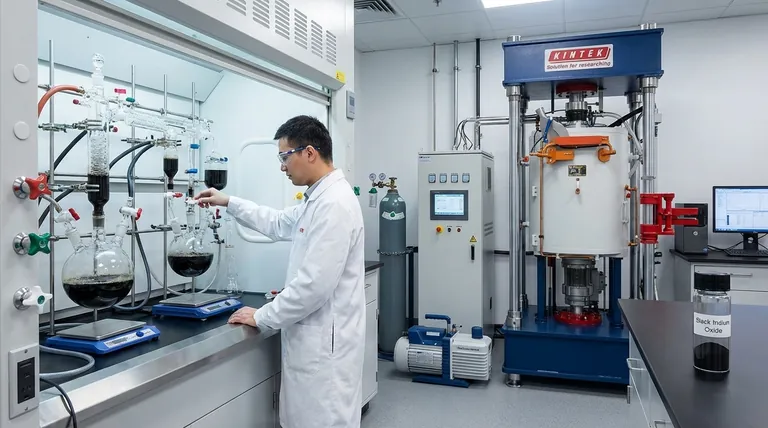
Degassing is the foundational control step that removes dissolved oxygen and volatile impurities from the reaction solvent and precursors. By utilizing a high-temperature vacuum system and a Schlenk line, you establish a strictly oxygen-free environment that is prerequisite for the specific chemical reduction required to synthesize black indium oxide.
The rigorous removal of oxygen is not merely about purity; it is the mechanism that allows precursors to enter a metallic intermediate state. This state is essential for creating the oxygen vacancies that define the structural and electronic properties of black indium oxide.
Establishing the Reaction Environment
Eliminating Competitive Oxidants
The primary function of the vacuum system and Schlenk line is to strip the solution of dissolved oxygen.
If oxygen remains in the solvent, it acts as an immediate oxidant. This prevents the controlled reduction necessary for the synthesis and leads to the formation of standard, fully oxidized indium oxide rather than the desired black variant.
Removing Volatile Impurities
Beyond oxygen, the high-temperature degassing process targets volatile impurities trapped within the precursors or solvent.
Removing these contaminants ensures that the reaction pathway is driven solely by the intended chemical reagents. This isolation is critical for maintaining reaction kinetics that favor the formation of defective crystal structures.
Enabling Nitrogen Protection
Once the solution is degassed, the Schlenk line allows for the introduction of a nitrogen atmosphere.
This inert blanket protects the solution from re-absorbing atmospheric oxygen. However, this protection is only effective if the initial dissolved oxygen has been completely evacuated first.
The Role of Metallic Intermediates
Facilitating Precursor Reduction
The oxygen-free environment allows for the reduction of precursors into metallic indium intermediates.
This conversion is the pivotal chemical transformation in the synthesis. Without the vacuum-enabled removal of oxygen, the precursors would simply oxidize rather than reduce to this metallic state.
Engineering Oxygen Vacancies
The formation of black indium oxide relies on the structure being rich in oxygen vacancies.
These vacancies are generated during the transition from the metallic indium intermediates to the final oxide structure. The degassing process ensures that this specific vacancy-rich architecture is preserved, giving the material its distinct black color and altered properties.
Understanding the Trade-offs
Process Complexity vs. Material Quality
Utilizing a Schlenk line and high-temperature vacuum system adds significant operational complexity and time to the synthesis.
It requires specialized glassware and strict adherence to safety protocols regarding pressure and temperature. However, attempting to bypass this step results in a complete failure to produce the "black" phase of the material, yielding only standard indium oxide.
Making the Right Choice for Your Goal
To determine how strictly you must adhere to this degassing protocol, consider the specific requirements of your end application.
- If your primary focus is synthesizing Black Indium Oxide: You must strictly enforce high-temperature vacuum degassing to ensure the formation of metallic intermediates and oxygen vacancies.
- If your primary focus is standard Indium Oxide ($In_2O_3$): You may bypass the rigorous Schlenk line degassing, as fully oxidized structures do not require oxygen-deficient environments.
Control the oxygen, and you control the vacancies that define the material's performance.
Summary Table:
| Process Component | Functional Role | Impact on Material Properties |
|---|---|---|
| Vacuum Degassing | Removes dissolved oxygen/volatiles | Prevents unwanted standard oxidation |
| Schlenk Line | Provides inert nitrogen blanket | Protects oxygen-deficient structures |
| High-Temp Control | Drives reaction kinetics | Enables metallic intermediate formation |
| Oxygen Vacancy Engineering | Creates defective crystal structures | Defines the black phase & electronic state |
Elevate Your Material Research with KINTEK
Achieve unmatched precision in your material synthesis with KINTEK’s advanced laboratory solutions. Backed by expert R&D and manufacturing, KINTEK offers Muffle, Tube, Rotary, Vacuum, and CVD systems—all customizable to meet the rigorous degassing and atmosphere control requirements of black indium oxide production. Our high-temp furnaces are engineered to help you master oxygen vacancy control and ensure superior material performance.
Ready to optimize your lab's capabilities? Contact us today to explore our customizable solutions!
References
- Cameron M. Armstrong, Emil A. Hernández-Pagán. Unraveling the molecular and growth mechanism of colloidal black In<sub>2</sub>O<sub>3−<i>x</i></sub>. DOI: 10.1039/d3nr05035a
This article is also based on technical information from Kintek Furnace Knowledge Base .
Related Products
- Vacuum Induction Melting Furnace
- Vacuum Heat Treat Sintering Furnace with Pressure for Vacuum Sintering
- Vacuum Heat Treat Sintering and Brazing Furnace
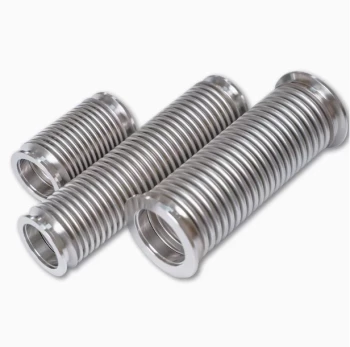
- High Performance Vacuum Bellows for Efficient Connection and Stable Vacuum in Systems
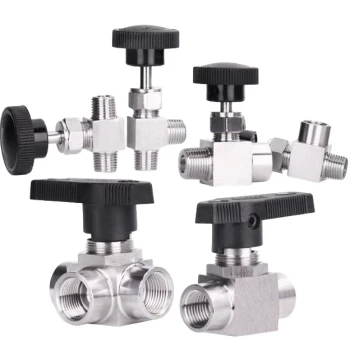
- 304 316 Stainless Steel High Vacuum Ball Stop Valve for Vacuum Systems
People Also Ask
- What are the core functions of the High Vacuum Induction Melting (VIM) furnace? Optimize DD5 Superalloy Purification
- Why is a Vacuum Induction Melting furnace (VIM) used for Cu-Zn-Al-Sn alloys? Achieve Precision Composition Control
- What are the advantages of using a VIM furnace to control residual oxygen pressure? Achieve Superior Metal Uniformity
- What role does a Vacuum Induction Melting furnace play in the production of high-aluminum nickel-based superalloys?
- What is the role of VIM and directional solidification in aero-engine blade substrates? Engineering Extreme Durability