A vacuum-sealed quartz tube is strictly required for the synthesis of LaMg₆Ga₆S₁₆ to create a completely isolated, negative-pressure environment. This specific setup is necessary to prevent the escape of volatile elemental sulfur at high temperatures and to rigidly exclude oxygen and moisture, which protects the chemically active low-valence lanthanum from oxidizing.
The synthesis of low-valence lanthanide sulfides relies on absolute atmospheric control. The vacuum seal performs two critical functions simultaneously: it traps volatile reactants to maintain the correct chemical formula and bars atmospheric contaminants that would otherwise destroy the fragile electronic state of the metal ions.

Preserving Chemical Precision
Controlling Volatility and Stoichiometry
Synthesis of LaMg₆Ga₆S₁₆ typically requires high temperatures where elemental sulfur becomes highly volatile. Without a sealed environment, sulfur would vaporize and escape the reaction zone.
A vacuum-sealed tube traps these vapors. This ensures that the precise amount of sulfur remains available to react, maintaining the exact stoichiometric ratio required for the final compound.
Protecting the Low-Valence State
Lanthanum is chemically active and typically prefers a trivalent (+3) state. Synthesizing it as a divalent (+2) ion in LaMg₆Ga₆S₁₆ is chemically challenging.
Oxygen and moisture are the enemies here. Even trace amounts of atmospheric oxygen will cause the divalent lanthanum to oxidize, forming unwanted oxide impurities rather than the desired sulfide.
The Role of Negative Pressure
The specific requirement of a vacuum at 10⁻³ Torr is not arbitrary. This level of negative pressure ensures the removal of virtually all reactive air pockets before the tube is sealed.
This creates a "clean slate" environment where the chemistry is dictated solely by the loaded reagents, not by environmental contaminants.
Understanding the Trade-offs
The Risk of Over-Pressurization
While sealing the tube prevents sulfur loss, it also creates a closed pressure vessel. As the volatile components heat up, internal pressure rises significantly.
There is a tangible risk of rupture. If the ratio of reactants to tube volume is not calculated correctly, the internal pressure of the sulfur vapor can shatter the quartz, ruining the experiment and posing a safety hazard.
Quartz Reactivity Limitations
Quartz is chosen for its high melting point and general inertness, but it is not universally unreactive.
It serves as a passive container, not a reactor. However, at extremely high temperatures or with specific aggressive reactants, the quartz wall itself can sometimes participate in the reaction, leading to silicate impurities.
Ensuring Synthesis Success
The use of a vacuum-sealed quartz tube is a balancing act between containment and safety.
- If your primary focus is phase purity: Ensure your vacuum system reliably reaches 10⁻³ Torr to completely eliminate the risk of lanthanum oxidation and oxide formation.
- If your primary focus is precise stoichiometry: Calculate the volume of your tube carefully against the mass of sulfur to prevent leakage or explosion while ensuring no reactant is lost.
Mastering the sealed-tube technique is the only way to stabilize these sensitive, low-valence materials effectively.
Summary Table:
| Feature | Function in LaMg6Ga6S16 Synthesis | Key Benefit |
|---|---|---|
| Vacuum Seal (10⁻³ Torr) | Removes reactive air pockets | Prevents oxidation of low-valence Lanthanum |
| Quartz Tube Material | High thermal resistance & inertness | Maintains structural integrity at high temperatures |
| Negative Pressure | Creates isolated reaction environment | Eliminates environmental contaminants |
| Sealed Containment | Traps volatile elemental sulfur | Ensures precise stoichiometry and chemical formula |
Elevate Your Material Synthesis with KINTEK
Precision in low-valence lanthanide sulfide synthesis starts with the right equipment. Backed by expert R&D and manufacturing, KINTEK offers a comprehensive range of high-performance Muffle, Tube, Rotary, Vacuum, and CVD systems. Whether you are performing delicate vacuum-sealed quartz tube reactions or high-throughput material processing, our lab high-temp furnaces are fully customizable to meet your unique research needs.
Don't compromise on phase purity or stoichiometry. Contact us today to discover how KINTEK’s advanced thermal solutions can optimize your synthesis process and protect your sensitive chemical reactions.
References
- Yu-Jie Zhang, Hongwei Yu. LaMg6Ga6S16: a chemical stable divalent lanthanide chalcogenide. DOI: 10.1038/s41467-024-47209-4
This article is also based on technical information from Kintek Furnace Knowledge Base .
Related Products
- High Pressure Laboratory Vacuum Tube Furnace
- Vacuum Sealed Continuous Working Rotary Tube Furnace Rotating Tube Furnace
- Vertical Laboratory Quartz Tube Furnace Tubular Furnace
- Laboratory Quartz Tube Furnace RTP Heating Tubular Furnace
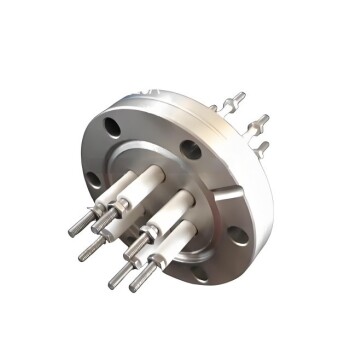
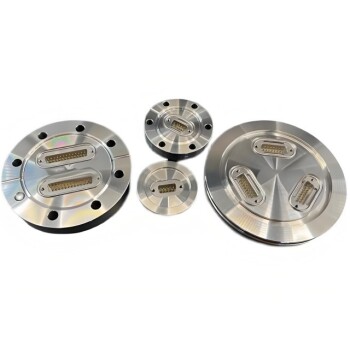
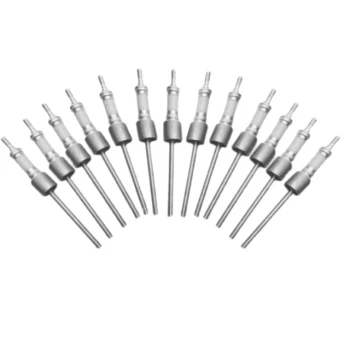
- CF KF Flange Vacuum Electrode Feedthrough Lead Sealing Assembly for Vacuum Systems
People Also Ask
- What role does a high vacuum tube furnace play in Co-Al sintering? Master High-Purity Porous Material Synthesis
- What are the different types of tube furnaces available? Find the Perfect Fit for Your Lab's Needs
- What is the role of a vacuum tube furnace during the final thermal treatment stage of Fe3O4@CSAC catalysts?
- What are the main advantages of vacuum tube furnaces in the market? Achieve Purity and Precision in Material Processing
- Why is control of heating rate and gas flow in a lab tube furnace critical for EM wave absorption materials?