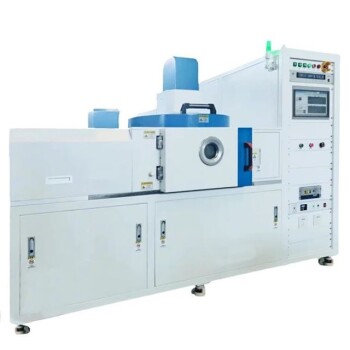
A fixed-bed reactor system equipped with a high-precision temperature controller is non-negotiable for maintaining the strict thermal environment required during slow pyrolysis. By maintaining accuracy within a tight margin of +/- 3 °C, the system ensures the stable evolution of specific chemical functional groups during the devolatilization phase. This precise regulation is the primary driver for determining the pore structure and aromaticity of the final biochar product.
Biochar quality is defined by the stability of chemical reactions that occur during heating. Precise temperature compensation prevents thermal fluctuations that would otherwise disrupt the formation of critical functional groups, ensuring consistent porosity and surface chemistry.
The Critical Role of Temperature Stability
Controlling Chemical Evolution
During slow pyrolysis at temperatures around 600 °C, biomass undergoes complex chemical transformations. A fixed-bed reactor acts as a stabilizer, strictly regulating the heat input to drive the devolatilization process.
Without a high-precision controller, temperature spikes can alter the reaction pathways. This prevents the consistent formation of essential chemical functional groups, specifically C=C, C-O, and C-N groups.
Defining Microstructural Characteristics
The specific arrangement of these functional groups is what determines the biochar's physical properties. The controller's ability to maintain a linear and stable temperature directly dictates the aromaticity (stability of the carbon structure) and the pore structure.
If the temperature deviates beyond the +/- 3 °C range, the development of these microstructures becomes unpredictable, potentially rendering the biochar unsuitable for high-value applications like adsorption or soil amendment.
Impact on Pre-Treatment and Material consistency
Preserving Lignocellulosic Structure
Precision control is not only vital during pyrolysis but also during the pre-treatment drying phase. Controlled dehydration ensures moisture is removed without chemically altering the lignocellulosic structure of the raw material.
Preventing Agglomeration
Accurate thermal management prevents the material from retaining pockets of humidity. High humidity during processing can cause raw materials, such as plum stones, to agglomerate (clump) during grinding.
By preventing this, the system allows for the production of a uniform powder with a particle size of less than 0.1 mm. This uniform foundation is essential for consistent thermochemical conversion later in the process.
Understanding the Trade-offs
Batch Constraints vs. Quality
While fixed-bed reactors offer superior control over the thermal degradation process, they typically operate in batch modes. This allows for high-quality "dry carbonization" and precise residence times but generally offers lower throughput compared to continuous flow systems.
Heating Rate Sensitivity
The ability to program linear heating rates (e.g., 5°C per minute) is powerful for research and optimization. However, this requires high-power heating elements and sophisticated double-tube furnace designs. The complexity of the equipment increases significantly to achieve this level of linear control, which may impact initial capital costs.
Making the Right Choice for Your Goal
To determine if this level of precision is required for your specific application, consider your end goals:
- If your primary focus is Surface Chemistry Optimization: You must prioritize the +/- 3 °C accuracy to ensure the correct evolution of C=C and C-O functional groups for specific reactivity profiles.
- If your primary focus is Material Homogeneity: You should leverage the temperature control to ensure uniform drying and particle sizes <0.1 mm to prevent agglomeration during processing.
- If your primary focus is Yield Investigation: You need the programmable heating rates (e.g., 5°C/min) to isolate how specific temperatures (500°C vs. 600°C) impact carbon content and yield.
Ultimately, high-precision temperature control transforms biochar production from a rough combustion process into a tunable chemical engineering operation.
Summary Table:
| Feature | Specification/Requirement | Impact on Biochar Quality |
|---|---|---|
| Temperature Precision | +/- 3 °C | Ensures stable formation of C=C, C-O, and C-N groups |
| Heating Rate Control | Linear (e.g., 5°C/min) | Determines aromaticity and microstructural pore development |
| Thermal Stability | Constant 500°C - 600°C | Prevents unpredictable chemical reaction pathways |
| Particle Size | < 0.1 mm | Ensures uniform thermochemical conversion and prevents clumping |
| Pre-treatment | Controlled Dehydration | Preserves lignocellulosic structure for high-value applications |
Elevate Your Biochar Precision with KINTEK
Transform your biochar production from a rough combustion process into a tunable chemical engineering operation. Backed by expert R&D and manufacturing, KINTEK offers high-performance Muffle, Tube, Rotary, Vacuum, and CVD systems, all customizable to meet your unique research or production needs.
Our systems deliver the +/- 3°C precision and linear heating rates required to optimize aromaticity and surface chemistry for your target materials. Don't leave your chemical evolution to chance.
Contact KINTEK today to discuss your custom furnace solution!
References
- Despina Vamvuka, Petros Tsilivakos. Energy Recovery from Municipal Solid Waste through Co-Gasification Using Steam or Carbon Dioxide with Olive By-Products. DOI: 10.3390/en17020304
This article is also based on technical information from Kintek Furnace Knowledge Base .
Related Products
- Custom Made Versatile CVD Tube Furnace Chemical Vapor Deposition CVD Equipment Machine
- MPCVD Machine System Reactor Bell-jar Resonator for Lab and Diamond Growth
- Slide PECVD Tube Furnace with Liquid Gasifier PECVD Machine
- 915MHz MPCVD Diamond Machine Microwave Plasma Chemical Vapor Deposition System Reactor
- Cylindrical Resonator MPCVD Machine System for Lab Diamond Growth
People Also Ask
- What is a CVD tube furnace and what is its primary function? Discover Precision Thin-Film Deposition
- Why are CVD tube furnace sintering systems indispensable for 2D material research and production? Unlock Atomic-Scale Precision
- Which industries and research fields benefit from CVD tube furnace sintering systems for 2D materials? Unlock Next-Gen Tech Innovations
- How does CVD tube furnace sintering enhance graphene growth? Achieve Superior Crystallinity and High Electron Mobility
- What future trends are expected in the development of CVD tube furnaces? Discover Smarter, More Versatile Systems