The unique value of a gradient electric furnace lies in its ability to map an entire spectrum of thermal reactions onto a single glass specimen. Instead of performing dozens of individual heat treatments at fixed temperatures, researchers can observe the full range of glass crystallization, transparency shifts, and phase transitions in one continuous sample.
A gradient electric furnace replaces the traditional "trial-and-error" method of multiple furnace runs with a single, spatially distributed experiment. This provides an immediate, visual, and data-dense map of how a material reacts to temperatures across a broad range, such as 550 °C to 900 °C.
The Mechanics of Spatial Temperature Mapping
Continuous Thermal Fields
A gradient furnace generates a continuous temperature field along the length of the heating chamber. This allows a single long glass sample to experience a different, precisely controlled temperature at every point along its surface.
Visualizing Phase Transitions
Because the temperature changes gradually across the sample, researchers can see the exact point where crystallization begins. This makes it easy to observe changes in transparency and structure as the glass transitions into a ceramic or glass-ceramic state.
Identifying the Crystallization Window
By examining the specimen after a single run, the optimal temperature window for heat treatment becomes immediately apparent. This is particularly valuable for complex materials like gahnite glass-ceramics, where the margin for error in thermal scheduling is narrow.
Efficiency and Resource Optimization
Consolidating Experimental Cycles
Traditional methods require a new experimental cycle for every temperature point being tested. The gradient furnace provides a series of temperature zones in a single cycle, which drastically reduces the total number of furnace runs required.
Rapid Parameter Identification
This method allows for the simultaneous observation of sintering, softening, and melting states. Researchers can quickly identify the necessary heat treatment parameters for production without the energy overhead of repeated heating and cooling cycles.
Accelerated Material Development
By streamlining the discovery of thermal properties, the gradient furnace shortens the development lifecycle for new materials. What used to take weeks of incremental testing can now be accomplished in a fraction of the time.
Understanding the Trade-offs
Sample Geometry Limitations
The most significant limitation is that the specimen must be long and uniform to capture the gradient accurately. This makes the method less suitable for finished parts or irregularly shaped components that require uniform bulk heating.
Precision vs. Uniformity
While gradient furnaces are unmatched for discovery and mapping, they are not intended for bulk manufacturing. A traditional furnace is still required for homogeneous heat treatment, where every part of the material must reach the exact same temperature simultaneously.
Spatial Resolution Constraints
The accuracy of the data depends on the researcher's ability to map the physical position on the sample back to the thermocouple readings in the furnace. Errors in measurement along the length of the sample can lead to slight inaccuracies in the identified transition temperatures.
Choosing the Right Tool for Thermal Analysis
Selecting the appropriate furnace depends on whether you are currently defining your process or executing it.
- If your primary focus is optimization and discovery: Use a gradient furnace to rapidly identify the crystallization window and phase transition temperatures in a single run.
- If your primary focus is consistent bulk production: Use a traditional furnace to ensure the entire material volume undergoes an identical thermal history.
The gradient electric furnace is a specialized instrument that transforms thermal analysis from a series of snapshots into a complete, continuous narrative of material behavior.
Summary Table:
| Feature | Gradient Electric Furnace | Traditional Heat Treatment |
|---|---|---|
| Process Method | Continuous Thermal Mapping | Discrete "Trial-and-Error" Runs |
| Sample Efficiency | Single specimen for full range | Multiple specimens/runs required |
| Data Output | Complete visual/data spectrum | Individual temperature snapshots |
| Development Speed | Highly accelerated (single cycle) | Slow (multiple incremental runs) |
| Best For | Material Discovery & Optimization | Bulk Production & Homogeneity |
Accelerate Your Material Research with KINTEK
Don't let traditional trial-and-error slow down your innovation. KINTEK specializes in laboratory equipment and consumables, offering a comprehensive range of high-temperature furnaces—including muffle, tube, rotary, vacuum, CVD, atmosphere, dental, and induction melting—all fully customizable for your unique research needs.
Whether you are mapping narrow crystallization windows or scaling up consistent production, our precision thermal solutions ensure unparalleled accuracy and efficiency. Contact us today to find the perfect furnace for your laboratory!
References
- G. Yu. Shakhgil’dyan, В. Н. Сигаев. One-Step Crystallization of Gahnite Glass-Ceramics in a Wide Thermal Gradient. DOI: 10.3390/chemengineering7020037
This article is also based on technical information from Kintek Furnace Knowledge Base .
Related Products
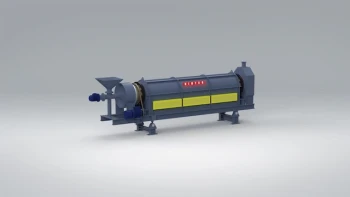
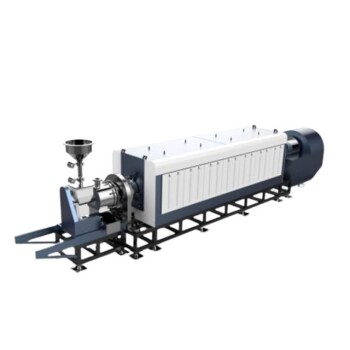
- Electric Rotary Kiln Small Rotary Furnace for Activated Carbon Regeneration
- Electric Rotary Kiln Continuous Working Small Rotary Furnace Kiln for Pyrolysis Plant Heating
- Electric Rotary Kiln Pyrolysis Furnace Plant Machine Small Rotary Kiln Calciner
- Electric Rotary Kiln Small Rotary Furnace Biomass Pyrolysis Plant Rotating Furnace
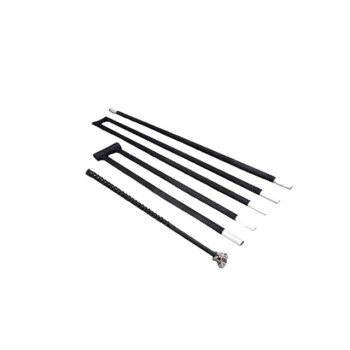
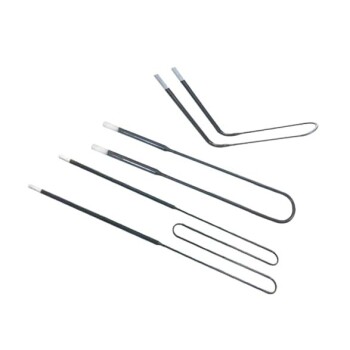
- Silicon Carbide SiC Thermal Heating Elements for Electric Furnace
People Also Ask
- What are the main applications of a rotary kiln electric furnace? Achieve Uniform Heat Treatment for Powders
- What are the key components of a rotary kiln electric furnace? Unlock Efficient Thermal Processing
- What is the significance of the refractory lining in a rotary kiln electric furnace? Unlock Efficiency and Longevity
- What advantages do electric rotary kilns offer over fuel-based kilns? Boost Efficiency and Purity in Your Process
- What materials can be processed in an electric rotary kiln? Versatile Solutions for Advanced Materials