
High-temperature vacuum drying systems are the critical engine behind sustainable industrial dehydration. These systems enable the regeneration of saturated dehydration materials, specifically 3A molecular sieves, by utilizing intense heat (typically 300°C) combined with vacuum pressure to strip away adsorbed water. This process is vital for tetraalkoxysilane production as it transforms single-use desiccants into reusable assets.
In industrial tetraalkoxysilane production, the ability to regenerate molecular sieves is essential for economic viability. By allowing dehydrating agents to be reused for more than six cycles, these systems significantly lower operating costs and reduce solid waste generation.
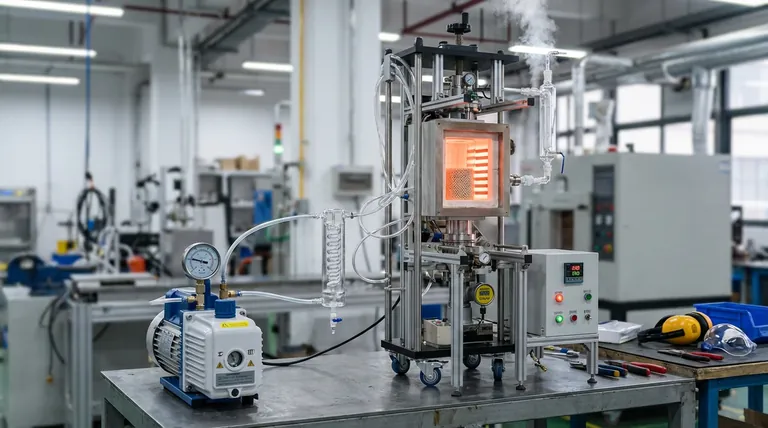
The Mechanics of Effective Regeneration
Reversing Saturation
Dehydration materials, such as 3A molecular sieves, eventually reach a saturation point where they can no longer capture moisture.
To restore their function, high-temperature vacuum drying systems apply thermal energy to forcibly release the water molecules trapped deep within the porous structure of the sieve.
The Role of Precision Heat and Vacuum
This is not a passive drying process; it requires aggressive conditions to be effective.
By maintaining a specific temperature of 300°C under vacuum, the system ensures the thorough removal of adsorbed water without destroying the sieve's structure.
Economic and Operational Impact
Extending Material Lifespan
Without a regeneration system, dehydration agents would be treated as costly, disposable consumables.
This technology allows the same batch of materials to be reused for multiple cycles, often exceeding six rounds of effective dehydration.
Lowering Operating Costs
The primary significance of this system lies in the drastic reduction of operating expenses.
By recycling existing materials rather than constantly purchasing fresh stock, manufacturers can maintain high-volume tetraalkoxysilane production more affordably.
Minimizing Industrial Waste
Beyond cost, there is a substantial environmental benefit.
Regeneration minimizes solid waste, reducing the logistical burden and environmental footprint associated with disposing of spent chemical agents.
Understanding the Trade-offs
Energy vs. Material Costs
While you save on materials, regeneration is an energy-intensive process.
Operators must account for the power required to sustain high temperatures and vacuum pressure, ensuring it does not outweigh the savings from material reuse.
Cycle Limitations
Regeneration extends life, but it does not make materials immortal.
After many cycles (typically beyond six), the physical integrity or adsorption capacity of the molecular sieves may degrade, eventually requiring replacement.
Optimizing Production Efficiency
To maximize the value of high-temperature vacuum drying systems in your facility, consider the following strategies:
- If your primary focus is cost reduction: Maximize the number of regeneration cycles up to the point of diminishing returns to fully amortize the material cost.
- If your primary focus is quality assurance: Implement strict testing protocols after the sixth cycle to ensure the regenerated sieves still meet the moisture removal standards required for tetraalkoxysilane.
Effective regeneration balances energy input with material savings to create a leaner, more sustainable production line.
Summary Table:
| Key Feature | Specification/Benefit |
|---|---|
| Regeneration Temp | Typically 300°C |
| Material Compatibility | 3A Molecular Sieves |
| Cycle Longevity | 6+ Reusable Cycles |
| Economic Impact | Drastic Reduction in OPEX |
| Environmental Impact | Minimal Solid Waste Generation |
| Core Mechanism | Thermal Energy + Vacuum Desorption |
Maximize Your Production Efficiency with KINTEK
Are you looking to slash operating costs and enhance sustainability in your chemical processing? Backed by expert R&D and manufacturing, KINTEK offers high-performance Vacuum, Tube, and Customizable Lab High-Temp Furnaces designed specifically for aggressive regeneration and dehydration tasks.
Our systems provide the precision heat and vacuum pressure necessary to extend the lifespan of your molecular sieves, ensuring your tetraalkoxysilane production remains both lean and green. Don't let high material costs hold your facility back—contact our specialists today to find the perfect thermal solution for your unique industrial needs!
Visual Guide

References
- The Potential Perspective of Processing Rice Husk as SiO<sub>2</sub> Source to Tetraalkoxysilane in Indonesia. DOI: 10.22146/ijc.92862
This article is also based on technical information from Kintek Furnace Knowledge Base .
Related Products
- 2200 ℃ Tungsten Vacuum Heat Treat and Sintering Furnace
- 2200 ℃ Graphite Vacuum Heat Treat Furnace
- Molybdenum Vacuum Heat Treat Furnace
- Vacuum Heat Treat Sintering Furnace Molybdenum Wire Vacuum Sintering Furnace
- High Pressure Laboratory Vacuum Tube Furnace
People Also Ask
- How does a tungsten-heated vacuum sintering furnace prepare (TbxY1-x)2O3 ceramics? Achieve 99%+ Density & Purity
- What wear-resistance enhancements are achieved by powder coating? The Role of Vacuum Sintering Furnaces
- How do compaction pressure and vacuum sintering optimize porous ceramics? Maximize Density & Toughness
- What role does a high-temperature vacuum sintering furnace play in the densification of WC-10(Ni, Ni/Co) alloys?
- How does high-temp vacuum sintering influence Y-TZP mechanical properties? Achieve Max Toughness

















