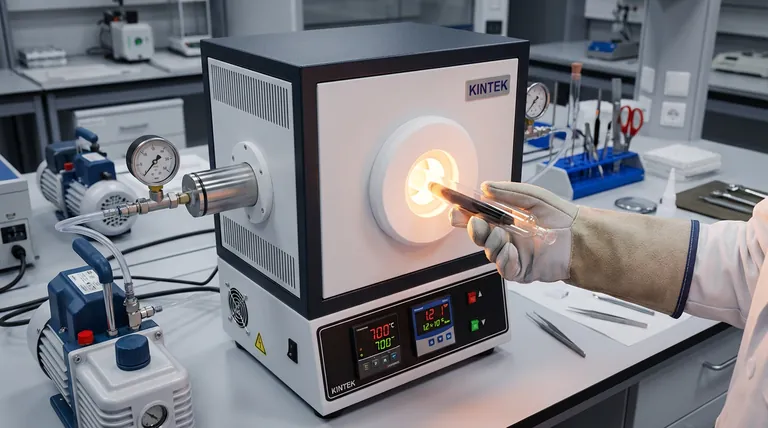
Quartz vacuum sealing is the definitive method for preserving the chemical integrity of BiCuSeO during high-temperature processing. This pretreatment step involves encapsulating BiCuSeO "green bodies" in quartz tubes under a high vacuum (approximately 10^-5 mbar) to create a controlled, isolated environment. This barrier is strictly necessary to prevent the material from interacting with the external atmosphere during sintering.
The core purpose of this technique is to lock in the material's stoichiometry. Without the protective vacuum environment, the high volatility and reactivity of Selenium would cause the material to degrade, resulting in impure phases and poor thermoelectric performance.
The Principles of Vacuum Protection
Preventing Selenium Volatilization
The element Selenium (Se) is inherently volatile, meaning it transitions to a gas phase easily when heated.
During the high temperatures required for sintering, unsealed Selenium would rapidly escape from the BiCuSeO matrix.
Quartz vacuum sealing creates a closed system that physically contains the Selenium vapors, forcing them to remain within the reaction zone and ensuring the final product retains the correct chemical ratio (stoichiometry).
Inhibiting Oxidation
Selenium is highly susceptible to oxidation at elevated temperatures.
If the sintering process occurred in air or a low-quality vacuum, oxygen would react with the Selenium to form unwanted oxide phases.
By evacuating the tube to a high vacuum (10^-5 mbar), you effectively remove the oxygen source, ensuring that the final material is composed of pure BiCuSeO rather than a mixture of the desired alloy and harmful oxides.
Avoiding Component Segregation
When a material loses specific elements (like Se) or reacts with oxygen, the remaining components often separate or "segregate."
This segregation disrupts the uniform crystal structure required for effective thermoelectric energy conversion.
The vacuum seal acts as a stabilizer, maintaining a homogeneous mixture of Bismuth, Copper, and Selenium throughout the thermal process.
Critical Process Constraints
The Necessity of High Vacuum
Merely sealing the tube is insufficient; the quality of the vacuum inside is paramount.
The primary requirement is a vacuum level of approximately 10^-5 mbar.
If the vacuum pressure is too high (meaning too much air remains), the residual oxygen will still cause partial oxidation, compromising the phase purity of the sample.
The Consequence of Seal Failure
The integrity of the quartz seal is a binary success factor—it either works or it fails.
A compromised seal allows for the immediate ingress of air and the egress of volatile components.
This results in a snowball effect where the material suffers from both oxidation and volatilization simultaneously, rendering the sample scientifically useless for thermoelectric applications.
Making the Right Choice for Your Goal
To ensure high-performance BiCuSeO samples, prioritize the following based on your specific objectives:
- If your primary focus is Phase Purity: Verify that your vacuum system can consistently achieve and maintain a pressure of 10^-5 mbar or better to eliminate oxidation risks.
- If your primary focus is Stoichiometric Accuracy: Ensure the quartz tube acts as a strictly enclosed environment to prevent the physical loss of volatile Selenium vapors.
Ultimately, quartz vacuum sealing is not an optional step but a fundamental prerequisite for stabilizing the volatile chemistry of BiCuSeO thermoelectrics.
Summary Table:
| Key Factor | Benefit of Vacuum Sealing | Consequence of Seal Failure |
|---|---|---|
| Selenium Levels | Physically contains volatile Se vapors | Rapid Se loss and stoichiometry shift |
| Oxidation | Removes oxygen to prevent oxide phases | Formation of unwanted harmful oxides |
| Phase Purity | Maintains homogeneous crystal structure | Component segregation and impure phases |
| Vacuum Quality | 10^-5 mbar ensures total protection | Residual oxygen causes partial oxidation |
Maximize Your Thermoelectric Research with KINTEK Precision
Ensure the integrity of your volatile materials with high-performance heating solutions. KINTEK provides industry-leading Tube Furnaces, Vacuum Systems, and CVD units specifically engineered to handle the rigorous demands of material sintering and quartz sealing processes.
Backed by expert R&D and world-class manufacturing, our systems are fully customizable to meet the strict vacuum requirements (up to 10^-5 mbar) needed for BiCuSeO and other sensitive alloys.
Ready to achieve superior phase purity in your lab? Contact KINTEK today to discuss your custom furnace needs
References
- N. P. Madhukar, Saikat Chattopadhyay. Role of sintering temperature in modulating the charge transport of BiCuSeO thermoelectric system: correlations to the microstructure. DOI: 10.1007/s00339-023-07218-4
This article is also based on technical information from Kintek Furnace Knowledge Base .
Related Products
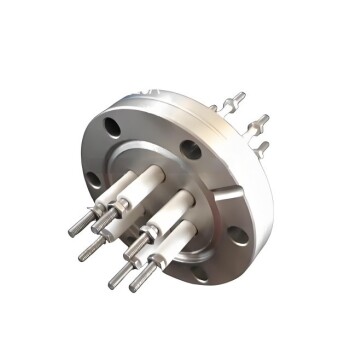
- CF KF Flange Vacuum Electrode Feedthrough Lead Sealing Assembly for Vacuum Systems
- Vacuum Sealed Continuous Working Rotary Tube Furnace Rotating Tube Furnace
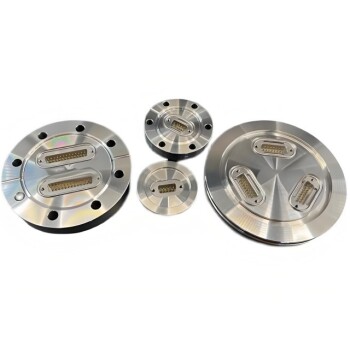
- Ultra-High Vacuum Flange Aviation Plug Glass Sintered Airtight Circular Connector for KF ISO CF
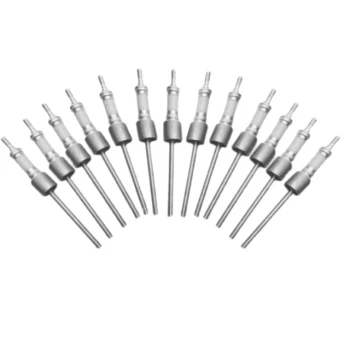
- Ultra Vacuum Electrode Feedthrough Connector Flange Power Lead for High Precision Applications
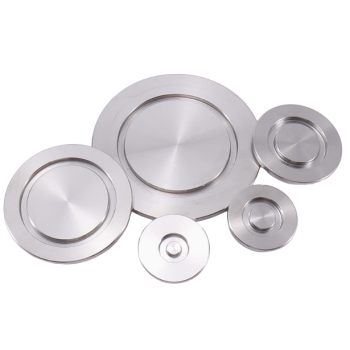
- Stainless Steel KF ISO Vacuum Flange Blind Plate for High Vacuum Systems
People Also Ask
- Why is a vacuum sealing process necessary for the synthesis of TaAs2 single crystals? Ensuring Purity in CVT Method
- Why is a PTFE-lined stainless steel autoclave used for Ni12P5 synthesis? Key Benefits for Nanomaterial Production
- What is the function of PTFE sealing rings in plastic pyrolysis? Ensure Safe, Anaerobic Material Decomposition
- What is the function of a Teflon-lined stainless steel autoclave in the hydrothermal synthesis of Bi2O3 precursors?
- Why is a stainless steel autoclave with a Teflon liner necessary for BiVO4? Ensure Purity & High Performance