
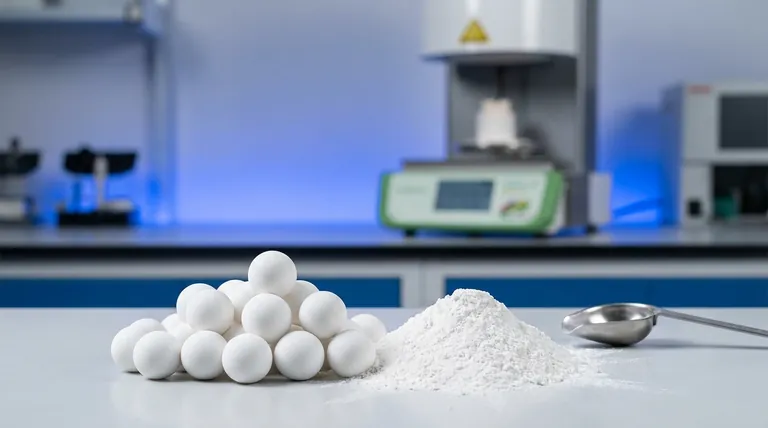
High-purity zirconia grinding balls are the superior choice for the deep grinding of ceramic raw materials primarily because they eliminate the risk of product contamination. Their exceptional hardness and chemical inertness ensure that, unlike steel, they do not introduce metal ions into the mixture, preserving the strict purity standards required for high-performance ceramics.
Ideally, grinding media should reduce particle size without altering the chemical composition of the product. Zirconia provides the critical combination of high wear resistance and chemical stability, preventing the material degradation that is common when using traditional steel media.
Preserving Material Purity
The primary driver for choosing zirconia over steel is the chemical integrity of the final product.
Eliminating Metal Ion Contamination
Traditional steel balls release metal ions as they degrade during the grinding process.
In high-performance ceramics, these metal ions act as impurities that can ruin the material's electrical or thermal properties. High-purity zirconia is chemically inert, preventing this cross-contamination entirely.
Meeting High-Performance Standards
Ceramic raw materials often require exacting standards of purity.
Because zirconia does not react with the powders being ground, it ensures the final output meets the rigorous specifications necessary for advanced technical applications.
Physical Durability and Efficiency
Beyond chemistry, the physical properties of zirconia offer significant advantages in process efficiency.
Superior Hardness and Stability
Deep grinding is a high-intensity process that puts immense stress on the grinding media.
Zirconia balls possess exceptional physical stability and high hardness. This allows them to withstand aggressive milling environments where softer materials would fail or deform.
Extremely Low Loss Rates
Due to their superior wear resistance, zirconia balls maintain their size and shape for longer periods.
They exhibit extremely low loss rates compared to steel. This durability ensures consistent grinding efficiency and reduces the frequency of media replacement.
Understanding the Trade-offs
While steel balls are common in general milling, they present specific liabilities in this context.
The Liability of Steel
The trade-off when using steel is an almost guaranteed introduction of impurities.
While steel may be sufficient for non-critical applications, it is physically unsuited for deep grinding where purity is paramount. The wear debris from steel acts as a contaminant that is often impossible to remove from the ceramic powder later.
Making the Right Choice for Your Goal
Selecting the correct grinding media is a decision based on the final requirements of your ceramic product.
- If your primary focus is absolute purity: distinctively choose high-purity zirconia to prevent the cross-contamination of metal ions into your ceramic powders.
- If your primary focus is process consistency: distinctively leverage the high hardness and low wear rates of zirconia to maintain stability during high-intensity grinding.
High-purity zirconia transforms deep grinding from a destructive process into a precise method for material refinement.
Summary Table:
| Feature | High-Purity Zirconia Balls | Traditional Steel Balls |
|---|---|---|
| Contamination Risk | Zero (Chemically Inert) | High (Metal Ion Release) |
| Wear Resistance | Extremely High | Moderate to Low |
| Hardness | Superior (Advanced Ceramic) | Standard |
| Ideal Application | High-Performance Ceramics | General Industrial Milling |
| Long-term Value | Low loss rates / Consistent size | High replacement frequency |
Elevate Your Material Purity with KINTEK
Don't let metal contamination compromise your advanced ceramic production. KINTEK provides high-performance grinding media and thermal processing solutions backed by expert R&D and manufacturing. Our extensive range includes Muffle, Tube, Rotary, Vacuum, and CVD systems, all customizable to meet your unique laboratory and industrial requirements.
Ready to optimize your deep grinding process? Contact us today to consult with our specialists and discover how our precision-engineered tools can enhance your lab's efficiency and product integrity.
References
- Zhanjiang Pei, Yanling Yu. The Enhancing Effect of Biochar Derived from Biogas Residues on the Anaerobic Digestion Process of Pig Manure Water. DOI: 10.3390/fermentation10120644
This article is also based on technical information from Kintek Furnace Knowledge Base .
Related Products
- Dental Porcelain Zirconia Sintering Ceramic Vacuum Press Furnace
- Chairside Dental Porcelain Zirconia Sintering Furnace with Transformer for Ceramic Restorations
People Also Ask
- What factors determine the quality of sintered zirconia restorations? Master Material, Equipment, and Technique
- How do conventional vs rapid sintering in dental furnaces affect zirconia? Optimize Efficiency Without Sacrificing Strength
- What is the purpose of dental sintering furnaces? Transform Zirconia into Durable, High-Quality Dental Restorations
- What precautions should be taken when sintering zirconia in the Fast Slow Dental Sintering Furnace? Master Key Steps for Perfect Results
- What temperature range is used for sintering zirconia ceramics? Achieve Optimal Strength and Translucency

