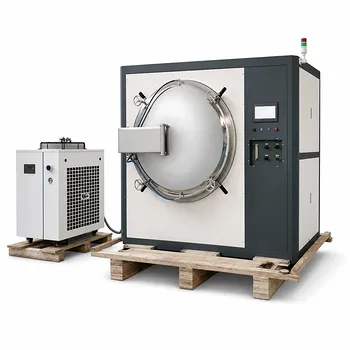
The primary function of an electric retort furnace in this context is to facilitate pyrolysis by creating a stable, oxygen-deprived environment. By maintaining a precise temperature of 500°C for four hours, the furnace thermally decomposes fast-growing teak sapwood waste into high-quality primary charcoal powder without allowing it to burn into ash.
Core Takeaway The electric retort furnace serves as the foundational stage of production, converting complex organic compounds (cellulose, hemicellulose, and lignin) into a stable carbon structure. It provides the necessary thermal consistency to produce uniform primary charcoal, which is a prerequisite for successful high-temperature activation.
The Mechanism of Carbonization
Creating an Oxygen-Free Environment
The defining feature of a retort furnace is the use of a sealed vessel, or "retort," which houses the teak sapwood.
This vessel physically separates the wood from the heating elements and the surrounding atmosphere. By strictly excluding air, the furnace ensures the process is pyrolysis (thermal decomposition) rather than combustion.
Thermal Decomposition of Components
The furnace creates a stable high-temperature environment of 500°C.
At this specific temperature, the chemical structure of the wood breaks down. The furnace drives the conversion of cellulose, hemicellulose, and lignin into a carbon-rich solid.
The Role of Duration
The process requires a sustained heating period of 4 hours.
This duration ensures the heat penetrates the material thoroughly. It guarantees that the conversion from raw wood to charcoal is complete and uniform throughout the batch.
The Role of Precision Control
Establishing the Carbon Foundation
The output of this furnace is primary charcoal powder, not the final activated carbon.
This step is critical because it establishes the basic carbon skeleton. Without this controlled carbonization, subsequent activation processes (which occur at much higher temperatures) would lack a stable material to work with.
Stability and Consistency
Electric heating allows for precise temperature regulation compared to direct-fire methods.
This stability ensures that every batch of teak sapwood waste is subjected to identical thermal conditions. This reduces variability in the charcoal, ensuring predictable performance during later processing stages.
Understanding the Trade-offs
Batch vs. Continuous Processing
Retort furnaces typically operate on a batch basis due to the sealed nature of the vessel.
While this allows for superior control over the atmosphere and temperature, it generally offers lower throughput compared to continuous flow systems.
Separation of Process Steps
It is important to distinguish this equipment from activation furnaces.
The electric retort furnace operates at 500°C for carbonization. It does not perform the physical activation, which requires ultra-high temperatures (750°C–950°C) to open micropores. Attempting to activate within the standard carbonization parameters of this furnace would result in insufficient surface area development.
Making the Right Choice for Your Goal
To maximize the utility of an electric retort furnace in your production line, consider the following focus areas:
- If your primary focus is Material Purity: Rely on the retort's sealed environment to prevent contamination and oxidation, preserving the carbon structure of the teak.
- If your primary focus is Downstream Activation: Ensure the 4-hour cycle at 500°C is strictly maintained to produce a robust "primary charcoal" capable of withstanding later high-heat activation.
By precisely controlling the thermal degradation of wood components, the electric retort furnace transforms waste into the essential building block of high-performance carbon materials.
Summary Table:
| Parameter | Specification | Function in Carbonization |
|---|---|---|
| Operating Temp | 500°C | Facilitates thermal decomposition of lignin and cellulose |
| Heating Duration | 4 Hours | Ensures complete and uniform conversion of sapwood to charcoal |
| Atmosphere | Oxygen-Deprived | Prevents combustion and ash formation via sealed retort vessel |
| Output Material | Primary Charcoal Powder | Establishes the carbon skeleton for future high-heat activation |
| Control Method | Electric Heating | Provides precision and batch-to-batch thermal consistency |
Elevate Your Carbon Research with KINTEK Precision
Maximize the purity and consistency of your carbonization process with KINTEK’s advanced thermal solutions. Whether you are converting biomass waste or developing high-performance activated carbon, our expert-engineered systems provide the stable, oxygen-free environments necessary for superior results.
Why partner with KINTEK?
- Expert R&D & Manufacturing: Our systems are built for precision, ensuring stable thermal degradation.
- Customizable Solutions: From Muffle and Tube furnaces to Rotary, Vacuum, and CVD systems, we tailor our lab high-temp equipment to your unique research needs.
- Scalable Performance: Reliable equipment designed to bridge the gap between lab-scale carbonization and industrial application.
Contact KINTEK today to discuss your specific requirements and discover how our customizable furnaces can optimize your material processing workflow!
References
- Johanes Pramana Gentur SUTAPA, Robertus Danu PRIYAMBODO. Utilization of Sapwood Waste of Fast-Growing Teak in Activated Carbon Production and Its Adsorption Properties. DOI: 10.5658/wood.2024.52.2.118
This article is also based on technical information from Kintek Furnace Knowledge Base .
Related Products
- Electric Rotary Kiln Continuous Working Small Rotary Furnace Kiln for Pyrolysis Plant Heating
- Electric Rotary Kiln Small Rotary Furnace for Activated Carbon Regeneration
- Electric Rotary Kiln Small Rotary Furnace Biomass Pyrolysis Plant Rotating Furnace
- Electric Rotary Kiln Pyrolysis Furnace Plant Machine Small Rotary Kiln Calciner
- Spark Plasma Sintering SPS Furnace
People Also Ask
- What are the advantages of electric rotary kilns compared to fuel-fired ones? Boost Precision and Efficiency in Your Process
- What materials can be processed in an electric rotary kiln? Versatile Solutions for Advanced Materials
- What advantages do electric rotary kilns offer over fuel-based kilns? Boost Efficiency and Purity in Your Process
- What are the primary applications of electric rotary kilns? Precision Thermal Processing for High-Value Materials
- How do electric rotary kilns achieve high thermal efficiency? Unlock Over 95% Thermal Efficiency