
The primary function of a vacuum box resistance furnace in this context is to execute the vacuum carbonization of pine nut shells. By maintaining a high-temperature environment of approximately 400°C, the furnace thermally decomposes the raw biomass into Pine Nut Shell Biochar (PBC) without combustion.
Core Takeaway The vacuum box resistance furnace is not merely a heating element; it is an oxidation shield. Its defining role is to facilitate pyrolysis in an oxygen-free environment, ensuring the resulting biochar retains the high specific surface area and electrical conductivity necessary for use as an anode substrate.
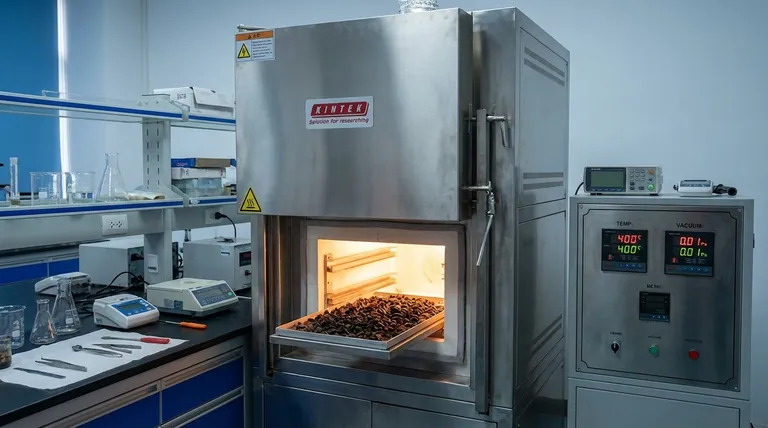
The Mechanics of Vacuum Carbonization
Controlled Pyrolysis
The furnace provides the thermal energy required to break down the chemical bonds within the pine nut shells.
Operating at approximately 400°C, the equipment initiates the transformation of organic matter into carbon-rich solid material.
Prevention of Oxidation
The most critical function of this specific furnace type is the creation of a vacuum environment.
By removing air from the chamber, the furnace prevents the biochar from reacting with oxygen. This ensures the material undergoes carbonization rather than combustion (burning to ash).
Impact on Material Properties
Developing Pore Structure
The vacuum carbonization process directly influences the physical architecture of the biochar.
The furnace environment promotes the development of a complex pore structure, which is essential for increasing the material's reactive surface area.
Preserving Conductivity
The vacuum environment protects the carbon structure from degrading at high temperatures.
This preservation ensures the final PBC possesses superior electrical conductivity, a requirement for its application as an anode substrate in electronic components.
Enrichment of Surface Groups
Beyond structure, the process affects the chemical composition of the char.
The controlled heating profile fosters the creation of rich surface functional groups, which determine how the biochar interacts chemically with other materials.
Understanding the Process Criticality
The Risk of Atmosphere Breach
The effectiveness of this furnace relies entirely on the integrity of the vacuum seal.
If the vacuum is compromised during the 400°C heating phase, oxygen ingress will immediately lead to oxidation. This degrades the specific surface area and ruins the electrical properties required for anode applications.
How to Apply This to Your Project
To maximize the quality of Pine Nut Shell Biochar, align your equipment usage with your specific material goals:
- If your primary focus is electrical conductivity: Ensure the furnace maintains a deep, consistent vacuum throughout the entire 400°C cycle to prevent any oxidative degradation.
- If your primary focus is surface chemistry: Monitor the temperature regulation strictly, as the 400°C setpoint is calibrated to generate specific functional groups without destroying the carbon skeleton.
Precision in the vacuum environment is the difference between creating high-grade anode material and common charcoal.
Summary Table:
| Feature | Function in PBC Preparation | Impact on Material Quality |
|---|---|---|
| Vacuum Environment | Prevents combustion and oxidation | Preserves high specific surface area and conductivity |
| Temperature Control | Maintains stable 400°C thermal decomposition | Ensures optimal pore development and functional groups |
| Oxidation Shielding | Removes oxygen from the chamber | Prevents biochar from turning into ash |
| Pyrolysis Execution | Breaks down organic chemical bonds | Facilitates the transition from biomass to carbon-rich solid |
Elevate Your Material Research with KINTEK
Precision in vacuum carbonization is the difference between ordinary charcoal and high-grade anode materials. Backed by expert R&D and manufacturing, KINTEK offers high-performance Vacuum, Muffle, Tube, and CVD systems—all fully customizable to meet your specific research needs.
Whether you are developing PBC biochar or advanced electronic substrates, our furnaces provide the oxygen-free environment and thermal stability required for superior conductivity and surface chemistry.
Ready to optimize your carbonization process? Contact KINTEK today to find the perfect lab high-temp furnace for your project!
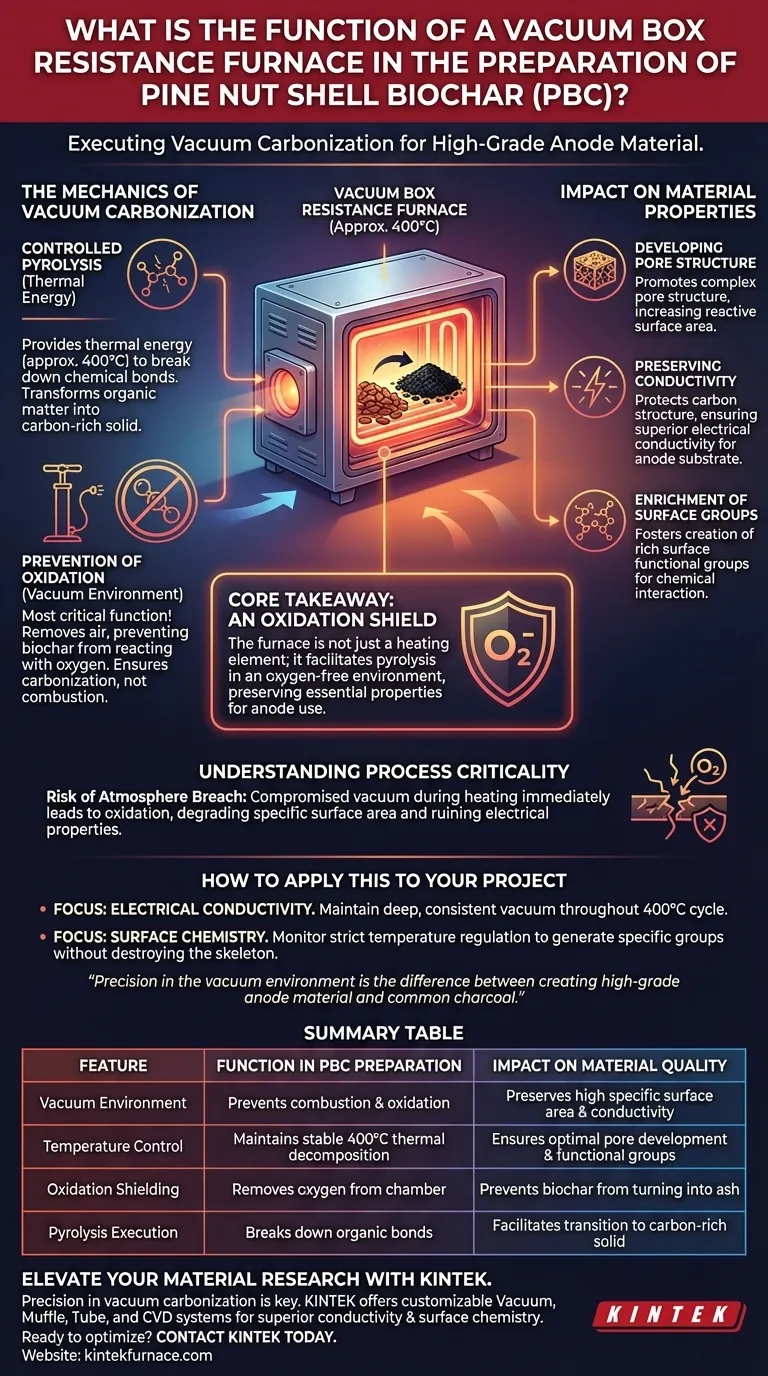
Visual Guide
References
- Chun Zhao, Shaojun Zhang. TiO₂/g-C₃N₄@HPBC Photoanode in PMFC for Shipboard Oily Wastewater Degradation. DOI: 10.54691/kk8pft70
This article is also based on technical information from Kintek Furnace Knowledge Base .
Related Products
- Vacuum Heat Treat Sintering Furnace with Pressure for Vacuum Sintering
- Vacuum Heat Treat Sintering and Brazing Furnace
- Vacuum Sealed Continuous Working Rotary Tube Furnace Rotating Tube Furnace
- Vacuum Induction Melting Furnace
- Small Vacuum Heat Treat and Tungsten Wire Sintering Furnace
People Also Ask
- How does vacuum heat treating affect the grain structure of metal alloys? Achieve Precise Microstructure Control
- What are the benefits of using vacuum heat treating furnaces for metal alloys? Achieve Superior Metal Properties and Performance
- What is one of the most important uses of vacuum heat treating furnaces in aerospace? Achieve Superior Strength in Aircraft Alloys
- What are the key components of a vacuum sintering furnace? Essential Parts for Precision Material Processing
- What is the purpose of setting a mid-temperature dwell stage? Eliminate Defects in Vacuum Sintering



















