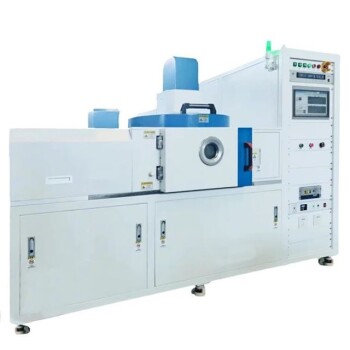
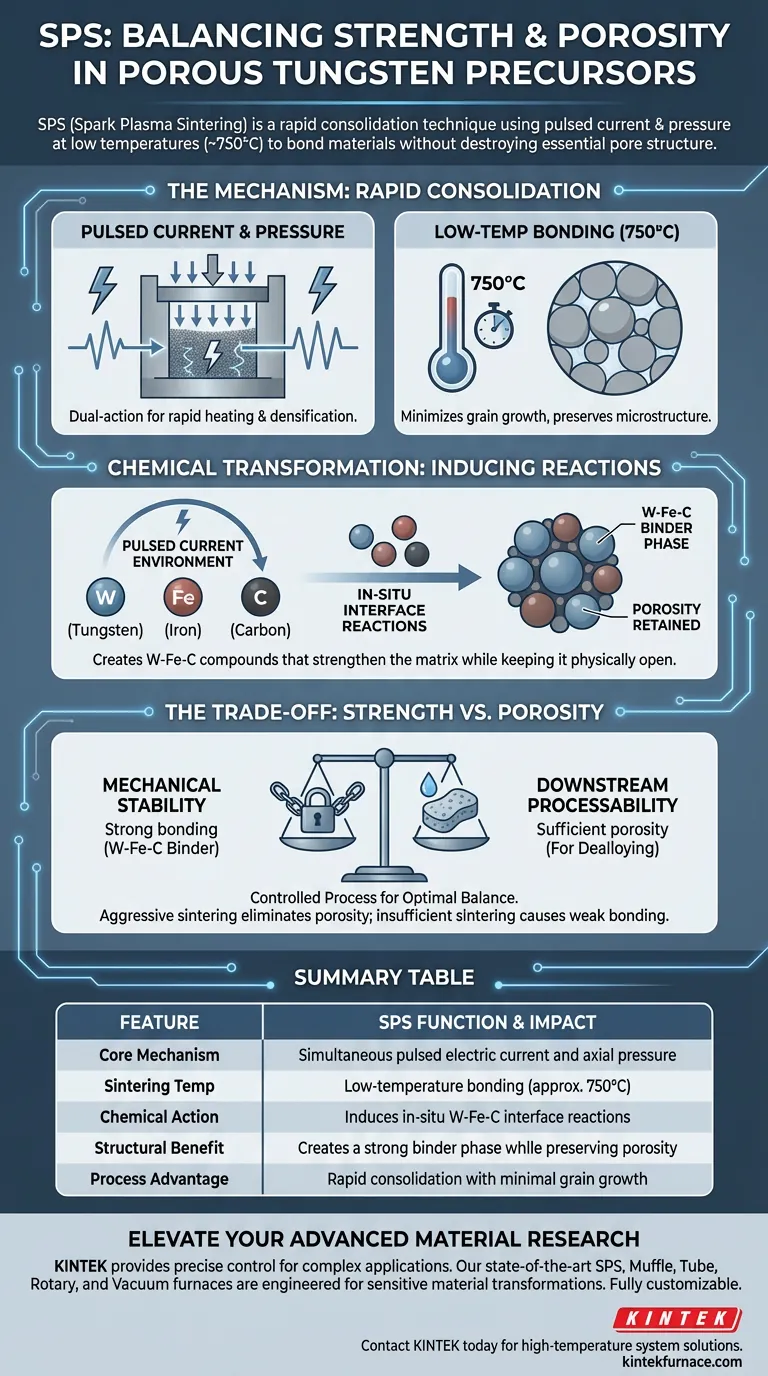
Spark Plasma Sintering (SPS) functions as a specialized rapid consolidation technique that utilizes pulsed electric current and axial pressure to bond porous tungsten gradient precursors. By operating at a relatively low temperature of 750°C for a short duration, the system secures the structural integrity of the material without eliminating the essential pore structure required for subsequent processing.
By inducing specific in-situ interface reactions, SPS creates a distinct W-Fe-C binder phase that strengthens the matrix. This process strikes a critical balance: it provides enough bonding strength to hold the precursor together while retaining sufficient porosity for future dealloying treatments.
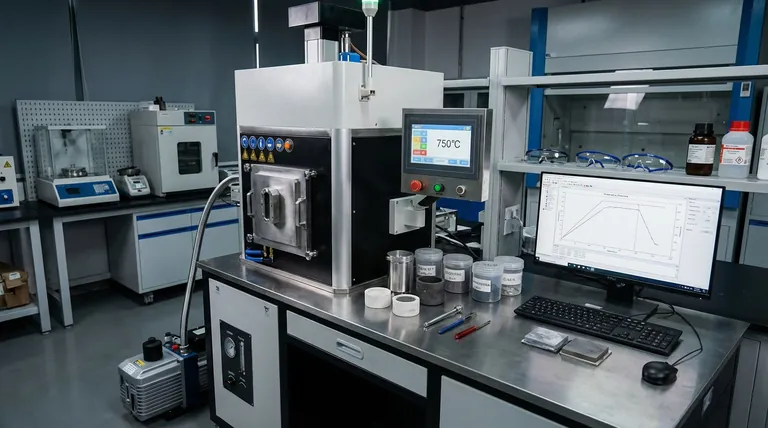
The Mechanism of Rapid Consolidation
Utilizing Pulsed Current and Pressure
The SPS system distinguishes itself from conventional sintering by applying pulsed electric current simultaneously with axial pressure.
This dual-action approach allows for rapid heating and material densification. The energy is delivered directly to the particles, facilitating fast consolidation.
Achieving Low-Temperature Bonding
A defining feature of this process is its ability to operate effectively at 750 degrees Celsius.
This is considered a relatively low temperature for tungsten-based materials. By minimizing thermal exposure, the system prevents excessive grain growth and preserves the material's microstructural intent.
Chemical Transformation and Bonding
Inducing In-Situ Interface Reactions
Beyond simple physical compression, the SPS process triggers chemical changes at the particle boundaries.
It induces in-situ interface reactions between the constituent elements: tungsten (W), iron (Fe), and carbon (C). These reactions occur rapidly due to the pulsed current environment.
The Role of W-Fe-C Compounds
The product of these reactions is the formation of W-Fe-C compounds.
These compounds act as a critical binder phase within the matrix. This binder significantly enhances the bonding strength between the matrix particles, ensuring the precursor is mechanically stable.
Understanding the Trade-offs
The Tension Between Strength and Porosity
The primary challenge in preparing these precursors is balancing mechanical durability with permeability.
If the sintering process is too aggressive—either through higher temperatures or longer durations—the material becomes too dense. This eliminates the porosity needed for subsequent dealloying treatments, rendering the precursor useless for its intended application.
Managing Reaction Extent
Conversely, insufficient sintering results in weak bonding.
If the W-Fe-C binder phase does not form adequately, the matrix particles will not adhere to one another. The SPS system navigates this trade-off by strictly controlling the time and temperature windows to ensure just enough reaction occurs to bind the particles without sealing the voids.
Making the Right Choice for Your Goal
To optimize the preparation of porous tungsten gradient precursors, you must prioritize your processing parameters based on the desired material state.
- If your primary focus is mechanical stability: Prioritize the formation of the W-Fe-C binder phase to ensure the matrix particles are securely bonded.
- If your primary focus is downstream processability: Ensure the sintering duration remains short and temperatures do not exceed 750°C to retain sufficient porosity for dealloying.
Success relies on leveraging the SPS system to harden the structure chemically while keeping it physically open.
Summary Table:
| Feature | SPS Function & Impact |
|---|---|
| Core Mechanism | Simultaneous pulsed electric current and axial pressure |
| Sintering Temp | Low-temperature bonding (approx. 750°C) |
| Chemical Action | Induces in-situ W-Fe-C interface reactions |
| Structural Benefit | Creates a strong binder phase while preserving porosity |
| Process Advantage | Rapid consolidation with minimal grain growth |
Elevate Your Advanced Material Research with KINTEK
Precise control over sintering parameters is vital for complex applications like porous tungsten gradient precursors. KINTEK provides state-of-the-art laboratory solutions, including SPS, Muffle, Tube, Rotary, and Vacuum furnaces, specifically engineered to handle sensitive material transformations.
Backed by expert R&D and manufacturing, our systems are fully customizable to meet your unique research needs, ensuring the perfect balance between mechanical strength and material porosity.
Ready to optimize your sintering process? Contact KINTEK today to discover how our high-temperature systems can empower your next breakthrough.
Visual Guide
References
- Ke Zhu, Jian Zhang. The Integrated Preparation of Porous Tungsten Gradient Materials with a Wide Porosity Range. DOI: 10.3390/met14040427
This article is also based on technical information from Kintek Furnace Knowledge Base .
Related Products
- Spark Plasma Sintering SPS Furnace
- Chairside Dental Porcelain Zirconia Sintering Furnace with Transformer for Ceramic Restorations
- 600T Vacuum Induction Hot Press Vacuum Heat Treat and Sintering Furnace
- 9MPa Air Pressure Vacuum Heat Treat and Sintering Furnace
- Dental Porcelain Zirconia Sintering Ceramic Vacuum Press Furnace
People Also Ask
- Why is it necessary to maintain a high vacuum environment during the SPS of SiC? Key to High-Density Ceramics
- How does the heating mechanism of Spark Plasma Sintering (SPS) function? Enhance TiC/SiC Composite Fabrication
- What are the technical advantages of using an SPS sintering furnace? Elevate Al2O3-TiC Material Performance
- What are the steps in the discharge plasma sintering process? Master Fast, High-Density Material Consolidation
- What are the advantages of spark plasma sintering (SPS) over traditional forging? Precision Microstructural Control