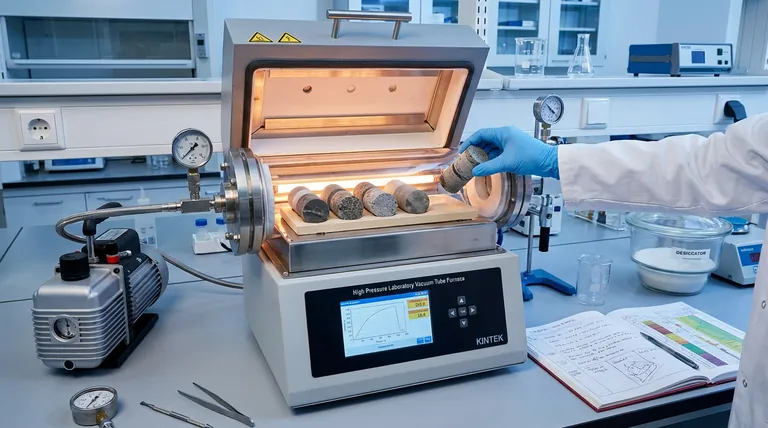
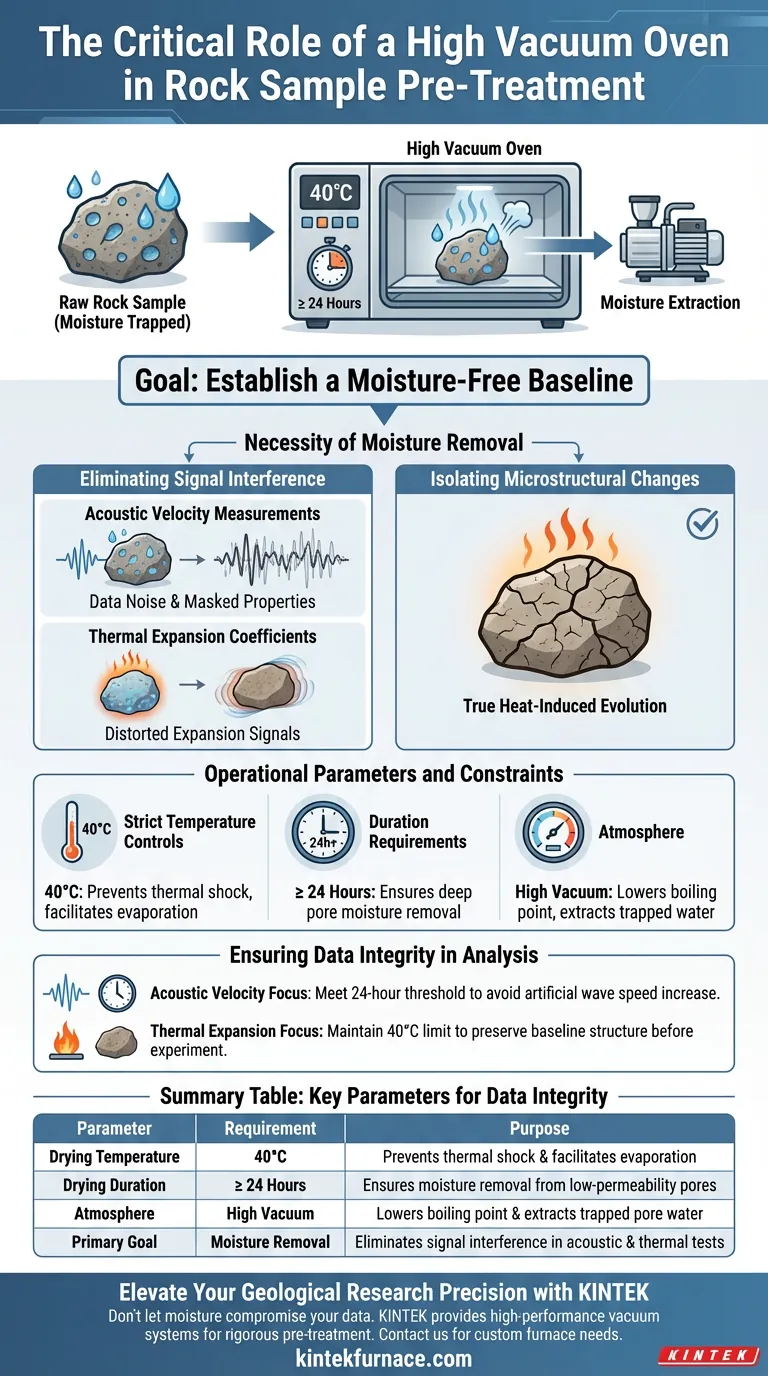
The critical function of a high vacuum oven in rock sample pre-treatment is to establish a moisture-free baseline by drying samples at 40°C for a minimum of 24 hours. This rigorous drying process is necessary to eliminate pore water, which acts as a significant confounding variable in the measurement of physical properties.
By effectively removing moisture, high vacuum drying ensures that any subsequent changes in physical data are strictly attributed to heat-induced microstructural evolution, rather than moisture-related anomalies.
The Necessity of Moisture Removal
Eliminating Signal Interference
Water trapped within rock pores drastically alters how physical signals interact with the sample. Specifically, moisture affects acoustic velocity measurements, creating data noise that masks the true properties of the dry rock frame.
Similarly, the presence of water distorts thermal expansion coefficients. Without removal, the expansion of water during heating would blend with the expansion of the rock, making it impossible to distinguish between the two.
Isolating Microstructural Changes
The ultimate goal of monitoring is to observe how the rock's microstructure evolves under heat stress. If moisture remains, it introduces hydraulic pressure and chemical interactions that confuse the results.
High vacuum drying isolates the variables. It ensures that any physical property changes recorded during testing are the direct result of heat-induced microstructural evolution.
Operational Parameters and Constraints
Strict Temperature Controls
The process mandates a drying temperature of 40°C.
This specific temperature is chosen to be high enough to facilitate evaporation under vacuum, yet low enough to prevent thermal shock or premature micro-cracking before the actual testing begins.
Duration Requirements
The protocol requires a duration of at least 24 hours.
This extended timeframe is critical for ensuring that moisture is evacuated from deep, low-permeability pores, guaranteeing the sample is thoroughly dried rather than just surface-dried.
Ensuring Data Integrity in Analysis
To achieve accurate microstructural monitoring, apply the following principles based on your specific objectives:
- If your primary focus is Acoustic Velocity: Ensure the 24-hour drying threshold is met to prevent pore water from artificially increasing wave speed readings.
- If your primary focus is Thermal Expansion: Maintain the strict 40°C limit during pre-treatment to ensure the baseline structure is not thermally altered before the experiment begins.
A disciplined pre-treatment phase is the only way to guarantee that your data reflects the true physical evolution of the rock.
Summary Table:
| Parameter | Requirement | Purpose for Data Integrity |
|---|---|---|
| Drying Temperature | 40°C | Prevents thermal shock while facilitating evaporation |
| Drying Duration | ≥ 24 Hours | Ensures moisture removal from low-permeability pores |
| Atmosphere | High Vacuum | Lowers boiling point and extracts trapped pore water |
| Primary Goal | Moisture Removal | Eliminates signal interference in acoustic and thermal tests |
Elevate Your Geological Research Precision with KINTEK
Don't let moisture-related anomalies compromise your microstructural data. KINTEK provides high-performance vacuum systems designed to meet the rigorous demands of rock sample pre-treatment. Backed by expert R&D and precision manufacturing, we offer a range of Vacuum, Muffle, Tube, and CVD systems that are fully customizable for your unique lab requirements.
Ensure your data reflects the true physical evolution of your materials. Contact KINTEK today to discuss your custom furnace needs and see how our advanced heating solutions can optimize your analytical workflow.
Visual Guide
References
- Luke Griffiths, H. Albert Gilg. Thermal Stressing of Volcanic Rock: Microcracking and Crack Closure Monitored Through Acoustic Emission, Ultrasonic Velocity, and Thermal Expansion. DOI: 10.1029/2023jb027766
This article is also based on technical information from Kintek Furnace Knowledge Base .
Related Products
- Vacuum Heat Treat Sintering Furnace Molybdenum Wire Vacuum Sintering Furnace
- Molybdenum Vacuum Heat Treat Furnace
- 2200 ℃ Tungsten Vacuum Heat Treat and Sintering Furnace
- High Pressure Laboratory Vacuum Tube Furnace
- 1700℃ High Temperature Muffle Oven Furnace for Laboratory
People Also Ask
- What are the main structural components of a vacuum sintering furnace? Unlock Precision in High-Temperature Processing
- What is the purpose of setting a mid-temperature dwell stage? Eliminate Defects in Vacuum Sintering
- How does vacuum sintering improve dimensional tolerances? Achieve Uniform Shrinkage and Precision
- What are the key components of a vacuum sintering furnace? Essential Parts for Precision Material Processing
- How does vacuum sintering contribute to cost reduction in material processing? Lower Expenses with Superior Parts