The high-temperature resistance furnace serves as the central thermal processor in the production of Al-15%Mg2Si hybrid composites. Its primary function is to provide a precisely controlled environment—reaching temperatures up to 800°C—to melt, dissolve, and homogenize raw aluminum, magnesium, and silicon materials. This process creates a high-quality, stable molten matrix that is essential for the successful introduction and distribution of reinforcement particles.
The furnace acts as the foundational hardware for composite synthesis by transforming solid raw materials into a uniform liquid state. By maintaining precise thermal stability and fluidity, it ensures the chemical homogenization necessary for a high-performance metal matrix.
Establishing the Thermal Foundation
Precise Temperature Control and Stability
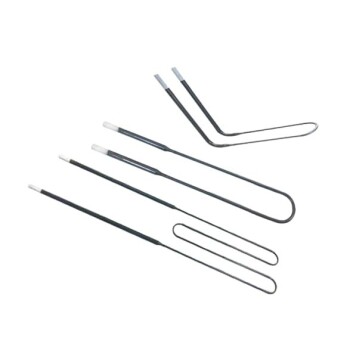
The resistance furnace utilizes specialized heating elements to maintain a constant thermal environment, often regulated at specific intervals like 750°C or 800°C. This stability is critical because even minor fluctuations can affect the solubility of alloying elements like magnesium and silicon.
Achieving Optimal Matrix Fluidity
A primary goal of the furnace is to transition the aluminum alloy from a solid state to a molten state with high fluidity. High fluidity is a prerequisite for the subsequent mixing process, allowing reinforcement particles to be integrated without clumping or uneven distribution.
Facilitating Long-Term Insulation
High-precision furnaces are designed for long-term insulation, sometimes maintaining heat for periods of two hours or more. This duration allows for the complete melting of pure aluminum blocks and master alloys, ensuring no solid remnants interfere with the composite's integrity.
Chemical and Structural Homogenization
Thorough Dissolution of Raw Materials
The furnace provides the energy required to break down the molecular bonds of the raw inputs, ensuring that Mg and Si are fully dissolved within the aluminum. This stage is vital for the formation of the Mg2Si phase, which provides the "hybrid" characteristics of the final composite.
Preliminary Chemical Homogenization
By maintaining the materials in a liquid state, the furnace facilitates preliminary homogenization of the chemical composition. This creates a uniform physical foundation, preventing "hot spots" or areas of high solute concentration that could lead to structural weaknesses.
Preparation for Reinforcement Synthesis
The furnace environment acts as the staging ground for the introduction of secondary phases. Whether adding ceramic particles or inducing in-situ chemical reactions, the stable liquid pool provided by the furnace is the only environment where uniform distribution can be achieved through stirring.
Understanding the Trade-offs and Limitations
Risk of Oxidation and Impurities
Operating at temperatures like 800°C increases the surface activity of the molten metal, making it susceptible to oxidation. Without proper shielding or fluxing, the furnace environment can inadvertently introduce oxides that compromise the mechanical properties of the Al-Mg2Si composite.
Energy Consumption vs. Thermal Uniformity
While higher temperatures ensure better dissolution, they also result in significant energy expenditure. Furthermore, in large box-type furnaces, ensuring thermal uniformity across the entire crucible can be challenging, potentially leading to localized cooling and premature solidification.
Material Compatibility and Crucible Wear
The sustained high temperatures required for Al-15%Mg2Si production can accelerate the degradation of the furnace lining and the melting crucible. Users must balance the need for high heat with the longevity of the hardware to avoid contaminating the melt with refractory materials.
How to Apply This to Your Process
Recommendations for Composite Synthesis
- If your primary focus is Chemical Uniformity: Prioritize a furnace with high-precision PID controllers to maintain a long-term soak (e.g., 2 hours) to ensure all master alloys are fully integrated.
- If your primary focus is Reinforcement Distribution: Focus on reaching the upper limit of the temperature range (800°C) to maximize melt fluidity before beginning the stirring or injection process.
- If your primary focus is Material Purity: Utilize a muffle furnace or controlled-atmosphere resistance furnace to minimize the contact between the molten aluminum and atmospheric oxygen.
By mastering the thermal environment of the resistance furnace, you ensure that the underlying matrix of your Al-15%Mg2Si composite is structurally sound and ready for high-performance applications.
Summary Table:
| Key Function | Primary Objective | Impact on Composite |
|---|---|---|
| Precise Thermal Control | Maintain stable 750°C-800°C range | Ensures complete solubility of Mg and Si |
| Optimal Fluidity | Transition solid alloy to liquid state | Facilitates uniform reinforcement distribution |
| Long-term Insulation | Sustained heat for 2+ hours | Guarantees full integration of master alloys |
| Chemical Homogenization | Molecular bond breakdown | Prevents structural weaknesses and hot spots |
| Atmosphere Control | Minimize oxygen exposure | Reduces risk of oxidation and impurities |
Elevate Your Composite Synthesis with KINTEK Precision
Achieving perfect homogenization in Al-15%Mg2Si composites requires uncompromising thermal stability. KINTEK specializes in advanced laboratory equipment, offering a comprehensive range of high-temperature furnaces—including muffle, tube, vacuum, CVD, and atmosphere furnaces—engineered for precise melting and long-term insulation.
Whether you are focusing on maximizing melt fluidity or minimizing oxidation, our customizable furnaces provide the reliability your research demands. Contact us today to discuss your unique laboratory needs and discover how KINTEK can enhance your material performance and process efficiency!
References
- Hamidreza Ghandvar, Seyed Saeid Rahimian Koloor. Role of YSZ Particles on Microstructural, Wear, and Corrosion Behavior of Al-15%Mg2Si Hybrid Composite for Marine Applications. DOI: 10.3390/jmse11051050
This article is also based on technical information from Kintek Furnace Knowledge Base .
Related Products
- Molybdenum Vacuum Heat Treat Furnace
- 1400℃ High Temperature Laboratory Tube Furnace with Alumina Tube
- 1700℃ High Temperature Laboratory Tube Furnace with Alumina Tube
- 1700℃ Controlled Inert Nitrogen Atmosphere Furnace
- Vacuum Heat Treat Sintering Furnace Molybdenum Wire Vacuum Sintering Furnace
People Also Ask
- What is the primary application of vacuum heat treating furnaces in aerospace? Enhance Component Performance with Precision
- How does vacuum heat treating work in terms of temperature and time control? Master Precise Material Transformations
- What is the process of vacuum heat treating? Achieve Superior Metallurgical Properties
- Why are vacuum heat treating furnaces essential for aerospace? Ensure Superior Material Integrity for High-Stakes Applications
- How does a vacuum heat treating furnace improve the condition of metal alloys? Achieve Superior Metal Performance