
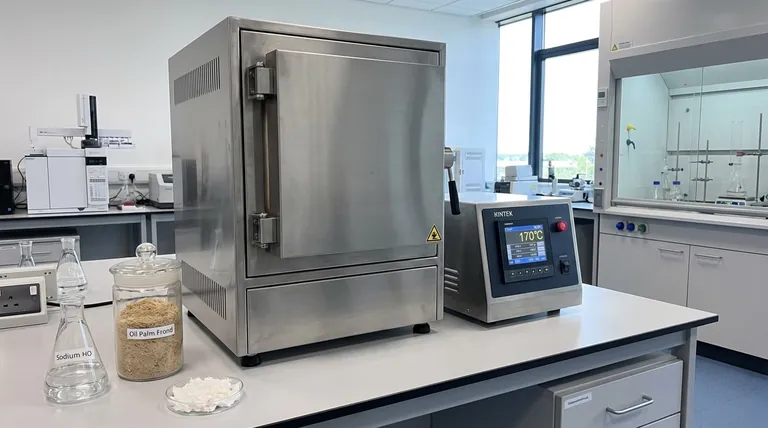
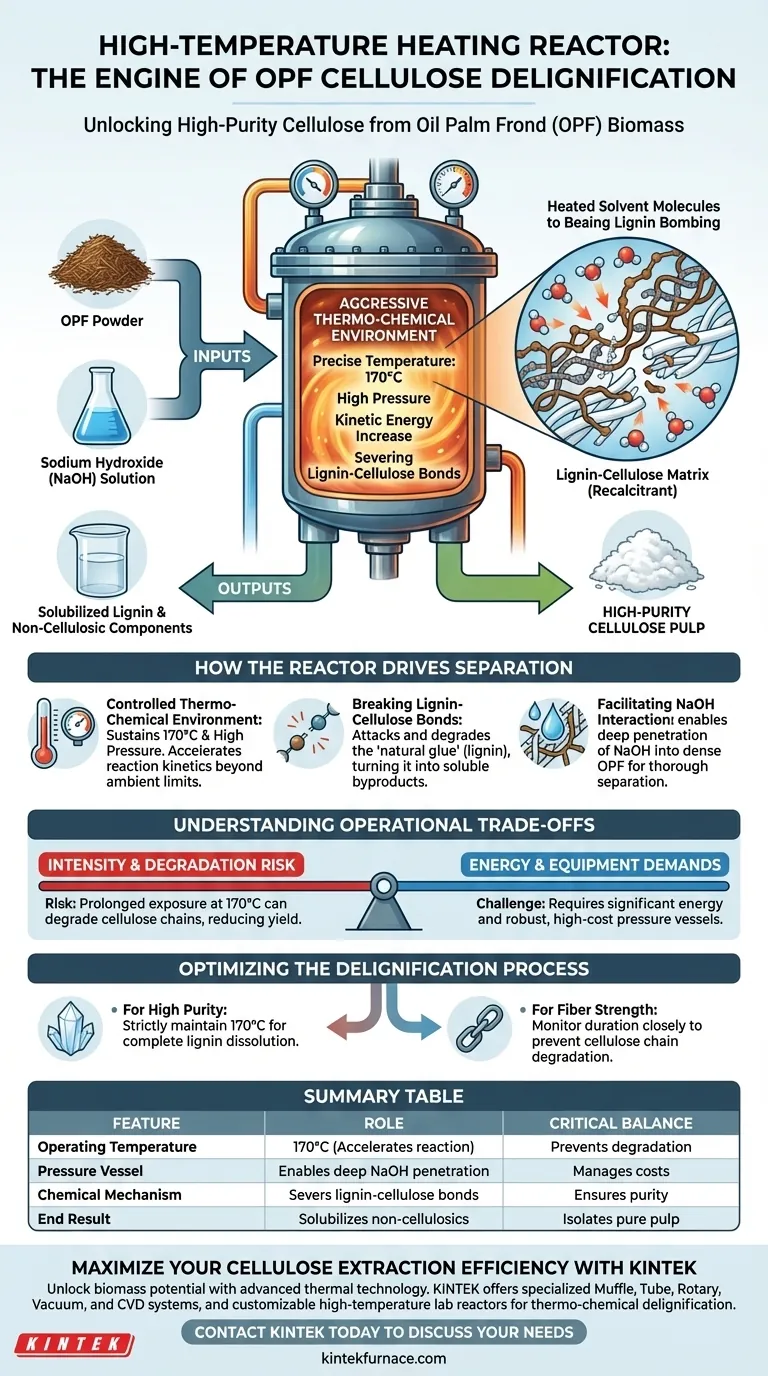
The primary function of a high-temperature heating reactor in this process is to facilitate a rigorous thermo-chemical reaction between Oil Palm Frond (OPF) powder and a sodium hydroxide solution. By maintaining a precise temperature of 170°C under high pressure, the reactor provides the necessary energy to sever the strong chemical bonds linking lignin to cellulose. This aggressive environment allows for the effective solubilization of non-cellulosic components, resulting in the isolation of high-purity cellulose pulp.
The reactor serves as the critical engine for overcoming biomass recalcitrance. By combining high heat and pressure, it forces the chemical breakdown of the protective lignin barrier, unlocking pure cellulose fibers that are otherwise inaccessible.
How the Reactor Drives Separation
To understand the reactor's role, we must look beyond simple heating. It acts as a pressurized vessel that enables the chemical solvent to penetrate the dense structure of the OPF biomass.
Creating a Controlled Thermo-Chemical Environment
The reactor is designed to reach and sustain a specific operating temperature of 170°C.
At this temperature, the kinetic energy of the molecules increases significantly. This accelerates the reaction rate between the biomass and the solvent far beyond what is possible at ambient temperatures.
Breaking the Lignin-Cellulose Bonds
Lignin acts as a natural glue, binding cellulose and hemicellulose together in a rigid structure.
The combination of high heat and pressure within the reactor attacks the chemical bonds holding this structure together. This "thermo-chemical action" effectively degrades the lignin and hemicellulose, turning them into soluble byproducts while leaving the cellulose intact.
Facilitating Sodium Hydroxide Interaction
The reactor creates the optimal conditions for the sodium hydroxide solution to do its work.
Under high pressure, the solution can penetrate deep into the OPF powder. The heat ensures that the sodium hydroxide reacts efficiently with the lignin, ensuring a thorough separation process rather than a superficial surface treatment.
Understanding the Operational Trade-offs
While the high-temperature reactor is essential for delignification, the process involves specific constraints that must be managed to ensure success.
Balancing Intensity and degradation
The aggressive environment of 170°C is necessary to remove lignin, but it presents a risk to the cellulose itself.
If the reaction conditions are uncontrolled or prolonged, the heat can begin to degrade the cellulose chains. This would reduce the yield and quality of the final pulp.
Energy and Equipment Demands
Maintaining high pressure and high temperature requires significant energy input.
Furthermore, the reactor vessel must be robust enough to withstand these conditions safely. This adds to the operational complexity and capital cost compared to low-temperature or atmospheric extraction methods.
Optimizing the Delignification Process
To achieve the best results with OPF cellulose extraction, you must align your operational parameters with your specific output goals.
- If your primary focus is high purity: Strictly maintain the 170°C temperature setpoint to ensure the complete dissolution of lignin and hemicellulose.
- If your primary focus is preserving fiber strength: Monitor the reaction duration closely to prevent the thermo-chemical action from degrading the cellulose chains after the lignin has been removed.
Mastering the reactor's environment is the single most important factor in converting raw agricultural waste into valuable industrial cellulose.
Summary Table:
| Feature | Role in Delignification Process |
|---|---|
| Operating Temperature | 170°C (Accelerates thermo-chemical reaction rate) |
| Pressure Vessel | Enables deep penetration of NaOH into dense OPF fibers |
| Chemical Mechanism | Severs bonds between lignin and cellulose fibers |
| End Result | Solubilizes non-cellulosic components for pure pulp isolation |
| Critical Balance | Prevents cellulose chain degradation while removing lignin |
Maximize Your Cellulose Extraction Efficiency
Unlock the full potential of your biomass research with KINTEK’s advanced thermal technology. Backed by expert R&D and world-class manufacturing, KINTEK offers specialized Muffle, Tube, Rotary, Vacuum, and CVD systems, along with customizable high-temperature lab reactors designed to handle the rigorous demands of thermo-chemical delignification.
Whether you are processing Oil Palm Frond or other complex biomass, our systems provide the precise temperature control and pressure stability needed to isolate high-purity cellulose while preserving fiber integrity.
Ready to optimize your lab's high-temperature processes? Contact KINTEK today to discuss your unique needs!
Visual Guide
References
- Bernadeta Ayu Widyaningrum, Heri Septya Kusuma. Chitosan-Reinforced Carbon Aerogels from Oil Palm Fronds for Enhanced Oil Absorption and Silver Nanowires Loaded as Antimicrobial Activity. DOI: 10.21203/rs.3.rs-7269305/v1
This article is also based on technical information from Kintek Furnace Knowledge Base .
Related Products
- High Temperature Muffle Oven Furnace for Laboratory Debinding and Pre Sintering
- 2200 ℃ Graphite Vacuum Heat Treat Furnace
- 1700℃ High Temperature Laboratory Tube Furnace with Alumina Tube
- 1800℃ High Temperature Muffle Oven Furnace for Laboratory
- Laboratory Quartz Tube Furnace RTP Heating Tubular Furnace
People Also Ask
- What thermal phenomena occur during polymer binder burnout in ceramic green bodies? Lab Furnace Guide
- Why is controlled heat treatment in a muffle furnace necessary for calcined clay? Achieve Optimal Pozzolanic Activity
- What role does a high-temperature muffle furnace play in STFO synthesis? Achieve Pure Perovskite Results
- How does a high-temperature muffle furnace facilitate the formation of LaNbxAl1−xO3+δ perovskite structures? Key Roles
- What role does a high-temperature muffle furnace play in the multi-stage synthesis of Li0.5MnFe1.5O4? Key to Pure Spinel















