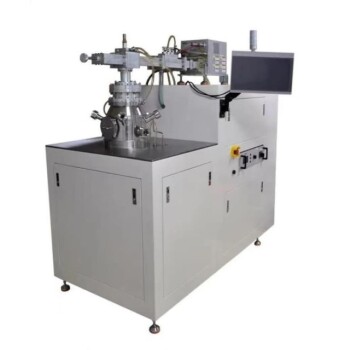
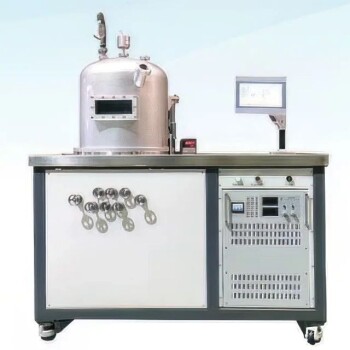
In short, Microwave Plasma Chemical Vapor Deposition (MPCVD) is a critical technology for manufacturing high-performance films, primarily diamond, for demanding industrial applications. Its use is concentrated in sectors like advanced electronics, optics, medical devices, and industrial tooling where material properties like extreme hardness, high thermal conductivity, and chemical inertness are non-negotiable.
The core reason industries choose MPCVD is its unique ability to produce exceptionally high-purity films with precisely controlled properties. This method unlocks material performance, particularly with diamond, that is simply unattainable through other deposition techniques, justifying its use in applications where failure is not an option.
Why MPCVD Excels for High-Performance Films
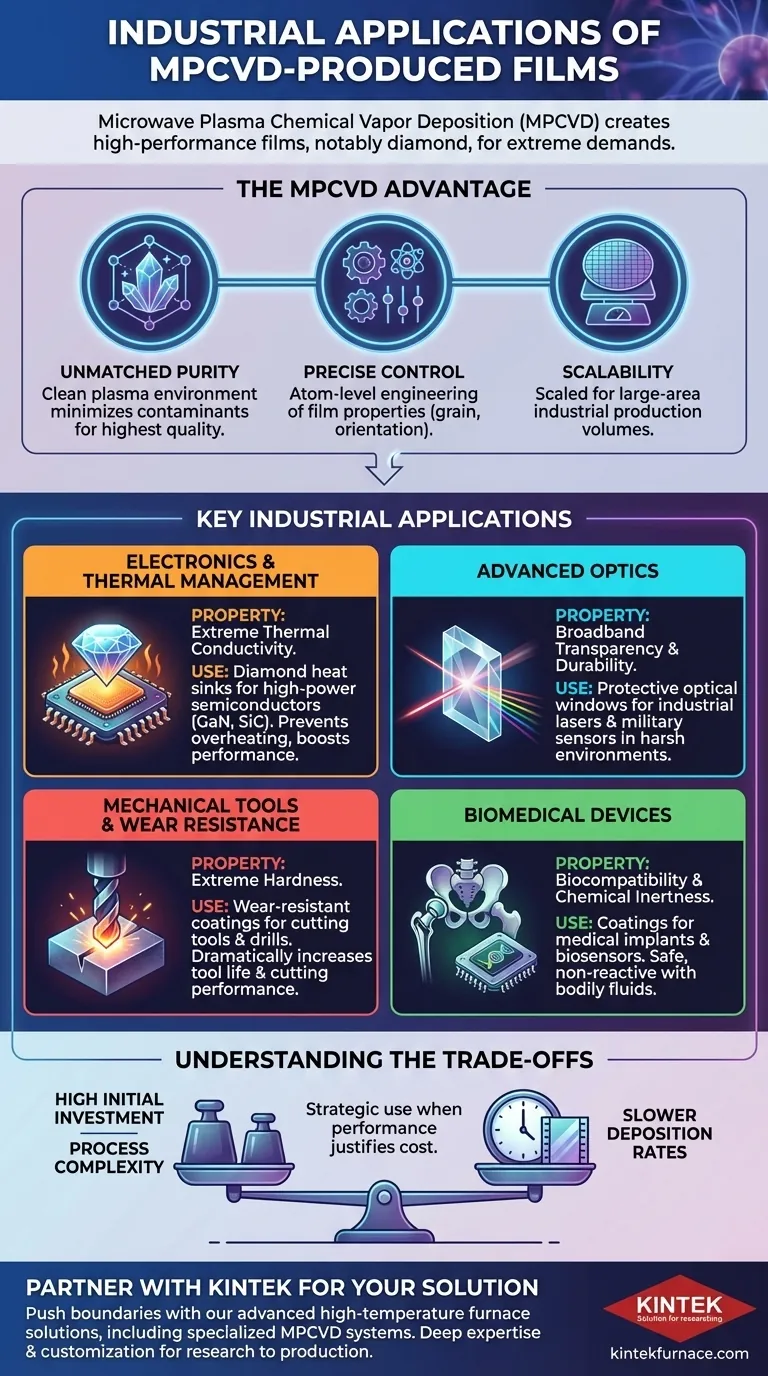
Before examining the specific applications, it's essential to understand why the MPCVD process itself is so valuable. It is not just another method for creating a thin layer; it is a precision instrument for engineering materials at the atomic level.
Unmatched Purity and Quality
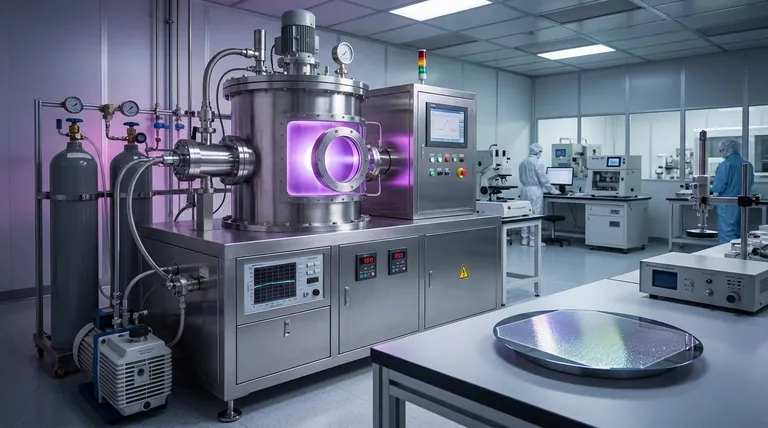
The process uses microwave energy to create a stable, high-density plasma in a vacuum. This clean energy source and low-pressure environment minimize contaminants, resulting in films—especially synthetic diamond—of the highest possible purity and quality.
Precise Control Over Film Properties
Technicians can meticulously tune process parameters like gas composition, pressure, and temperature. This control allows for the precise engineering of film characteristics, such as crystal orientation, grain size, and electrical properties, tailoring the material to a specific application's needs.
Scalability for Industrial Demands
While a laboratory technique in origin, MPCVD has been scaled to accommodate large-area substrates, such as large silicon wafers. This scalability makes it commercially viable for producing high-quality films in industrial volumes.
Key Industrial Applications Breakdown
The superior properties of MPCVD-produced films directly enable performance breakthroughs in several key industries. Each application leverages a specific, exceptional characteristic of the deposited material.
Electronics and Thermal Management
Modern electronics, especially high-power semiconductors (like GaN and SiC), generate immense heat in a small area. MPCVD-grown diamond heat sinks are used because diamond has the highest thermal conductivity of any known material.
These films efficiently pull heat away from the active components, preventing overheating, improving performance, and extending the device's lifespan.
Advanced Optics
For applications in harsh environments, such as industrial lasers or military sensor windows, optical components need to be both transparent and incredibly durable. MPCVD-produced diamond optical windows are ideal.
They offer excellent transparency across a wide spectrum (from UV to far-infrared) while being exceptionally hard and resistant to abrasion and chemical attack.
Mechanical Tools and Wear Resistance
The extreme hardness of diamond makes it the ultimate material for cutting and grinding. MPCVD is used to apply wear-resistant diamond coatings onto cutting tools, inserts, and drills.
This thin but durable layer dramatically increases tool life, improves cutting performance, and allows for the machining of very hard materials that would otherwise be impossible to work with.
Biomedical Devices
When a material is placed inside the human body, it must be biocompatible and chemically inert. MPCVD diamond films are used to coat medical implants and biosensors.
The carbon-based structure of diamond is inherently biocompatible, and its inertness prevents it from reacting with bodily fluids, ensuring patient safety and device longevity.
Understanding the Trade-offs
While powerful, MPCVD is not a universal solution. Its application is strategic and reserved for cases where its benefits outweigh its complexities.
High Initial Investment
MPCVD reactor systems are complex and represent a significant capital expenditure. The cost of the equipment and its installation is a primary consideration for any company looking to adopt the technology.
Process Complexity
Achieving high-quality, repeatable results with MPCVD requires deep process knowledge and skilled operators. It is not a "plug-and-play" technology and often involves a substantial investment in research and development to optimize the process for a specific film.
Slower Deposition Rates
In many cases, producing the highest-purity films requires slower growth rates. This can create a trade-off between ultimate film quality and manufacturing throughput, impacting the cost per part.
Making the Right Choice for Your Goal
Selecting MPCVD depends entirely on whether the performance requirements of your application justify the investment.
- If your primary focus is extreme thermal management or optical durability: MPCVD diamond films are the undisputed choice for high-power electronics and protective windows.
- If your primary focus is extending the life of mechanical tools: A diamond coating from MPCVD will provide a dramatic improvement in hardness and wear resistance.
- If your primary focus is biocompatibility and chemical inertness: MPCVD-grown diamond is a leading candidate for advanced medical implants and in-body sensors.
Ultimately, MPCVD is the enabling technology you turn to when conventional materials and processes have reached their absolute limit.
Summary Table:
| Application | Key Material Property Utilized | Example Use Case |
|---|---|---|
| Electronics & Thermal Management | Extreme Thermal Conductivity | Diamond heat sinks for high-power semiconductors (GaN, SiC) |
| Advanced Optics | Broadband Transparency & Hardness | Protective windows for industrial lasers and military sensors |
| Mechanical Tools & Wear Resistance | Extreme Hardness | Wear-resistant coatings for cutting tools and drills |
| Biomedical Devices | Biocompatibility & Chemical Inertness | Coatings for medical implants and biosensors |
Ready to engineer the impossible with high-performance films?
At KINTEK, we understand that pushing the boundaries of material science requires more than just equipment—it demands deep expertise and customization. Leveraging our exceptional R&D and in-house manufacturing capabilities, we provide advanced high-temperature furnace solutions, including specialized systems for demanding processes like MPCVD.
Our product line—featuring Muffle, Tube, Rotary Furnaces, Vacuum & Atmosphere Furnaces, and CVD/PECVD Systems—is backed by strong deep customization capabilities to precisely meet your unique research and production requirements. Whether you are developing next-generation electronics, durable optical components, longer-lasting tools, or safer medical devices, we can help you build the foundation for success.
Let's discuss how our solutions can be tailored to your specific application. Contact our experts today for a consultation.
Visual Guide
Related Products
- 915MHz MPCVD Diamond Machine Microwave Plasma Chemical Vapor Deposition System Reactor
- MPCVD Machine System Reactor Bell-jar Resonator for Lab and Diamond Growth
- Cylindrical Resonator MPCVD Machine System for Lab Diamond Growth
- HFCVD Machine System Equipment for Drawing Die Nano Diamond Coating
People Also Ask
- What is the MPCVD method and why is it considered effective for diamond deposition? Superior Purity & High Growth Rates
- What factors influence the quality of diamond deposition in the MPCVD method? Master the Critical Parameters for High-Quality Diamond Growth
- What are some key features and benefits of the microwave plasma chemical vapor deposition system? Achieve Unmatched Material Synthesis
- What is the purpose of a microwave plasma chemical vapor deposition system? Grow High-Purity Diamonds and Advanced Materials
- What is the basic principle of operation for the microwave plasma chemical vapor deposition system? Unlock High-Purity Material Growth