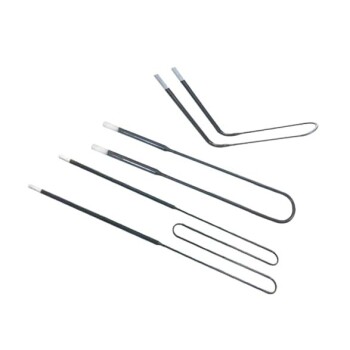
A small high-temperature electric heating furnace establishes a precise thermal environment utilizing built-in resistance heating elements to reach temperatures up to 500°C. This experimental setup is designed to simulate extreme operational parameters, such as those found in aviation air conditioning units, allowing researchers to evaluate how graphite bearings perform under significant thermal stress. By maintaining stable, elevated temperatures, the furnace isolates critical physical and chemical transitions that define the material's friction characteristics.
Core Takeaway The primary value of this experimental condition is not just the heat itself, but the ability to trigger and sustain specific material transitions—such as water desorption and polymer melting—to observe how the coefficient of friction changes in real-time.
Creating the Thermal Environment
Precision Resistance Heating
The core of this experimental setup relies on built-in resistance heating elements. These components provide the necessary energy to drive the chamber temperature up to a maximum of 500°C.
Simulation of Aviation Conditions
The furnace is specifically calibrated to replicate the harsh environments encountered in aviation applications. Aviation air conditioning units, for example, subject components to high thermal loads that cannot be replicated in standard ambient tests.
Evaluating Material Transitions
The furnace allows researchers to observe specific friction coefficient transitions that only occur when graphite is pushed past certain thermal thresholds.
Water Desorption Thresholds
Graphite bearings often rely on adsorbed water for lubrication. The furnace enables testing above 150°C, the critical threshold where water desorption occurs.
Once this temperature is exceeded, the water evaporates, leading to a distinct transition in the friction coefficient. This allows engineers to see how the bearing behaves when it loses its primary natural lubricant.
Polymer Impregnant Dynamics
Many graphite bearings are impregnated with polymers to enhance performance. By maintaining precise temperatures, such as 270°C, the furnace facilitates the study of these impregnants.
At these elevated temperatures, researchers can observe the melting behavior of the polymer. This reveals how the impregnant contributes to lubrication and affects the overall friction performance under stress.
Understanding the Trade-offs
The Risk of Low-Temperature Testing
The most significant limitation in evaluating graphite bearings is testing below critical thermal thresholds. If the furnace does not reach or sustain temperatures above 150°C, the data will fail to account for the loss of water lubrication.
Specificity of Temperature Targets
Evaluating polymer impregnants requires more than just "high heat"; it requires specific thermal targeting. Simply heating the unit to 500°C may bypass the specific melting phase of the polymer.
To accurately assess lubrication behavior, the furnace must be capable of holding steady at intermediate temperatures, such as 270°C, to capture the active lubrication phase of the impregnant.
Making the Right Choice for Your Goal
To get the most out of your evaluation, align your experimental conditions with the specific material property you need to validate:
- If your primary focus is baseline graphite stability: Ensure your test protocol exceeds 150°C to analyze performance after water desorption.
- If your primary focus is polymer impregnant efficacy: Maintain a steady state at approximately 270°C to observe melting and lubrication behaviors.
Validating graphite bearings requires a thermal environment that does not just withstand heat, but precisely manipulates it to reveal the material's hidden friction characteristics.
Summary Table:
| Experimental Variable | Temperature Threshold | Physical/Chemical Impact |
|---|---|---|
| Max Operating Temp | Up to 500°C | Simulates extreme aviation thermal loads |
| Water Desorption | Above 150°C | Analyzes friction after loss of natural lubrication |
| Polymer Melting | Approx. 270°C | Evaluates lubrication efficacy of impregnants |
| Thermal Stability | Variable | Isolates transitions for real-time COF observation |
Precision Thermal Solutions for Your Advanced Material Testing
Unlock deep insights into material transitions with KINTEK’s industry-leading thermal technology. Backed by expert R&D and manufacturing, KINTEK offers a comprehensive range of Muffle, Tube, Rotary, Vacuum, and CVD systems, along with specialized lab high-temperature furnaces—all fully customizable to meet your unique experimental needs.
Whether you are simulating aviation environments or analyzing polymer dynamics, our equipment provides the stability and precision required for accurate friction performance evaluation.
Ready to elevate your lab's capabilities? Contact KINTEK today to discuss your custom furnace requirements with our technical experts.
References
- H. Zaïdi, Kaouthar Bouguerra. Friction Evolution of Graphite Bearing Impregnated with Polymer Subjected to Vibration Fretting at High Temperature. DOI: 10.3390/coatings14020207
This article is also based on technical information from Kintek Furnace Knowledge Base .
Related Products
- Electric Rotary Kiln Continuous Working Small Rotary Furnace Kiln for Pyrolysis Plant Heating
- 1700℃ High Temperature Muffle Oven Furnace for Laboratory
- 1800℃ High Temperature Muffle Oven Furnace for Laboratory
- Laboratory Muffle Oven Furnace with Bottom Lifting
- 1700℃ High Temperature Laboratory Tube Furnace with Alumina Tube
People Also Ask
- What are the advantages of electric rotary kilns compared to fuel-fired ones? Boost Precision and Efficiency in Your Process
- What materials can be processed in an electric rotary kiln? Versatile Solutions for Advanced Materials
- What advantages do electric rotary kilns offer over fuel-based kilns? Boost Efficiency and Purity in Your Process
- What are the primary applications of electric rotary kilns? Precision Thermal Processing for High-Value Materials
- In what ways are electric rotary kilns more environmentally friendly? Achieve Zero On-Site Emissions