
High-quality firing and even sintering in a furnace are primarily ensured by technologies that promote uniform heat distribution, precise thermal management, and controlled atmospheric conditions. Key features include advanced muffle designs, reflective elements, infrared technology for predrying, precise temperature controls, and programmable firing cycles.
Achieving high-quality firing and even sintering is critical for material integrity and performance. The most effective furnaces integrate design elements and technologies that precisely manage heat distribution, prevent thermal shock, and ensure consistency across the entire firing chamber, leading to defect-free and uniformly densified components.
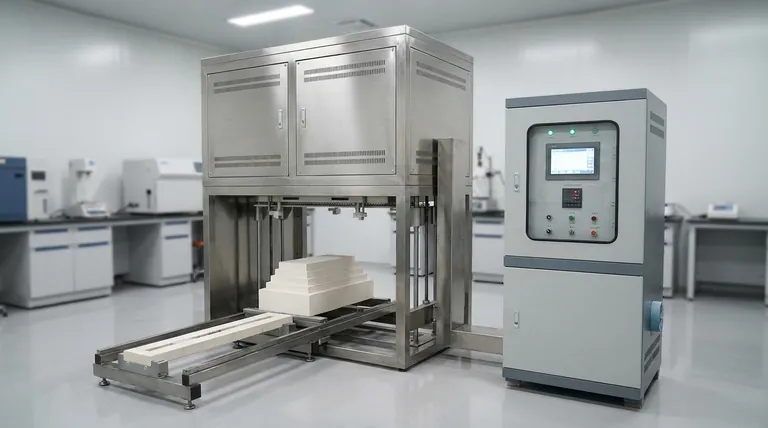
Achieving Uniform Heat Distribution
Consistent heat across the firing chamber is fundamental for even sintering. Without it, parts can experience differential shrinkage or property variations.
QTK Muffle Technology
QTK muffle technology is designed to provide uniform heat distribution within the furnace chamber. This specific muffle design helps to eliminate cold spots and ensure that all parts are exposed to the same temperature profile. The result is more consistent sintering outcomes and reduced material stress.
Reflecting Floor Design
A reflecting floor within the furnace chamber further aids in heat distribution. By reflecting thermal energy, it helps to balance temperatures, particularly at the base of the firing space. This prevents temperature gradients that can lead to uneven sintering or warping of delicate components.
Multiple Heating Elements
Furnaces equipped with multiple heating elements can achieve more even heat distribution. Strategically placed elements allow for precise zonal heating and prevent localized temperature variations. This is crucial for large or complex loads where a single heating source might create hot and cold spots.
Enhancing Firing Consistency and Efficiency
Beyond static heat distribution, dynamic control and efficiency features significantly impact the quality of the firing process.
Infrared Technology for Reliability
Built-in infrared technology offers more reliable firing results and increased efficiency. This technology monitors and manages temperature more dynamically, adapting to the specific material being processed. It contributes to a more predictable and consistent firing process.
Infrared for Predrying
Specifically, infrared technology used during the predrying process helps reduce the risk of cracks. As the furnace closes, rapid temperature changes can induce stress. Infrared assistance in predrying mitigates this thermal shock, preventing structural damage in ceramics.
Precise Temperature Control
Precise temperature control is paramount for high-quality sintering. Advanced control systems maintain the programmed temperature profile with minimal deviation. This accuracy ensures that the material undergoes the correct phase transformations and densification without overheating or underheating.
Advanced Heating Elements & Insulation
The combination of advanced heating elements and superior insulation contributes to both efficiency and stability. Efficient heating elements reach target temperatures quickly and maintain them stably, while superior insulation minimizes heat loss. This partnership ensures energy efficiency and a consistent thermal environment.
Understanding the Trade-offs
While these features enhance quality, they often come with considerations regarding cost, complexity, and maintenance.
Increased Initial Investment
Furnaces with advanced features like QTK muffle technology or integrated infrared systems typically have a higher upfront cost. This investment is often justified by improved results and reduced material waste, but it's a factor in procurement.
Potential for Higher Maintenance
More complex systems with multiple heating zones or specialized sensors might require more sophisticated maintenance. Regular calibration and upkeep are essential to ensure these advanced features continue to perform optimally.
Energy Consumption for Specific Technologies
While overall efficiency is improved, certain advanced heating methods might have specific energy consumption profiles. Understanding the operational costs associated with these technologies is important for long-term planning.
Making the Right Choice for Your Goal
Selecting a furnace involves prioritizing features based on your specific material and production requirements.
- If your primary focus is uniform density across complex parts: Prioritize furnaces with QTK muffle technology, reflecting floors, and multiple heating elements.
- If your primary focus is preventing cracks during critical drying stages: Look for furnaces incorporating infrared technology specifically for predrying.
- If your primary focus is repeatable results and process control: Ensure the furnace has precise temperature control and programmable firing cycles.
- If your primary focus is energy efficiency and speed: Consider furnaces with advanced heating elements and superior insulation.
The integration of these specialized features is what truly distinguishes a high-performance furnace, leading to consistently superior firing and sintering outcomes.
Summary Table:
| Feature | Primary Benefit | Ideal For |
|---|---|---|
| QTK Muffle Technology | Uniform heat distribution | Complex parts, uniform density |
| Infrared Predrying | Reduces cracks, prevents thermal shock | Delicate ceramics, critical drying stages |
| Precise Temperature Control | Repeatable results, accurate sintering | Process control, consistent outcomes |
| Multiple Heating Elements | Eliminates hot/cold spots | Large or complex loads |
| Reflecting Floor | Balances temperature, prevents warping | Sensitive components, base heating |
Achieve flawless sintering and high-quality firing with KINTEK's advanced furnace solutions. Leveraging exceptional R&D and in-house manufacturing, we provide diverse laboratories with advanced high-temperature furnace solutions. Our product line, including Muffle, Tube, Rotary Furnaces, Vacuum & Atmosphere Furnaces, and CVD/PECVD Systems, is complemented by our strong deep customization capability to precisely meet your unique experimental requirements. Whether you need uniform density for complex parts or crack prevention during drying, KINTEK can tailor a solution for you. Contact us today to discuss how our technologies can enhance your lab's efficiency and results!
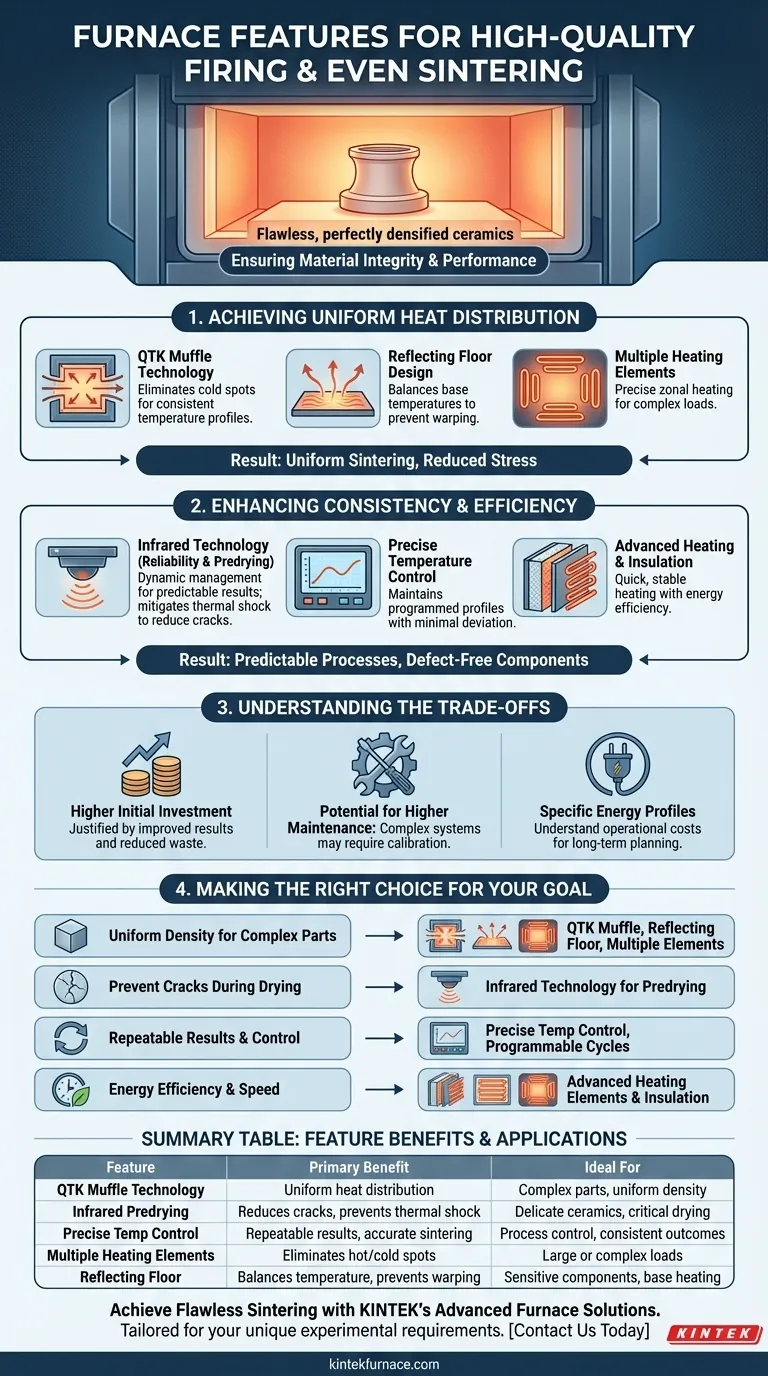
Visual Guide
Related Products
- 1400℃ Muffle Oven Furnace for Laboratory
- 1700℃ High Temperature Muffle Oven Furnace for Laboratory
- 1800℃ High Temperature Muffle Oven Furnace for Laboratory
- 1200℃ Muffle Oven Furnace for Laboratory
- High Temperature Muffle Oven Furnace for Laboratory Debinding and Pre Sintering
People Also Ask
- What is the primary function of a high-temperature laboratory muffle furnace in chemical synthesis? Achieve Precision.
- How does a high-temperature laboratory muffle furnace affect material properties? Transform Anodic Oxide Films Fast
- What is the role of a laboratory high-temperature muffle furnace in H13 steel treatment? Optimize Tool Performance
- How does a laboratory high-temperature muffle furnace contribute to the final formation of Bismuth Oxide nanosheets?
- What role does a laboratory high-temperature muffle furnace play in the treatment of highly contaminated waste glass?



















