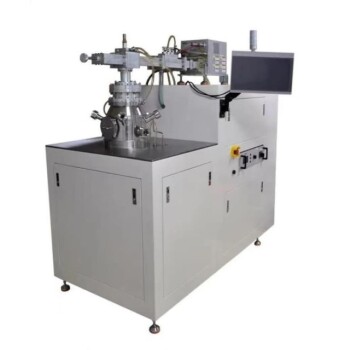
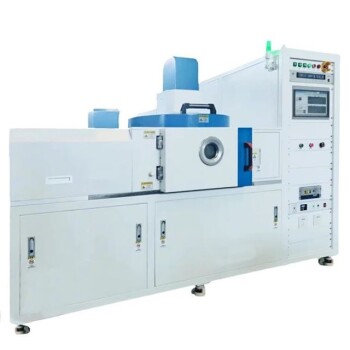
The primary technical advantage of using an industrial-grade microwave-assisted hydrothermal system is the achievement of simultaneous internal and external heating, which eliminates the thermal gradients inherent in traditional electrical heating methods. By ensuring uniform heat distribution and significantly reducing heating time, this technology allows for the precise regulation of crystal plane growth rates, enabling the production of specific cerium dioxide morphologies without the use of chemical surfactants.
By replacing conductive heating with rapid, uniform volumetric heating, this system transforms how crystal structures are formed. It shifts the control mechanism from chemical additives to precise thermal regulation, allowing for cleaner, shape-specific synthesis.
The Mechanics of Thermal Efficiency
Simultaneous Heating Dynamics
Unlike traditional electrical heating, which transfers thermal energy from the outside in, microwave-assisted systems generate heat internally and externally at the same time.
This results in a rapid rise in temperature throughout the entire reaction vessel. The lag time typically associated with heating a liquid medium is effectively removed.
Elimination of Thermal Gradients
The most critical issue in traditional synthesis is the uneven distribution of heat.
Microwave-assisted systems eliminate these thermal gradients. By maintaining a uniform temperature profile throughout the solution, the system ensures that all precursor materials experience the exact same reaction conditions simultaneously.
Precision Control Over Crystal Growth
Regulating Growth Rates
The uniformity of the microwave heating process provides direct control over the crystallization kinetics.
Specifically, it allows operators to regulate the growth rate of crystal planes during the precursor crystallization phase. This level of kinetic control is difficult to achieve when heat transfer is slow or uneven.
Temperature-Dependent Morphology
Because the heating is so precise, simple adjustments to the synthesis temperature can dictate the final physical shape of the material.
For example, utilizing specific temperatures such as 150°C or 200°C allows for the targeted formation of distinct cerium dioxide shapes, including triangular or flake-like structures.
Efficiency and Purity Implications
Surfactant-Free Synthesis
A major technical benefit of this approach is the ability to control morphology purely through physics rather than chemistry.
Traditional methods often require surfactants (chemical additives) to guide crystal growth into specific shapes. The microwave-assisted system achieves these specific morphologies (like flakes or triangles) without these additives, resulting in a purer final product.
Reduced Processing Time
The mechanism of simultaneous heating drastically reduces the overall time required for the reaction.
This efficiency is not just about speed; it prevents the "ripening" or over-growth of crystals that can occur during long, slow ramp-up times associated with conventional heating.
Understanding the Trade-offs
Sensitivity to Temperature Variance
While the system allows for high precision, the outcome is highly sensitive to the chosen parameters.
Because the morphology (e.g., triangular vs. flake-like) is dictated by specific temperature set-points like 150°C or 200°C, strict adherence to these operational parameters is required. Any deviation in the system's calibration could lead to inconsistent crystal shapes.
Dependence on Equipment Capability
The advantages described rely heavily on the system being "industrial-grade."
Standard or lower-power microwave units may not achieve the necessary field uniformity to guarantee the elimination of thermal gradients, potentially compromising the surfactant-free capability of the process.
Making the Right Choice for Your Goal
To determine if this synthesis method aligns with your production requirements, consider your primary objectives:
- If your primary focus is material purity: This system is ideal as it eliminates the need for surfactants, reducing chemical contamination in the final cerium dioxide product.
- If your primary focus is morphological specificity: The precise thermal control allows you to reliably target specific geometries, such as triangular or flake-like structures, by locking in temperatures like 150°C or 200°C.
- If your primary focus is process efficiency: The simultaneous heating mechanism offers a significant reduction in reaction time compared to conventional electrical heating methods.
This technology represents a shift away from chemical-dependent morphology control toward a cleaner, physics-driven thermal process.
Summary Table:
| Feature | Microwave-Assisted Hydrothermal | Traditional Electrical Heating |
|---|---|---|
| Heating Mechanism | Simultaneous Internal/External (Volumetric) | Conductive (Outside-In) |
| Thermal Gradients | Eliminated (Uniform Profile) | High (Uneven Distribution) |
| Morphology Control | Thermal Regulation (Physics-driven) | Chemical Surfactants (Additive-driven) |
| Purity Level | High (Surfactant-Free) | Lower (Chemical Residues) |
| Processing Time | Rapid/Reduced | Long Ramp-up/Reaction Times |
| Key Shapes | Precise Flakes, Triangles, etc. | Limited/Variable Without Additives |
Elevate Your Material Synthesis Precision with KINTEK
Unlock the full potential of your research with KINTEK’s advanced laboratory solutions. Backed by expert R&D and world-class manufacturing, we provide high-performance Muffle, Tube, Rotary, Vacuum, and CVD systems, along with specialized high-temperature furnaces tailored for precision crystal growth.
Whether you are targeting specific cerium dioxide morphologies or requiring surfactant-free purity, our equipment is fully customizable to meet your unique synthesis needs. Let our technical experts help you achieve superior thermal uniformity and process efficiency.
Ready to optimize your lab's performance? Contact KINTEK Today
References
- Xingzi Wang, Juanyu Yang. Controlled Synthesis of Triangular Submicron-Sized CeO2 and Its Polishing Performance. DOI: 10.3390/ma17092001
This article is also based on technical information from Kintek Furnace Knowledge Base .
Related Products
- 915MHz MPCVD Diamond Machine Microwave Plasma Chemical Vapor Deposition System Reactor
- MPCVD Machine System Reactor Bell-jar Resonator for Lab and Diamond Growth
- Custom Made Versatile CVD Tube Furnace Chemical Vapor Deposition CVD Equipment Machine
- Multi Heating Zones CVD Tube Furnace Machine for Chemical Vapor Deposition Equipment
- Slide PECVD Tube Furnace with Liquid Gasifier PECVD Machine
People Also Ask
- What is the MPCVD method and why is it considered effective for diamond deposition? Superior Purity & High Growth Rates
- What factors influence the quality of diamond deposition in the MPCVD method? Master the Critical Parameters for High-Quality Diamond Growth
- What are some key features and benefits of the microwave plasma chemical vapor deposition system? Achieve Unmatched Material Synthesis
- What is the purpose of a microwave plasma chemical vapor deposition system? Grow High-Purity Diamonds and Advanced Materials
- What is the basic principle of operation for the microwave plasma chemical vapor deposition system? Unlock High-Purity Material Growth