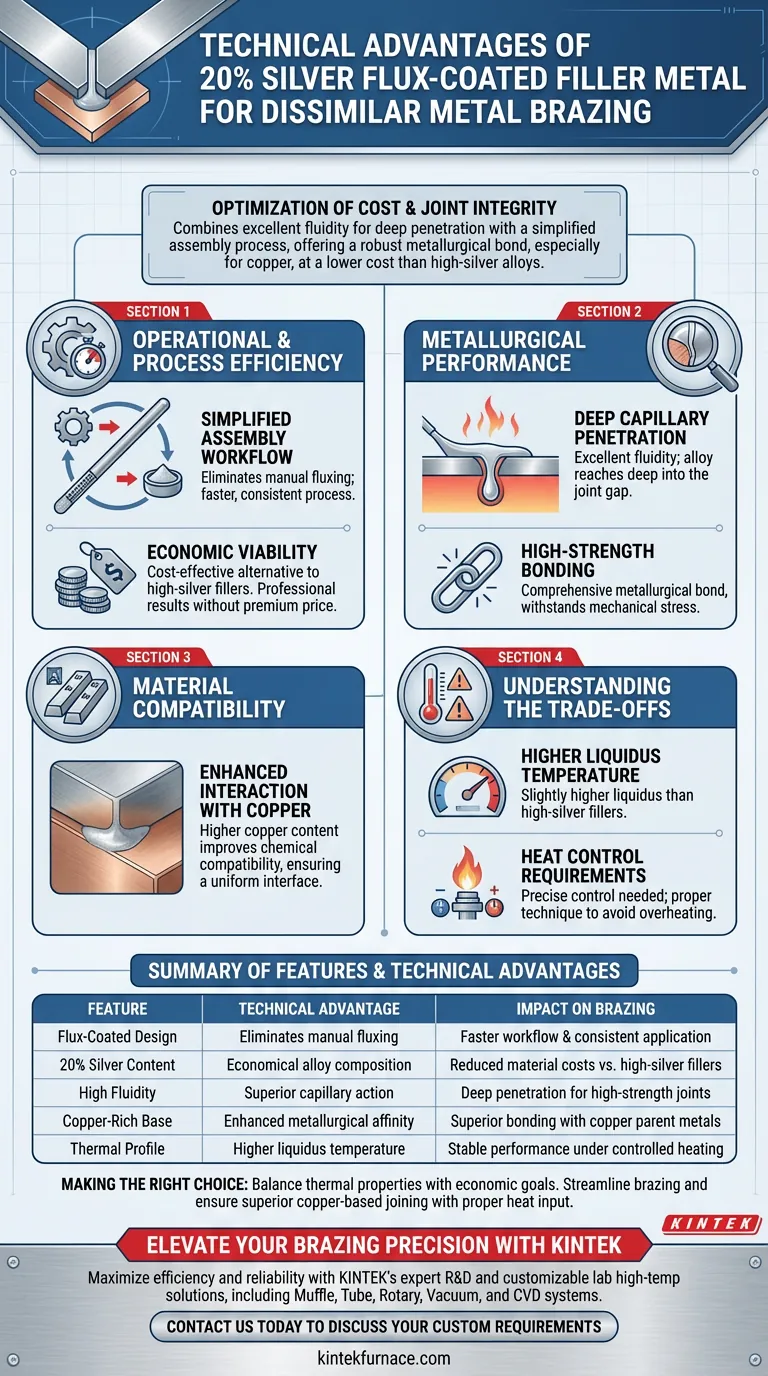
The primary technical advantage of using a flux-coated filler metal with 20% silver is the optimization of both cost and joint integrity in dissimilar metal brazing. This filler metal combines excellent fluidity for deep joint penetration with a simplified assembly process due to the pre-placed flux. It provides a robust metallurgical bond, specifically enhancing compatibility with copper parent metals while offering a more economical alternative to high-silver alloys.
By eliminating separate flux application and leveraging higher copper content for better base metal compatibility, this filler creates a streamlined, high-strength solution for complex joining applications.
Operational and Process Efficiency
Simplified Assembly Workflow
The flux-coated design significantly reduces preparation time by eliminating the need for manual flux application. By pre-placing the flux directly on the filler surface, the assembly process becomes faster and less prone to operator inconsistency.
Economic Viability
Using a 20% silver content provides a cost-effective alternative to high-silver fillers. It delivers professional-grade results and efficiency without the premium price tag associated with higher silver concentrations.
Metallurgical Performance
Deep Capillary Penetration
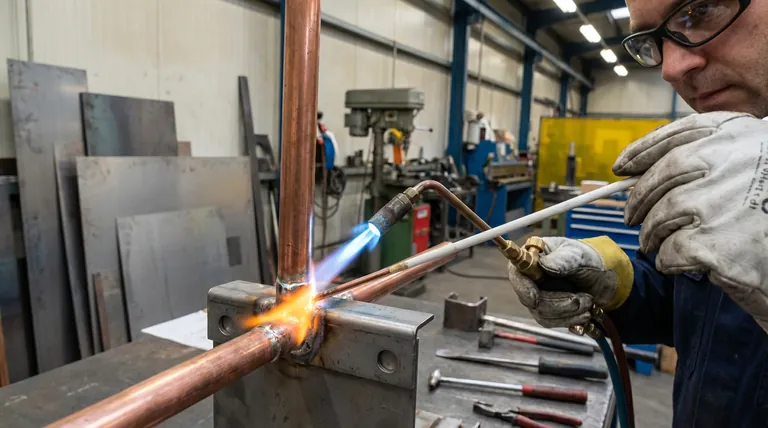
When heated by a torch, this filler metal demonstrates excellent fluidity. This characteristic allows the alloy to utilize capillary action effectively, reaching deep into the joint gap rather than merely sitting on the surface.
High-Strength Bonding
The deep penetration capability ensures a comprehensive metallurgical bond. This results in a high-strength joint capable of withstanding mechanical stress, which is critical when joining metals with different properties.
Material Compatibility
Enhanced Interaction with Copper
Because this filler contains 20% silver, the remaining composition includes a higher percentage of copper compared to high-silver alternatives. This increased copper content improves the filler's chemical compatibility with copper parent metals, ensuring a more uniform and reliable interface.
Understanding the Trade-offs
Higher Liquidus Temperature
It is essential to recognize that this filler metal has a slightly higher liquidus temperature than high-silver fillers.
Heat Control Requirements
Due to this higher temperature threshold, operators must exercise precise control during torch heating. Proper technique is required to ensure the filler flows correctly without overheating or distorting the base materials.
Making the Right Choice for Your Project
Selecting the correct filler requires balancing thermal properties with economic goals.
- If your primary focus is operational efficiency: Choose this filler to streamline the brazing process and eliminate the step of separate flux application.
- If your primary focus is copper-based joining: Leverage the higher copper content to ensure superior chemical compatibility and bonding with copper parent metals.
By mastering the heat input required for this alloy, you achieve a durable, professional joint that balances performance with economy.
Summary Table:
| Feature | Technical Advantage | Impact on Brazing |
|---|---|---|
| Flux-Coated Design | Eliminates manual fluxing | Faster workflow & consistent application |
| 20% Silver Content | Economical alloy composition | Reduced material costs vs. high-silver fillers |
| High Fluidity | Superior capillary action | Deep penetration for high-strength joints |
| Copper-Rich Base | Enhanced metallurgical affinity | Superior bonding with copper parent metals |
| Thermal Profile | Higher liquidus temperature | Stable performance under controlled heating |
Elevate Your Brazing Precision with KINTEK
Maximize operational efficiency and joint reliability with materials designed for performance. Backed by expert R&D and manufacturing, KINTEK offers a comprehensive range of lab high-temp solutions—including Muffle, Tube, Rotary, Vacuum, and CVD systems—all fully customizable to meet your unique metallurgical needs.
Whether you are joining dissimilar metals or optimizing high-temp workflows, our team is ready to provide the technical expertise you deserve. Contact us today to discuss your custom requirements!
Visual Guide
References
- Auday Awad Abtan, Iqbal Alshalal. Microstructure, Mechanical Properties, and Heat Distribution ANSYS model of CP Copper and 316 Stainless Steel Torch Brazing. DOI: 10.12913/22998624/177299
This article is also based on technical information from Kintek Furnace Knowledge Base .
Related Products
- CF KF Flange Vacuum Electrode Feedthrough Lead Sealing Assembly for Vacuum Systems
- Ultra-High Vacuum Flange Aviation Plug Glass Sintered Airtight Circular Connector for KF ISO CF
- Vacuum Heat Treat Sintering and Brazing Furnace
- Magnesium Extraction and Purification Condensing Tube Furnace
- Vacuum Induction Melting Furnace
People Also Ask
- Why is a vacuum sealing process necessary for the synthesis of TaAs2 single crystals? Ensuring Purity in CVT Method
- Why is a PTFE-lined stainless steel autoclave used for Ni12P5 synthesis? Key Benefits for Nanomaterial Production
- What is the function of PTFE sealing rings in plastic pyrolysis? Ensure Safe, Anaerobic Material Decomposition
- What is the function of a Teflon-lined stainless steel autoclave in the hydrothermal synthesis of Bi2O3 precursors?
- Why is a stainless steel autoclave with a Teflon liner necessary for BiVO4? Ensure Purity & High Performance