
To ensure safety and experimental success, furnace tubes must be constructed from materials that deliver high heat resistance, oxidation resistance, and mechanical structural strength. For combustion applications specifically, high heat-resistant stainless steel—such as grade H25N20S2—is the standard, capable of maintaining integrity at temperatures up to 1200°C without softening.
Successful high-temperature operations require materials that resist both thermal softening and chemical corrosion. Selecting the correct tube material is not just about reaching a specific temperature; it is about ensuring the vessel retains its shape and does not contaminate the experiment through oxidation or failure.
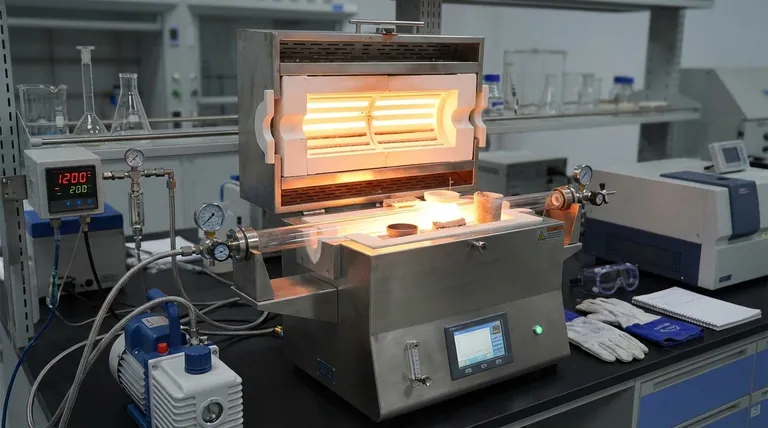
Critical Performance Criteria
Mechanical Structural Strength
The most fundamental requirement for a furnace tube is the ability to resist softening under thermal load. Materials must maintain their rigidity to prevent structural collapse or deformation during experiments.
Oxidation Resistance
At elevated temperatures, standard metals degrade rapidly due to oxidation. Furnace tubes must utilize specialized alloys or materials that resist this chemical breakdown to ensure the continuity of the experiment.
Thermal Stability
Materials must remain stable over long periods of operation. This stability prevents fluctuations that could compromise precise temperature control or lead to safety hazards.
Material Selection by Application
High-Heat Resistant Stainless Steel
For combustion tubes, high-grade stainless steel (specifically grade H25N20S2) is the primary choice. This material provides the necessary balance of structural strength and oxidation resistance required for operations up to 1200°C.
Glass and Ceramic Options
For general high-temperature applications, materials such as fused quartz, Pyrex, and various ceramics are commonly used. These materials are selected for their ability to withstand high heat without the conductive properties of metal.
Materials for Corrosive Environments
When experiments involve corrosive substances, standard steel or glass may degrade. In these specific chemical environments, metal tubes constructed from tungsten or molybdenum are often utilized for their robust chemical resistance.
The Role of Alumina Ceramics
Alumina ceramics are notable for their high thermal resistance and insulating properties. While often used in heaters to improve efficiency and reduce energy consumption, their stability makes them a reference point for materials that must mitigate overheating risks.
Understanding the Trade-offs
Temperature Limits vs. Material Ductility
While stainless steel (H25N20S2) offers excellent ductility and strength, it has a hard temperature ceiling around 1200°C. Pushing metal tubes beyond their rated thermal limit invites immediate risk of softening and structural failure.
Chemical Compatibility vs. Cost
Refractory metals like tungsten and molybdenum offer superior resistance to specific corrosive elements. However, they are specialized materials often reserved for specific use cases where standard stainless steel or quartz would fail chemically.
Making the Right Choice for Your Goal
To select the appropriate furnace tube for your laboratory environment, you must align the material properties with your specific experimental constraints.
- If your primary focus is structural durability up to 1200°C: Prioritize high heat-resistant stainless steel (grade H25N20S2) to prevent failure due to softening.
- If your primary focus is handling corrosive substances: Select specialized metal tubes made from tungsten or molybdenum to resist chemical attack.
- If your primary focus is general high-heat stability: Consider fused quartz, Pyrex, or ceramics for reliable performance in standard heating environments.
By matching the material's thermal and chemical limits to your experimental parameters, you ensure both the safety of the operator and the accuracy of your results.
Summary Table:
| Material Type | Max Temp (Approx.) | Key Advantage | Typical Applications |
|---|---|---|---|
| Stainless Steel (H25N20S2) | Up to 1200°C | High structural strength & oxidation resistance | Combustion tubes, general heating |
| Fused Quartz / Pyrex | Varies | Excellent thermal stability, non-conductive | General lab heating, optical applications |
| Alumina Ceramics | High | Superior insulation & thermal resistance | High-efficiency heating, energy saving |
| Tungsten / Molybdenum | Very High | Exceptional resistance to corrosion | Corrosive chemical environments |
Elevate Your Lab's Thermal Performance with KINTEK
Selecting the right furnace tube material is critical for experimental accuracy and equipment longevity. Backed by expert R&D and manufacturing, KINTEK offers high-performance Muffle, Tube, Rotary, Vacuum, and CVD systems designed to meet your most demanding thermal requirements. Whether you need standard high-heat resistant stainless steel or specialized customizable lab high-temp furnaces, our team provides the precision and durability your research deserves.
Ready to optimize your high-temperature operations? Contact KINTEK today to discuss your unique needs with our technical experts.
Visual Guide

References
- Beata Brzychczyk, L. J. Sikora. Modernization of a Tube Furnace as Part of Zero-Waste Practice. DOI: 10.3390/su17198940
This article is also based on technical information from Kintek Furnace Knowledge Base .
Related Products
- 1400℃ High Temperature Laboratory Tube Furnace with Alumina Tube
- 1700℃ High Temperature Laboratory Tube Furnace with Alumina Tube
- 1200℃ Split Tube Furnace Laboratory Quartz Tube Furnace with Quartz Tube
- Vertical Laboratory Quartz Tube Furnace Tubular Furnace
- High Pressure Laboratory Vacuum Tube Furnace
People Also Ask
- How does zone-melting in tube furnaces synthesize bismuth micro-wires? Master Single-Crystal Thermoelectric Growth
- How are high-temperature laboratory tube furnaces applied in long-term vacuum homogenization heat treatments for intermetallic samples?
- How are high-temp tube furnaces used to measure diffusion coefficients per Fick's law? Master Precision Annealing
- How do high-temperature laboratory tube furnaces ensure environmental stability? Precision Thermal Reduction Tips
- How are high-temperature tube furnaces applied in testing ceramic-supported alloy membranes? Insights



















