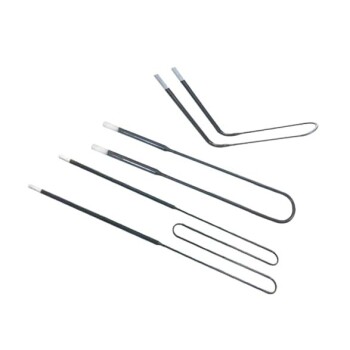
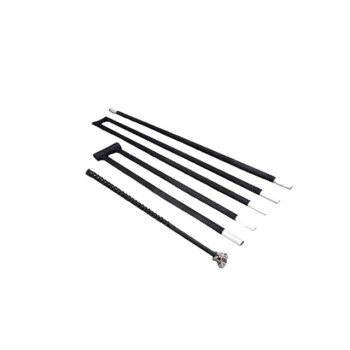
At their core, Molybdenum Disilicide (MoSi2) heating elements are engineered for the most demanding high-temperature environments. Their defining features are an exceptionally high operating temperature, a uniquely long lifespan, and a self-healing capability that protects them from oxidation. This combination makes them a premier choice for industrial furnaces operating continuously at extreme heat.
The crucial insight is that the very property that gives MoSi2 elements their long life—the formation of a protective silica glass layer at high temperatures—also dictates their primary operational requirement: they must be used in an oxidizing atmosphere to function correctly.
The Core Advantages Explained
MoSi2 elements derive their market-leading performance from a unique set of material properties. Understanding these is key to leveraging their full potential.
Unmatched High-Temperature Performance
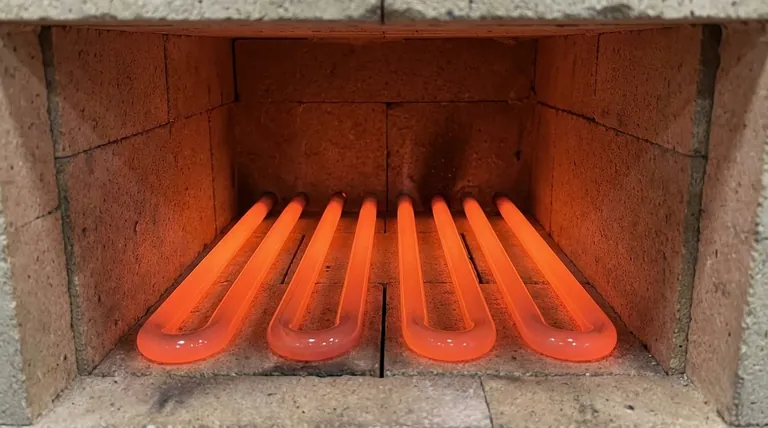
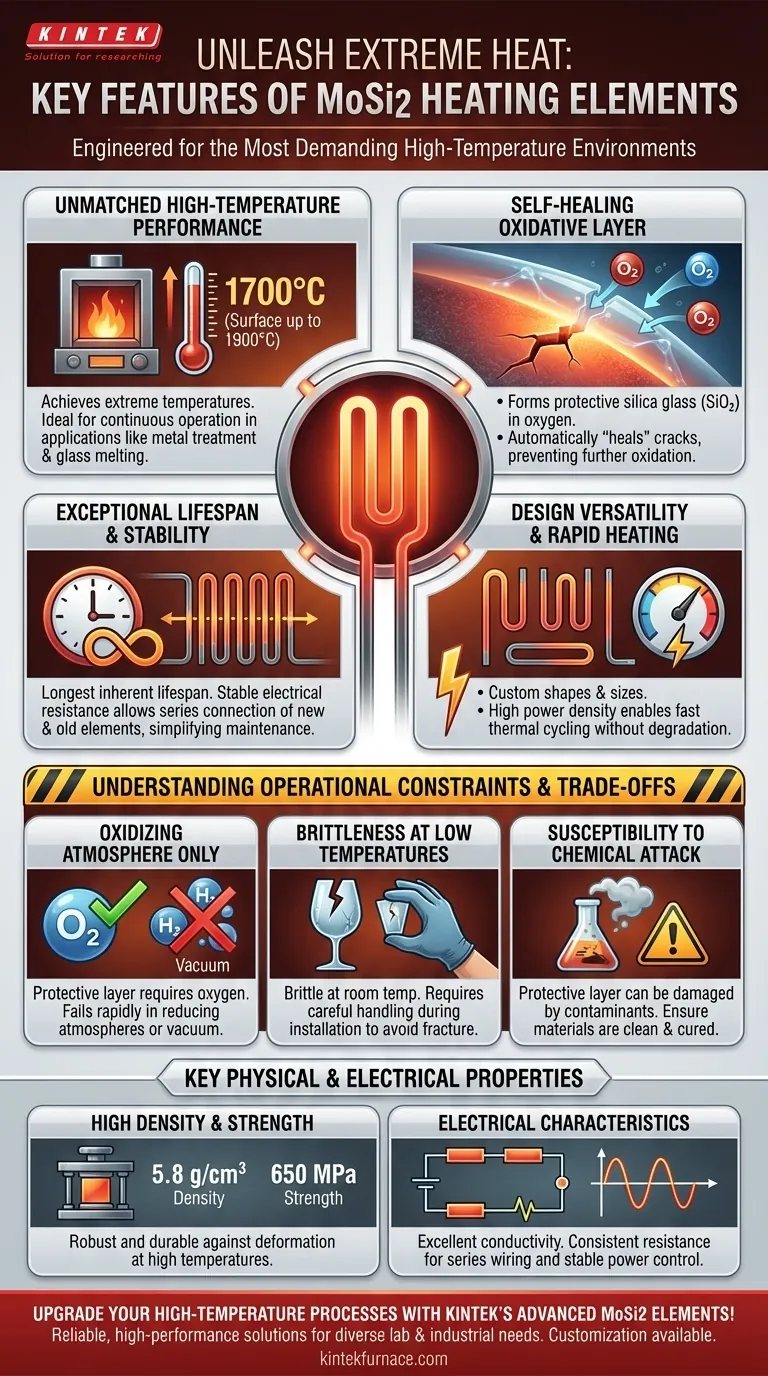
MoSi2 elements are built to operate where many other metallic elements fail. They can achieve furnace temperatures between 1600°C and 1700°C, with some element surface temperatures reaching as high as 1900°C.
This makes them the default choice for applications like metal heat treatment, glass melting, and ceramic sintering that require sustained, extreme heat.
The Self-Healing Oxidative Layer
The most remarkable feature of MoSi2 is its antioxidant and auto-repair function. When heated in an oxygen-rich atmosphere, a thin, non-porous layer of silica glass (SiO₂) forms on the element's surface.
This protective layer prevents further oxidation of the underlying molybdenum disilicide. If a crack or spall occurs, the exposed material immediately re-oxidizes, effectively "healing" the damage and extending the element's life.
Exceptional Lifespan and Stability
Due to the protective silica layer, MoSi2 elements boast the longest inherent lifespan of all common electric heating elements, significantly reducing replacement frequency and furnace downtime.
Their electrical resistance remains remarkably stable over their entire life. This stability allows new elements to be connected in series with old ones without issue, simplifying maintenance and lowering replacement costs.
Design Versatility and Rapid Heating
These elements can be manufactured in a wide variety of shapes—such as U, W, and L—and custom sizes to fit specific furnace designs.
They also have a high power density, which translates to a very high heating rate and low power consumption. This allows for fast thermal cycling without degrading the element, increasing furnace throughput.
Understanding the Trade-offs and Operational Constraints
While powerful, MoSi2 elements are not universally applicable. Their performance is tied to specific operating conditions that must be respected.
The Requirement for an Oxidizing Atmosphere
The self-healing silica layer can only form in the presence of oxygen. Using MoSi2 elements in a reducing atmosphere (like hydrogen or cracked ammonia) or a vacuum will prevent this layer from forming, leading to rapid degradation and failure.
Brittleness at Low Temperatures
Like many ceramics, MoSi2 is brittle at room temperature. Care must be taken during shipping, handling, and installation to avoid mechanical shock, which can cause fracture. The material gains ductility as it heats up.
Susceptibility to Chemical Attack
While resistant to oxidation, the protective silica layer can be attacked by certain contaminants. Technicians must ensure materials placed in the furnace, such as paints or binders on zirconia, are fully dried and cured to prevent chemical vapors from damaging the elements.
Key Physical and Electrical Properties
The performance advantages of MoSi2 are rooted in its fundamental material characteristics.
High Density and Strength
With a density of approximately 5.8 g/cm³ and a compressive strength of 650 MPa, MoSi2 is a robust material. This high density and strength contribute to its durability and resistance to deformation at high temperatures.
Electrical Characteristics
MoSi2 elements possess excellent electrical conductivity. They are designed to be wired in series circuits, a configuration made possible by their consistent and stable resistance over time. This simplifies furnace wiring and power control systems.
Making the Right Choice for Your Application
Selecting the right heating element requires matching its capabilities to your process goals.
- If your primary focus is maximum temperature and throughput: MoSi2 is the definitive choice for continuous operation above 1500°C and for applications requiring rapid heating cycles.
- If your primary focus is operational robustness in varied atmospheres: You must ensure a consistent oxidizing atmosphere for MoSi2; if your process involves reducing gases, an alternative element type is necessary.
- If your primary focus is minimizing long-term costs and downtime: MoSi2's exceptional lifespan and the ability to mix new and old elements make it highly cost-effective for high-utilization industrial furnaces.
Ultimately, MoSi2 elements are a specialized tool designed for extreme conditions, offering unparalleled performance when operated within their ideal parameters.
Summary Table:
| Feature | Description |
|---|---|
| High-Temperature Operation | Achieves furnace temperatures up to 1700°C, with element surfaces reaching 1900°C. |
| Self-Healing Capability | Forms a protective silica layer in oxidizing atmospheres, preventing oxidation and repairing damage. |
| Long Lifespan | Longest inherent lifespan among common heating elements, reducing replacement frequency. |
| Stable Resistance | Consistent electrical resistance allows series connection of new and old elements. |
| Design Versatility | Available in various shapes (U, W, L) and custom sizes for specific furnace designs. |
| Rapid Heating | High power density enables fast heating rates and low power consumption. |
| Brittleness at Low Temperatures | Requires careful handling to avoid fractures, as material is brittle when cold. |
| Atmosphere Requirement | Must be used in oxidizing atmospheres; not suitable for reducing gases or vacuum. |
Upgrade your high-temperature processes with KINTEK's advanced MoSi2 heating elements! Leveraging exceptional R&D and in-house manufacturing, we provide diverse laboratories and industrial facilities with reliable, high-performance solutions. Our product line, including Muffle, Tube, Rotary Furnaces, Vacuum & Atmosphere Furnaces, and CVD/PECVD Systems, is complemented by strong deep customization capabilities to precisely meet your unique experimental and production needs. Contact us today to discuss how our expertise can enhance your furnace efficiency and reduce downtime!
Visual Guide
Related Products
- Molybdenum Disilicide MoSi2 Thermal Heating Elements for Electric Furnace
- Silicon Carbide SiC Thermal Heating Elements for Electric Furnace
- Molybdenum Vacuum Heat Treat Furnace
- Vacuum Heat Treat Sintering Furnace Molybdenum Wire Vacuum Sintering Furnace
- 1400℃ Muffle Oven Furnace for Laboratory
People Also Ask
- What are the typical application temperatures for molybdenum disilicide (MoSi2) heating elements? Master High-Temp Performance
- What is the primary use of molybdenum disilicide? Ideal for High-Temp Heating Elements
- What are the characteristics of molybdenum disilicide heating elements? Unlock High-Temp Performance
- What are the properties of molybdenum disilicide (MoSi2) that make it suitable for high-temperature applications? Discover Its High-Temp Resilience
- What are the applications of molybdenum disilicide heating elements? Achieve Extreme Heat Stability for Industrial Processes