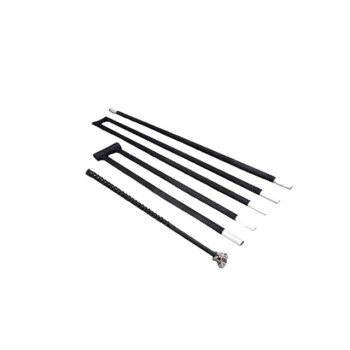
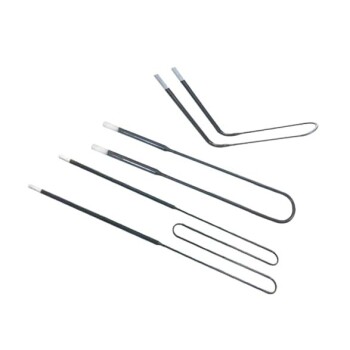
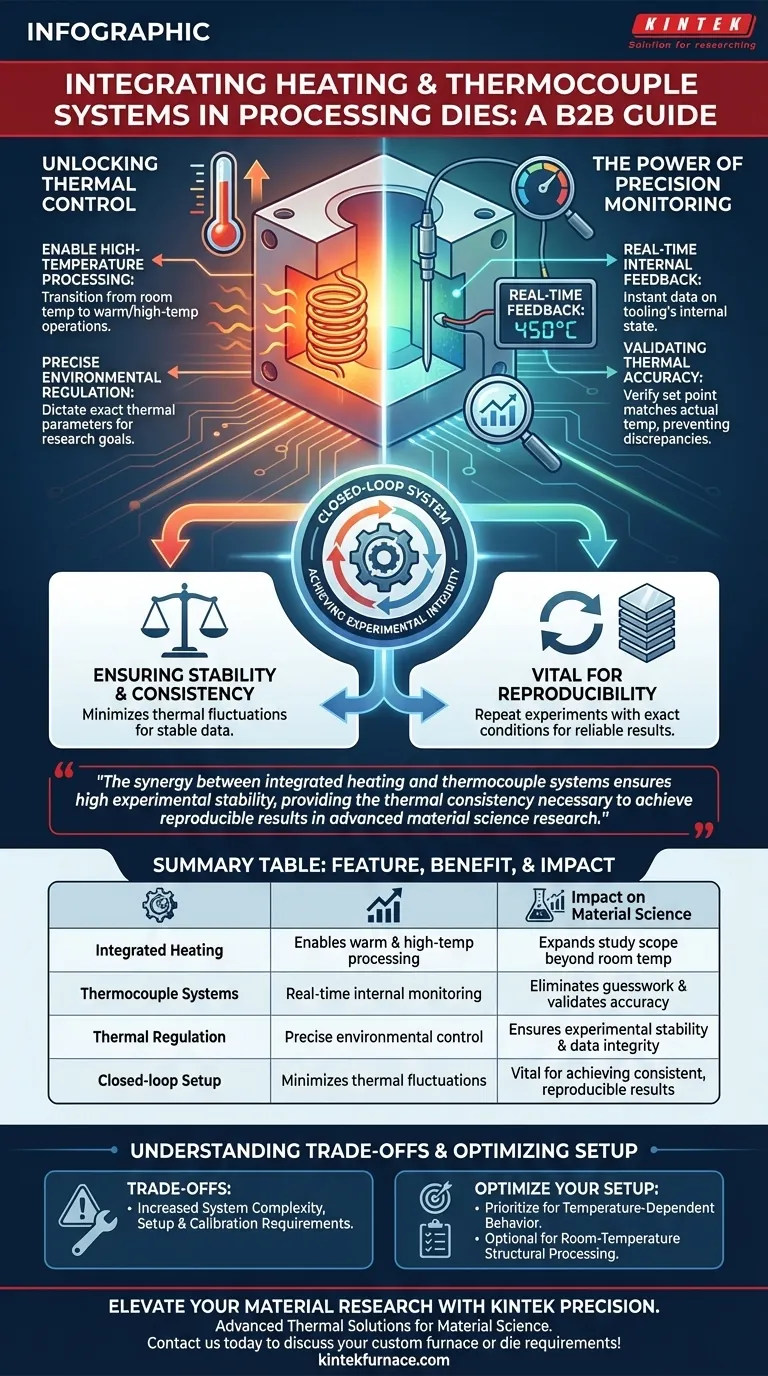
Integrating heating elements and thermocouple systems into specialized processing dies transforms basic tooling into an active, controlled experimental environment. This combination offers two primary advantages: precise regulation of environmental temperatures to enable warm or high-temperature processing, and real-time internal monitoring to ensure the data you collect is accurate and consistent.
The synergy between integrated heating and thermocouple systems ensures high experimental stability, providing the thermal consistency necessary to achieve reproducible results in advanced material science research.
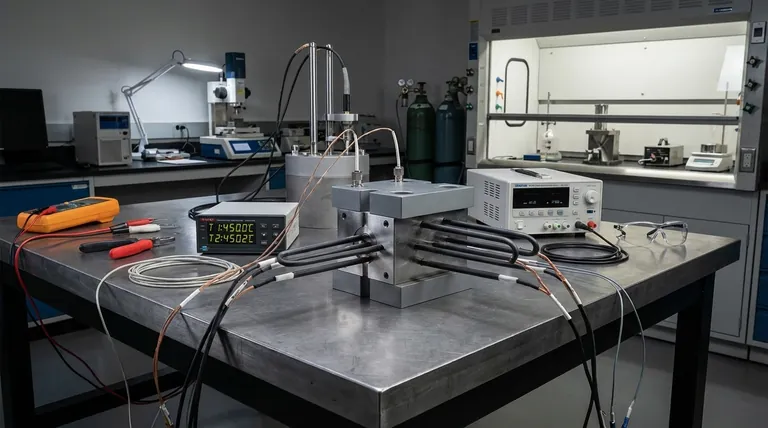
Unlocking Thermal Control
Enabling High-Temperature Processing
Standard dies are often limited to room-temperature operations, which restricts the scope of material studies. By integrating heating elements, you gain the ability to transition from room temperature to warm or high-temperature processing.
Precise Environmental Regulation
This integration allows you to dictate the exact environmental conditions surrounding the workpiece. Rather than relying on ambient conditions, you can establish and maintain specific thermal parameters required by your specific research goals.
The Power of Precision Monitoring
Real-Time Internal Feedback
A thermocouple system acts as the nervous system of the die, providing real-time feedback on the internal state of the tool. This eliminates guesswork regarding the actual temperature at the point of processing.
Validating Thermal Accuracy
Monitoring is not just about observing heat; it is about verifying accuracy. The thermocouple ensures that the temperature set by the heating elements is achieved and maintained within the die itself, preventing discrepancies between the set point and the actual processing environment.
Achieving Experimental Integrity
Ensuring Stability and Consistency
The combination of active heating and active monitoring creates a closed-loop system of sorts. This setup ensures high experimental stability, minimizing thermal fluctuations that could introduce variables into your data.
Vital for Reproducibility
In material science research and development, validity depends on reproducibility. By strictly controlling and monitoring the thermal environment, you ensure that experiments can be repeated with the exact same conditions, yielding reliable and comparable results.
Understanding the Trade-offs
Increased System Complexity
While beneficial, integrating these systems adds mechanical and electrical complexity to the die design. This requires more robust maintenance protocols to ensure heating elements do not fail and sensors remain calibrated.
Setup and Calibration Requirements
Unlike passive dies, these systems require setup time to reach thermal equilibrium and calibration to ensure accurate readings. You must account for this additional preparation time in your experimental workflow.
Optimizing Your Processing Setup
To decide if this integration is necessary for your specific application, consider your research goals:
- If your primary focus is temperature-dependent material behavior: Prioritize this integration to ensure you can precisely manipulate and verify thermal conditions during processing.
- If your primary focus is room-temperature structural processing: You may be able to forgo this complexity, though you sacrifice the ability to strictly control for ambient thermal fluctuations.
The value of this integration lies in replacing environmental assumptions with verifiable thermal data.
Summary Table:
| Feature | Benefit | Impact on Material Science |
|---|---|---|
| Integrated Heating | Enables warm & high-temp processing | Expands study scope beyond room temperature |
| Thermocouple Systems | Real-time internal monitoring | Eliminates guesswork and validates thermal accuracy |
| Thermal Regulation | Precise environmental control | Ensures experimental stability and data integrity |
| Closed-loop Setup | Minimizes thermal fluctuations | Vital for achieving consistent, reproducible results |
Elevate Your Material Research with KINTEK Precision
Ready to transform your experimental outcomes? KINTEK specializes in advanced thermal solutions tailored for material science professionals. Backed by expert R&D and manufacturing, we offer high-performance Muffle, Tube, Rotary, Vacuum, and CVD systems, alongside fully customizable lab furnaces and specialized processing dies for ECAP and beyond.
Don't let environmental variables compromise your data integrity. Our team of experts is ready to help you design a system that offers the precise thermal control and monitoring your unique research demands.
Contact us today to discuss your custom furnace or die requirements!
Visual Guide
References
- Qussay Salah Mahdi, Mustafa Mohammed Abdulrazaq. [RETRACTED] An Investigation of the Equal Channel Angular Pressing Process on the Hardness of Heat-Treated Al-7075 Alloy. DOI: 10.48084/etasr.10911
This article is also based on technical information from Kintek Furnace Knowledge Base .
Related Products
- Multi Heating Zones CVD Tube Furnace Machine for Chemical Vapor Deposition Equipment
- Multi Zone Laboratory Quartz Tube Furnace Tubular Furnace
- High Temperature Muffle Oven Furnace for Laboratory Debinding and Pre Sintering
- Silicon Carbide SiC Thermal Heating Elements for Electric Furnace
- Electric Rotary Kiln Continuous Working Small Rotary Furnace Kiln for Pyrolysis Plant Heating
People Also Ask
- What is the function of a multi-zone tube furnace in CVD synthesis? Master 2D In2Se3 Nanosheet Precision
- What environmental protection applications utilize multi zone tube furnaces? Unlock Precision in Waste Treatment and Green Tech
- What temperature-related capabilities make multi zone tube furnaces valuable for research? Unlock Precision Thermal Control
- Why are multi zone tube furnaces particularly useful for nanomaterial research? Unlock Precise Thermal Control for Advanced Synthesis
- What role do multi zone tube furnaces play in new energy research? Unlock Precise Thermal Control for Innovation