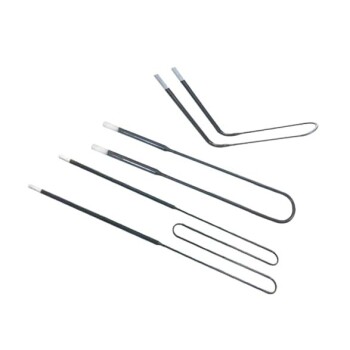
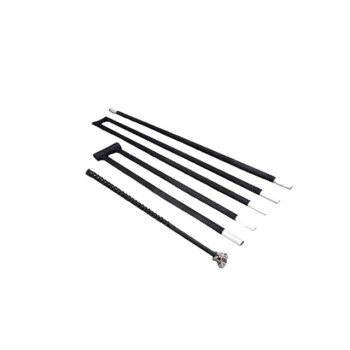
At their core, MoSi2 (Molybdenum Disilicide) heating elements deliver operational efficiency through a combination of rapid heating rates, high-temperature stability, and exceptional energy conversion. This unique profile directly translates to lower energy bills, increased production throughput, and significantly reduced furnace downtime.
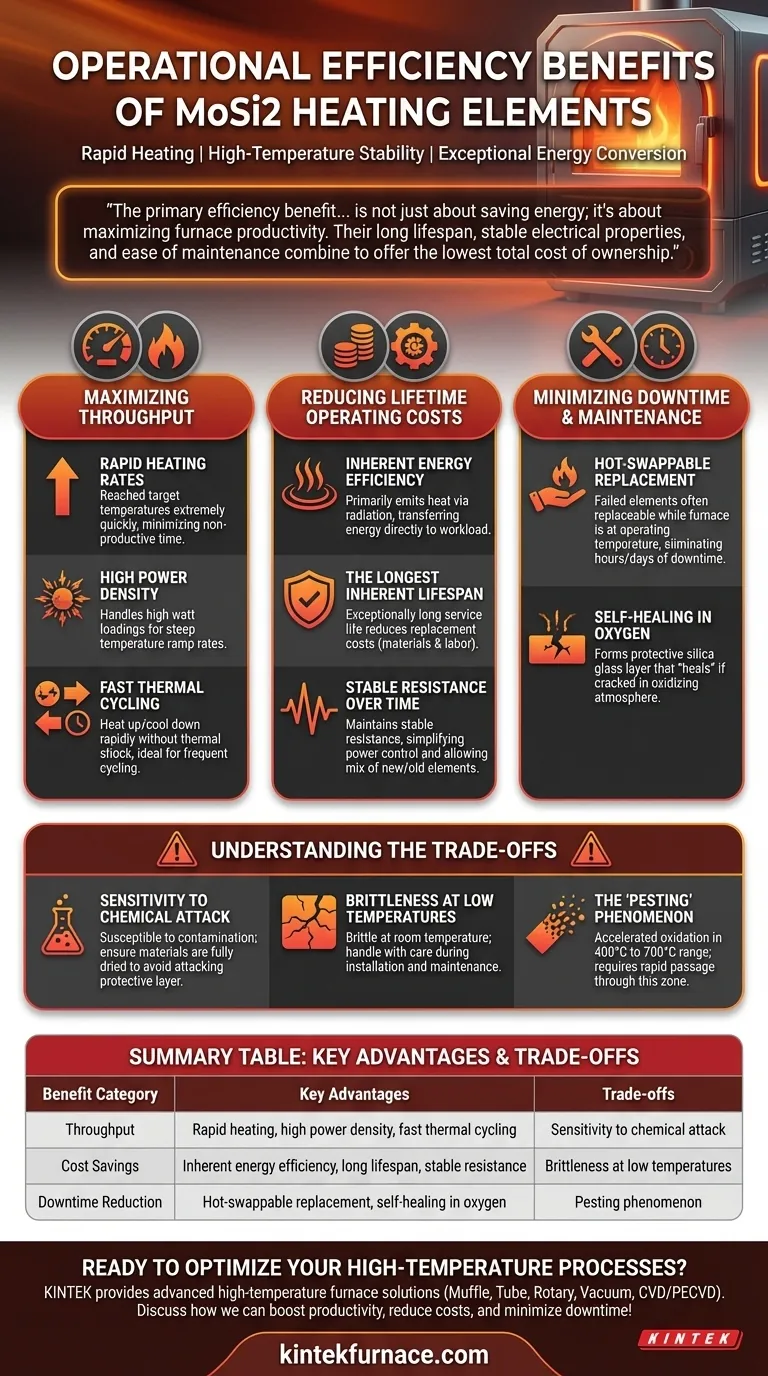
The primary efficiency benefit of MoSi2 is not just about saving energy; it's about maximizing furnace productivity. Their long lifespan, stable electrical properties, and ease of maintenance combine to offer the lowest total cost of ownership for many high-temperature processes.
Maximizing Throughput with Rapid Heating
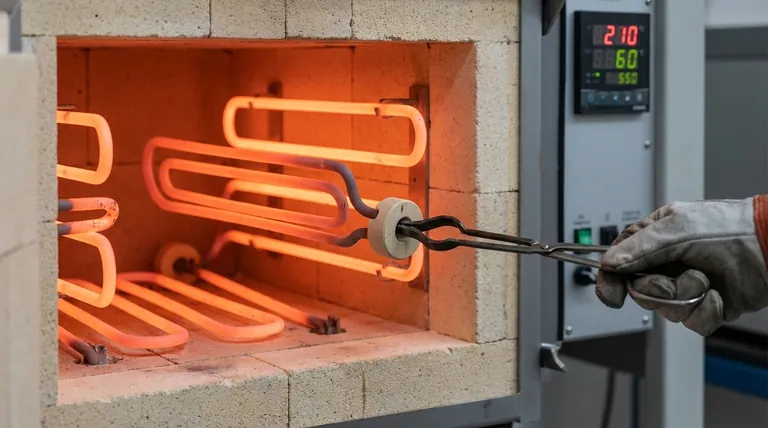
One of the most significant operational advantages of MoSi2 elements is their ability to reach target temperatures extremely quickly. This minimizes the non-productive time your furnace spends heating up.
High Power Density and Watt Loading
MoSi2 elements can handle very high watt loadings. This means they can convert a large amount of electrical energy into heat in a small area, enabling steep temperature ramp rates that are impossible with many other element types.
Fast Thermal Cycling
These elements can be heated up and cooled down rapidly and repeatedly without suffering from thermal shock or degradation. This makes them ideal for processes that do not run continuously and require frequent cycling.
Reducing Lifetime Operating Costs
The initial investment in MoSi2 elements is often paid back through lower ongoing operational expenses over the life of the furnace.
Inherent Energy Efficiency
MoSi2 elements primarily emit heat via radiation. This is a highly efficient method for transferring energy directly to the workload, minimizing wasted energy heating the air or furnace chamber.
The Longest Inherent Lifespan
When operated correctly, MoSi2 elements have an exceptionally long service life. This durability directly reduces the costs associated with frequent element replacement, both in terms of materials and labor.
Stable Resistance Over Time
Unlike Silicon Carbide (SiC) elements, which increase in resistance as they age, MoSi2 elements maintain a stable resistance throughout their life. This allows you to connect new and old elements in the same circuit without issue and simplifies power control system requirements.
Minimizing Downtime and Maintenance
Ease of service and robustness are key drivers of the operational efficiency provided by MoSi2 elements.
Hot-Swappable Element Replacement
A failed element can often be replaced while the furnace is still at operating temperature. This is a critical advantage in production environments, as it can eliminate hours or even days of downtime associated with cooling, replacing, and reheating the furnace.
Self-Healing in Oxygen
In an oxidizing atmosphere, MoSi2 elements form a thin, protective layer of silica glass (SiO2) on their surface. If this layer is cracked, the underlying material re-oxidizes, effectively "healing" the element and ensuring its continued long life.
Understanding the Trade-offs
To fully realize their benefits, you must be aware of their specific operational requirements and limitations. Objectivity requires acknowledging these factors.
Sensitivity to Chemical Attack
MoSi2 elements are susceptible to contamination. Care must be taken to ensure materials processed in the furnace, such as certain paints or colorants on zirconia, are fully dried and do not release vapors that can attack the elements' protective layer.
Brittleness at Low Temperatures
At room temperature, MoSi2 elements are brittle and must be handled with care during installation and maintenance to avoid fracture. They gain ductility as they heat up.
The "Pesting" Phenomenon
In a specific low-temperature range (approximately 400°C to 700°C), MoSi2 elements can be subject to accelerated oxidation, or "pesting," which can cause them to disintegrate. Furnaces using these elements must be designed to move through this temperature zone quickly.
Making the Right Choice for Your Application
Selecting the right heating element technology depends entirely on your operational priorities.
- If your primary focus is maximizing production speed and throughput: The rapid heating and thermal cycling capabilities are your most significant advantages.
- If your primary focus is reducing long-term operational costs: The combination of long lifespan, stable resistance, and energy efficiency will yield the lowest total cost of ownership in demanding high-temperature applications.
- If your primary focus is operational simplicity and uptime: The ability to replace elements while the furnace is hot and the stability of the elements over time dramatically reduce maintenance complexity and process downtime.
By understanding both their powerful benefits and their specific operational requirements, you can effectively leverage MoSi2 elements to achieve superior performance and efficiency in your high-temperature processes.
Summary Table:
| Benefit Category | Key Advantages |
|---|---|
| Throughput | Rapid heating rates, high power density, fast thermal cycling |
| Cost Savings | Inherent energy efficiency, long lifespan, stable resistance |
| Downtime Reduction | Hot-swappable replacement, self-healing in oxygen |
| Trade-offs | Sensitivity to chemical attack, brittleness at low temperatures, pesting phenomenon |
Ready to optimize your high-temperature processes with MoSi2 heating elements? Leveraging exceptional R&D and in-house manufacturing, KINTEK provides diverse laboratories with advanced high-temperature furnace solutions. Our product line, including Muffle, Tube, Rotary Furnaces, Vacuum & Atmosphere Furnaces, and CVD/PECVD Systems, is complemented by our strong deep customization capability to precisely meet unique experimental requirements. Contact us today to discuss how our solutions can boost your productivity, reduce costs, and minimize downtime!
Visual Guide
Related Products
- Molybdenum Disilicide MoSi2 Thermal Heating Elements for Electric Furnace
- Silicon Carbide SiC Thermal Heating Elements for Electric Furnace
- Molybdenum Vacuum Heat Treat Furnace
- Vacuum Heat Treat Sintering Furnace Molybdenum Wire Vacuum Sintering Furnace
- 1400℃ Muffle Oven Furnace for Laboratory
People Also Ask
- What are the typical application temperatures for molybdenum disilicide (MoSi2) heating elements? Master High-Temp Performance
- What is the primary use of molybdenum disilicide? Ideal for High-Temp Heating Elements
- What are the characteristics of molybdenum disilicide heating elements? Unlock High-Temp Performance
- What are the properties of molybdenum disilicide (MoSi2) that make it suitable for high-temperature applications? Discover Its High-Temp Resilience
- What are the applications of molybdenum disilicide heating elements? Achieve Extreme Heat Stability for Industrial Processes