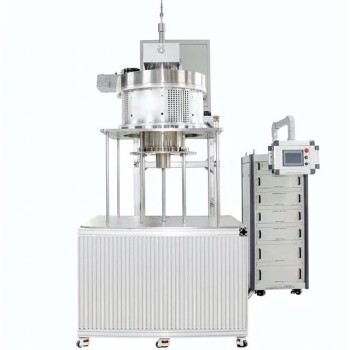
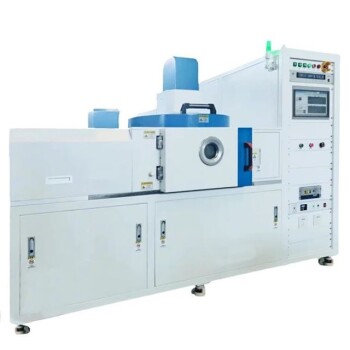
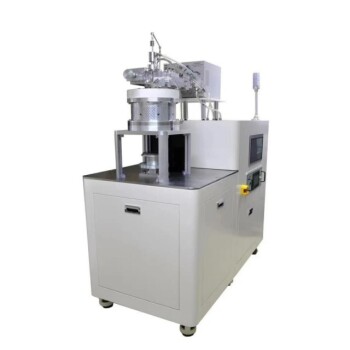
Spark Plasma Sintering (SPS) offers a definitive advantage over conventional methods for BCZY712 preparation by combining pulsed electrical current with high axial pressure. This approach allows you to achieve relative densities exceeding 98% while significantly lowering the required sintering temperature from 1550°C to 1200°C. Unlike conventional furnaces that rely on slow external heating, SPS facilitates rapid densification, preserving the material's chemical stability and microstructure.
Core Takeaway By shifting from the passive radiation heating of conventional furnaces to the active, direct Joule heating of SPS, you can bypass the thermal limitations that degrade BCZY712 electrolytes. This results in a denser, more conductive material with a uniform fine-grained structure, achieved in a fraction of the time required by traditional methods.
The Mechanics of Densification
Moving Beyond External Heating
Conventional tube or muffle furnaces rely on radiation and convection to transfer heat from the outside in. This process is inherently slow and inefficient for materials with high sintering activation energy like BCZY712.
The Power of Direct Joule Heating
SPS utilizes a pulsed high-voltage current that passes directly through the mold and the sample. This generates internal Joule heat and plasma discharge, allowing the material to reach the target temperature almost immediately.
Applying High Axial Pressure
In addition to heat, SPS applies mechanical pressure during the sintering process. This added force promotes particle rearrangement and densification at significantly lower thermal thresholds than pressureless sintering.
Optimizing Microstructure and Performance
Achieving Superior Density
With conventional methods, achieving high density is a struggle against time and temperature. SPS consistently achieves over 98% relative density for BCZY712 electrolytes, ensuring a robust physical structure.
Inhibiting Grain Growth
Prolonged exposure to high heat causes grains to coarsen, which can degrade mechanical properties. The rapid heating rates and short holding times of SPS effectively inhibit ceramic grain growth, preserving a fine, uniform microstructure.
Enhancing Conductivity
The combination of high density and fine grain structure directly correlates to performance. SPS-prepared electrolytes exhibit improved proton conductivity and superior mechanical strength compared to their conventionally sintered counterparts.
Understanding the Trade-offs: Stability vs. Time
The Risks of Long Durations
Conventional sintering requires holding temperatures for over 10 hours to allow for sufficient diffusion and pore elimination. This duration creates a high risk for side effects, specifically barium volatilization, which alters the chemical composition of the electrolyte.
The Efficiency of Short Durations
SPS dramatically reduces the processing window. By completing densification in minutes rather than hours, you virtually eliminate the window of opportunity for volatile elements to escape, ensuring the final product matches your stoichiometric intent.
Making the Right Choice for Your Goal
Depending on your specific requirements for the BCZY712 electrolyte, the choice of sintering method dictates the final quality.
- If your primary focus is maximizing density and conductivity: SPS is the superior choice, offering >98% density and improved proton transport through fine-grain retention.
- If your primary focus is compositional stoichiometry: SPS provides the necessary speed to prevent barium volatilization, a common failure point in the 10+ hour cycles of conventional furnaces.
Switching to SPS transforms the sintering process from a prolonged thermal endurance test into a rapid, precision-controlled fabrication step.
Summary Table:
| Feature | Conventional Sintering | Spark Plasma Sintering (SPS) |
|---|---|---|
| Sintering Temp (BCZY712) | ~1550°C | ~1200°C |
| Relative Density | Often <95% | >98% |
| Heating Mechanism | External (Radiation/Convection) | Internal (Direct Joule Heating) |
| Process Duration | 10+ Hours | Minutes |
| Grain Structure | Coarse (due to long heat exposure) | Fine-grained (inhibited growth) |
| Chemical Stability | High risk of Barium loss | Excellent (minimal volatilization) |
Revolutionize Your Material Research with KINTEK Advanced Sintering Solutions
Don't let traditional sintering limitations compromise the integrity of your BCZY712 electrolytes. KINTEK provides the cutting-edge technology needed to achieve superior material performance.
Backed by expert R&D and world-class manufacturing, we offer high-performance Muffle, Tube, Rotary, Vacuum, and CVD systems, alongside advanced sintering solutions tailored to your unique laboratory needs. Whether you require precise temperature control or rapid densification, our systems are fully customizable to help you prevent grain growth and preserve stoichiometry.
Ready to elevate your lab's efficiency? Contact us today to discuss your project requirements!
References
- Pallavi Bhaktapralhad Jagdale, Manav Saxena. Agri-waste derived electroactive carbon–iron oxide nanocomposite for oxygen reduction reaction: an experimental and theoretical study. DOI: 10.1039/d4ra01264j
This article is also based on technical information from Kintek Furnace Knowledge Base .
Related Products
- Spark Plasma Sintering SPS Furnace
- Chairside Dental Porcelain Zirconia Sintering Furnace with Transformer for Ceramic Restorations
- 600T Vacuum Induction Hot Press Vacuum Heat Treat and Sintering Furnace
- Dental Porcelain Zirconia Sintering Ceramic Vacuum Press Furnace
- 9MPa Air Pressure Vacuum Heat Treat and Sintering Furnace
People Also Ask
- Why is it necessary to maintain a high vacuum environment during the SPS of SiC? Key to High-Density Ceramics
- How does the heating mechanism of Spark Plasma Sintering (SPS) function? Enhance TiC/SiC Composite Fabrication
- What are the technical advantages of using an SPS sintering furnace? Elevate Al2O3-TiC Material Performance
- What are the steps in the discharge plasma sintering process? Master Fast, High-Density Material Consolidation
- What are the advantages of spark plasma sintering (SPS) over traditional forging? Precision Microstructural Control