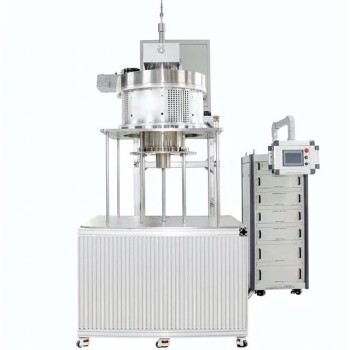
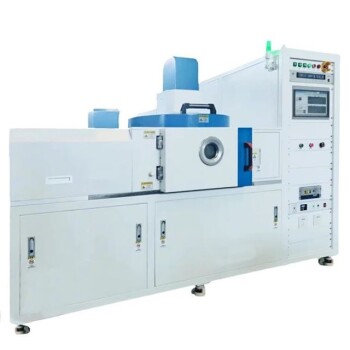
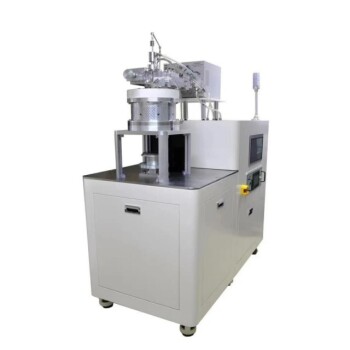
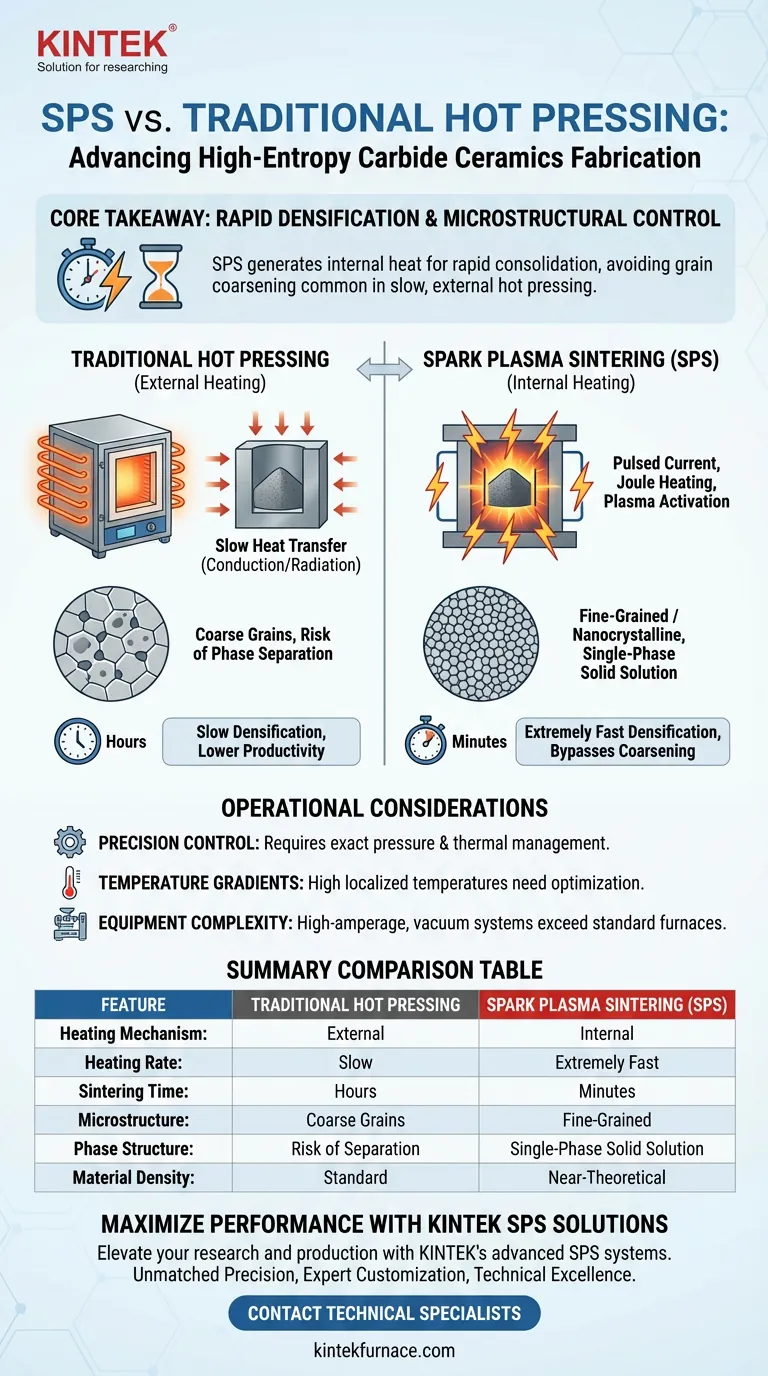
Spark Plasma Sintering (SPS) systems offer a distinct advantage over traditional hot pressing through the integration of pulsed current direct heating and precision pressure control. By utilizing plasma activation and Joule heating effects, SPS achieves densification rates that are unattainable with conventional external heating methods, specifically allowing for the formation of stable high-entropy carbide structures.
The Core Takeaway Traditional hot pressing relies on slow, external heat transfer which often leads to grain coarsening before density is achieved. SPS solves this by generating heat internally within the powder, enabling the consolidation of five-component high-entropy carbides into a single-phase solid solution with near-theoretical density and preserved fine-grain microstructures.
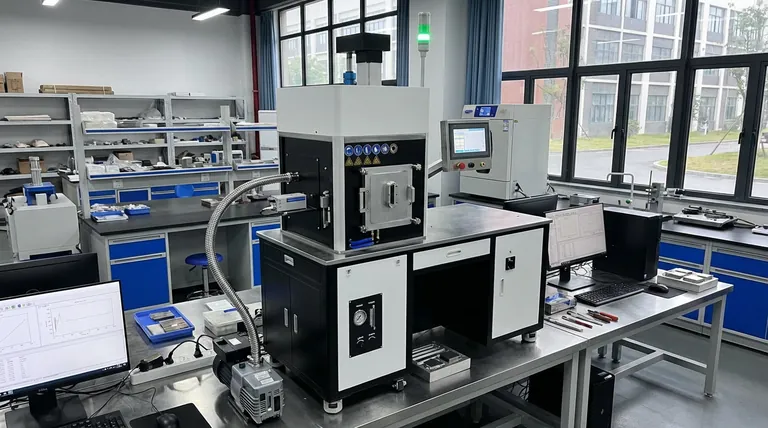
The Mechanism of Rapid Densification
Internal vs. External Heating
The defining difference lies in how heat is applied. While traditional furnaces heat the sample from the outside in, SPS passes pulsed electric currents directly through the graphite mold and the powder compact.
Joule Heating and Plasma Activation
This process generates Joule heat at the contact points between particles. The primary reference indicates that this internal heating mechanism, combined with plasma activation, significantly accelerates atomic diffusion.
Extreme Heating Rates
Because the heat is generated internally, SPS systems can achieve extremely high heating rates within the critical temperature range of 1800°C to 2300°C. This allows the material to bypass the lower temperature zones where surface diffusion (which causes coarsening) dominates, reaching the sintering temperature almost instantly.
Preserving Microstructural Integrity
Achieving Single-Phase Solid Solutions
For high-entropy ceramics, mixing five distinct carbide components into a single uniform lattice is the ultimate goal. SPS facilitates this by accelerating diffusion so effectively that the components form a completely solid-solution single-phase structure in a very short period.
Inhibiting Grain Growth
Time is the enemy of microstructure. The longer a ceramic sits at high temperature, the larger its grains grow, which reduces mechanical strength.
Short Holding Times
SPS requires very short holding times to achieve densification. This rapid process denies the grains the time needed to coalesce and grow. As a result, the final product retains a fine-grained or even nanocrystalline structure, which directly correlates to superior hardness and fracture toughness.
Operational Constraints and Considerations
The Necessity of Precision Control
While the advantages are clear, the SPS process is highly sensitive. The primary benefit—speed—relies on precision pressure control and exact thermal management.
Temperature Gradients
The mechanism causes the temperature at particle contact points to be significantly higher than the bulk temperature. While this aids diffusion, it requires careful parameter optimization to ensure uniform densification without localized melting or structural inhomogeneities.
Equipment Complexity
Achieving vacuum conditions and managing high-amperage pulsed currents introduces a level of complexity exceeding that of standard resistance furnaces. The process is optimized for high-value performance rather than operational simplicity.
Making the Right Choice for Your Goal
If your primary focus is Maximum Mechanical Performance: Choose SPS to achieve near-theoretical density while maintaining the ultra-fine grain structure required for maximum hardness and toughness.
If your primary focus is Compositional Homogeneity: Choose SPS to force the rapid formation of single-phase solid solutions in complex 5-component high-entropy alloys, avoiding phase separation.
If your primary focus is Process Efficiency: Choose SPS to drastically reduce cycle times from hours to minutes, lowering overall energy consumption per run despite the high peak power usage.
SPS transforms the sintering of high-entropy carbides from a battle against time and temperature into a controlled, rapid consolidation of superior materials.
Summary Table:
| Feature | Traditional Hot Pressing | Spark Plasma Sintering (SPS) |
|---|---|---|
| Heating Mechanism | External (Conduction/Radiation) | Internal (Joule Heating/Plasma) |
| Heating Rate | Slow (Low productivity) | Extremely Fast (Bypasses coarsening) |
| Sintering Time | Hours | Minutes |
| Microstructure | Coarse grains common | Fine-grained / Nanocrystalline |
| Phase Structure | Risk of phase separation | Single-phase solid solution |
| Material Density | Standard density | Near-theoretical density |
Maximize Your Material Performance with KINTEK SPS Solutions
Elevate your research and production with KINTEK’s advanced Spark Plasma Sintering (SPS) systems. Backed by expert R&D and manufacturing, we provide high-precision muffle, tube, vacuum, and customizable high-temp furnace systems designed to meet the rigorous demands of high-entropy ceramic fabrication.
Why partner with KINTEK?
- Unmatched Precision: Achieve near-theoretical density with superior microstructural integrity.
- Expert Customization: Our systems are tailored to your unique lab or industrial requirements.
- Technical Excellence: Benefit from our deep expertise in CVD, rotary, and vacuum furnace technologies.
Ready to transform your sintering process? Contact our technical specialists today to find the perfect customizable solution for your next breakthrough.
Visual Guide
References
- Evaluation of a fluidised catalytic cracking co‐processing method for the production of renewable fuels using Category 3 animal fat and used cooking oils. DOI: 10.2903/j.efsa.2025.9337
This article is also based on technical information from Kintek Furnace Knowledge Base .
Related Products
- Spark Plasma Sintering SPS Furnace
- Chairside Dental Porcelain Zirconia Sintering Furnace with Transformer for Ceramic Restorations
- 600T Vacuum Induction Hot Press Vacuum Heat Treat and Sintering Furnace
- 9MPa Air Pressure Vacuum Heat Treat and Sintering Furnace
- Dental Porcelain Zirconia Sintering Ceramic Vacuum Press Furnace
People Also Ask
- How does the heating mechanism of Spark Plasma Sintering (SPS) function? Enhance TiC/SiC Composite Fabrication
- Why is it necessary to maintain a high vacuum environment during the SPS of SiC? Key to High-Density Ceramics
- What are the technical advantages of using an SPS sintering furnace? Elevate Al2O3-TiC Material Performance
- What are the steps in the discharge plasma sintering process? Master Fast, High-Density Material Consolidation
- What are the advantages of spark plasma sintering (SPS) over traditional forging? Precision Microstructural Control