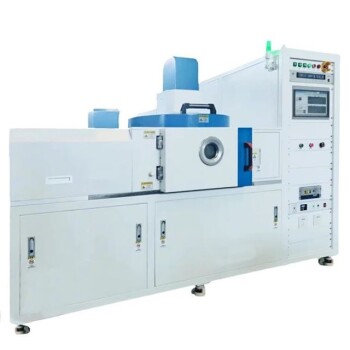
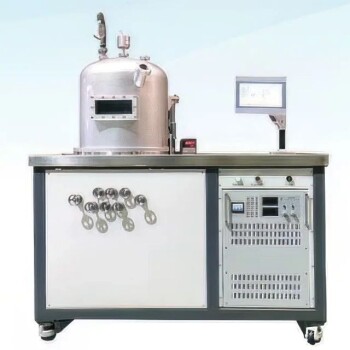
Plasma nitriding equipment distinguishes itself through superior process flexibility, offering a level of microstructural control that traditional gas nitriding processes cannot match. By strictly regulating the nitrogen-hydrogen gas mixture, pressure, and electrical parameters, this technology allows operators to dictate the precise composition of the surface layer rather than accepting a generic outcome.
The definitive advantage of plasma nitriding is the ability to suppress the formation of the brittle compound layer (white layer) entirely or tailor it to a specific phase, maximizing ductility and eliminating the need for post-process machining.
The Mechanics of Structural Control
Regulating Gas Composition
The core of this control lies in the precise regulation of the process gas, typically a mixture of nitrogen ($N_2$) and hydrogen ($H_2$).
By adjusting these ratios—often utilizing a standard of 30% nitrogen to 70% hydrogen—operators can fine-tune the nitrogen potential at the surface. This specific control prevents the nitrogen saturation that leads to uncontrolled layer growth.
Electrical Parameter Tuning
Beyond gas flow, plasma nitriding utilizes electrical parameters to influence the layer structure.
Adjusting the plasma density and voltage directly impacts the energy with which ions strike the workpiece. This allows for the manipulation of the microstructure's thickness and phase composition on a granular level.
Eliminating the "White Layer"
The Brittleness Challenge
In traditional gas nitriding, the process often creates a "white layer"—a compound zone on the surface that is extremely hard but inherently brittle.
This layer is prone to spalling or cracking under mechanical stress. Consequently, parts treated via traditional methods often require expensive grinding or machining to remove this brittle shell before they are fit for service.
The Diffusion-Only Solution
Plasma nitriding solves this by offering the capability to produce a diffusion layer without a compound layer.
By restricting the nitrogen supply to only what can diffuse into the steel lattice, the equipment creates a surface that is hardened but retains significant ductility. This "finished-surface" quality significantly reduces manufacturing cycle times.
The Role of Hydrogen
Surface Activation and Cleaning
Hydrogen plays a critical, active role in the plasma nitriding process beyond acting as a carrier gas.
It serves to reduce surface oxides, effectively cleaning the workpiece at a molecular level. This ensures that the nitrogen atoms can penetrate the surface uniformly, resulting in a consistent and high-quality layer structure.
Understanding the Trade-offs
Process Complexity
While the ability to control pressure, voltage, and gas ratios offers superior results, it introduces process complexity.
Operators must understand the interplay between these variables to achieve the desired single-phase or diffusion-only structure. Unlike "set-and-forget" methods, plasma nitriding requires precise recipe management to avoid inconsistent results.
Making the Right Choice for Your Goal
To leverage the advantages of plasma nitriding effectively, align the process parameters with your specific mechanical requirements:
- If your primary focus is high-impact durability: Configure the equipment to suppress the white layer entirely, creating a ductile diffusion zone that resists cracking.
- If your primary focus is maximum wear resistance: Adjust the gas ratios to form a controlled, single-phase compound layer that provides hardness without excessive brittleness.
Plasma nitriding changes surface treatment from a passive thermal cycle into an active, tunable manufacturing step.
Summary Table:
| Feature | Plasma Nitriding | Traditional Gas Nitriding |
|---|---|---|
| Compound Layer (White Layer) | Fully suppressible or tunable | Difficult to avoid; often brittle |
| Dimensional Control | High; often eliminates post-machining | Lower; often requires grinding |
| Process Flexibility | High (Gas, Pressure, & Voltage) | Limited (Temperature & Gas flow) |
| Surface Activation | Active ion cleaning (Hydrogen) | Passive chemical reaction |
| Resulting Ductility | High (Diffusion-only options) | Low (Prone to spalling/cracking) |
Optimize Your Material Performance with KINTEK
Don't settle for brittle surface layers that compromise your component integrity. Backed by expert R&D and manufacturing, KINTEK offers cutting-edge Muffle, Tube, Rotary, Vacuum, and CVD systems, including highly customizable lab high-temperature furnaces designed for precision surface treatments.
Whether you need to eliminate the "white layer" for high-impact durability or require a tailored phase composition for maximum wear resistance, our technical team is ready to deliver a solution for your unique needs.
Ready to transform your heat treatment process? Contact us today to discuss your custom furnace requirements!
References
- Magdalena Mokrzycka, Maciej Pytel. The influence of plasma nitriding process conditions on the microstructure of coatings obtained on the substrate of selected tool steels. DOI: 10.7862/rm.2024.1
This article is also based on technical information from Kintek Furnace Knowledge Base .
Related Products
- Spark Plasma Sintering SPS Furnace
- Slide PECVD Tube Furnace with Liquid Gasifier PECVD Machine
- Inclined Rotary Plasma Enhanced Chemical Deposition PECVD Tube Furnace Machine
- Inclined Rotary Plasma Enhanced Chemical Deposition PECVD Tube Furnace Machine
- 915MHz MPCVD Diamond Machine Microwave Plasma Chemical Vapor Deposition System Reactor
People Also Ask
- Why is it necessary to maintain a high vacuum environment during the SPS of SiC? Key to High-Density Ceramics
- How does the heating mechanism of Spark Plasma Sintering (SPS) function? Enhance TiC/SiC Composite Fabrication
- What are the technical advantages of using an SPS sintering furnace? Elevate Al2O3-TiC Material Performance
- What are the steps in the discharge plasma sintering process? Master Fast, High-Density Material Consolidation
- What are the advantages of spark plasma sintering (SPS) over traditional forging? Precision Microstructural Control