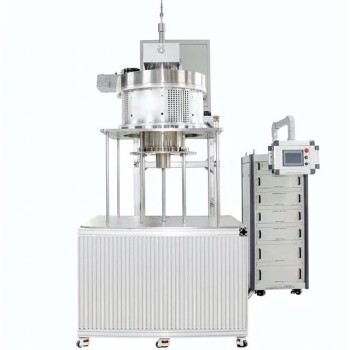
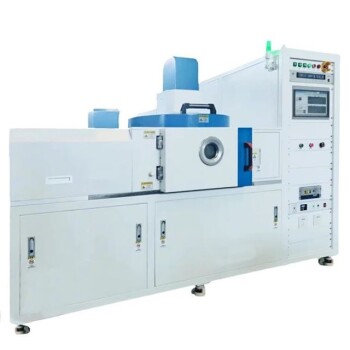
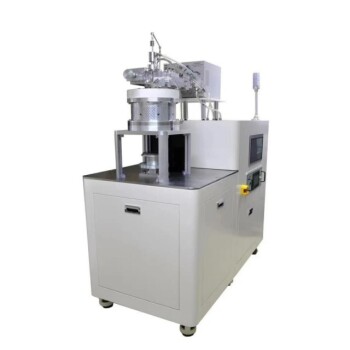
Spark Plasma Sintering (SPS) offers a decisive advantage over traditional hot pressing by utilizing pulsed electric currents to achieve rapid densification. By applying 50 MPa of axial pressure, an SPS system can fully process Tin Selenide (SnSe) alloys in as little as 5 minutes, a fraction of the time required by conventional methods.
Core Takeaway The primary value of SPS for Tin Selenide lies in its speed, which directly dictates material quality. By compressing the processing window to minutes, SPS prevents the grains within the alloy from growing excessively, resulting in a fine microstructure that enhances both mechanical strength and thermoelectric performance.
The Mechanism of Rapid Densification
Direct Pulsed Electric Current
Unlike traditional hot pressing, which relies on external heating elements to slowly warm the material, SPS passes pulsed electric currents directly through the mold and the powder.
Simultaneous Axial Pressure
To facilitate this rapid consolidation, the system applies significant force—specifically 50 MPa for SnSe alloys. This pressure assists in the diffusion process, allowing the particles to bond tightly without requiring prolonged exposure to heat.
Drastic Reduction in Processing Time
The combination of internal Joule heating and high pressure allows the sintering process to be completed in approximately 5 minutes. Traditional hot pressing typically requires significantly longer holding times to achieve similar densities.
Impact on Microstructure and Performance
Inhibiting Grain Growth
The most critical advantage of the 5-minute processing time is the inhibition of excessive grain growth. In slower thermal processes, grains have time to coarsen and expand, which can degrade the material's properties. SPS "freezes" the fine microstructure in place by finishing the process before substantial growth can occur.
Lower Lattice Thermal Conductivity
For Tin Selenide, maintaining a fine microstructure is not just about structural integrity; it is essential for performance. A finer grain structure creates more boundaries that scatter phonons, effectively reducing lattice thermal conductivity. This is a highly desirable trait for thermoelectric materials.
Improved Mechanical Properties
The preservation of fine grains also contributes to superior mechanical properties. Large, coarse grains often lead to brittleness, whereas the dense, fine-grained structure achieved via SPS results in a more robust alloy.
Critical Process Considerations
Parameter Sensitivity
While SPS offers superior results, it relies on a precise balance of high pressure (50 MPa) and rapid thermal ramping. Deviating from these specific parameters can result in incomplete densification or localized overheating.
The Necessity of Optimization
The "5-minute" advantage is only achievable if the system is correctly optimized for SnSe. Unlike traditional methods where "soaking" the material for longer can sometimes forgive minor temperature variances, the rapid nature of SPS requires strict adherence to the defined pressure and current profiles to ensure the material properties are uniform throughout the sample.
Making the Right Choice for Your Goal
To maximize the benefits of Spark Plasma Sintering for your SnSe projects, focus on the specific outcome you need to achieve:
- If your primary focus is Thermoelectric Efficiency: Prioritize SPS to achieve the finest possible grain size, as this directly lowers lattice thermal conductivity.
- If your primary focus is Manufacturing Throughput: Leverage the 5-minute cycle time to drastically increase production volume compared to the hours required for hot pressing.
SPS transforms the fabrication of SnSe from a slow, thermal endurance test into a rapid, precision-controlled operation that yields superior material characteristics.
Summary Table:
| Feature | Spark Plasma Sintering (SPS) | Traditional Hot Pressing |
|---|---|---|
| Processing Time | ~5 Minutes | Hours |
| Heating Method | Direct Pulsed Electric Current | External Heating Elements |
| Microstructure | Fine Grains (Inhibits Growth) | Coarse Grains (Common) |
| Thermal Conductivity | Lower (Superior for Thermoelectrics) | Higher |
| Pressure Applied | 50 MPa (for SnSe) | Variable |
| Throughput | High / Rapid | Low / Slow |
Elevate Your Material Research with KINTEK
Unlock the full potential of your Tin Selenide (SnSe) alloys and advanced materials with KINTEK’s cutting-edge sintering solutions. Backed by expert R&D and precision manufacturing, KINTEK offers customizable SPS, Vacuum, CVD, and high-temp lab furnaces tailored to your unique research needs.
Whether you require rapid densification or precise microstructure control, our systems provide the reliability and performance necessary for next-generation breakthroughs. Ready to optimize your fabrication process? Contact KINTEK today to discuss your custom furnace needs!
References
- Nan Lin, Yuan Yu. Metavalent Bonding in Cubic SnSe Alloys Improves Thermoelectric Properties over a Broad Temperature Range. DOI: 10.1002/adfm.202315652
This article is also based on technical information from Kintek Furnace Knowledge Base .
Related Products
- Spark Plasma Sintering SPS Furnace
- Chairside Dental Porcelain Zirconia Sintering Furnace with Transformer for Ceramic Restorations
- 600T Vacuum Induction Hot Press Vacuum Heat Treat and Sintering Furnace
- Dental Porcelain Zirconia Sintering Ceramic Vacuum Press Furnace
- 9MPa Air Pressure Vacuum Heat Treat and Sintering Furnace
People Also Ask
- Why is it necessary to maintain a high vacuum environment during the SPS of SiC? Key to High-Density Ceramics
- How does the heating mechanism of Spark Plasma Sintering (SPS) function? Enhance TiC/SiC Composite Fabrication
- What are the technical advantages of using an SPS sintering furnace? Elevate Al2O3-TiC Material Performance
- What are the steps in the discharge plasma sintering process? Master Fast, High-Density Material Consolidation
- What are the advantages of spark plasma sintering (SPS) over traditional forging? Precision Microstructural Control