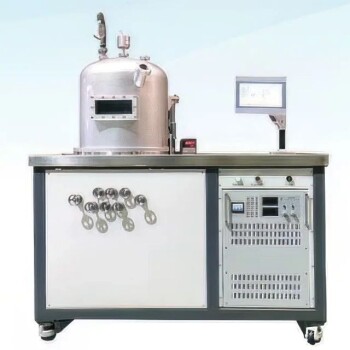
Multi-channel mass flow controllers (MFCs) dictate the structural integrity of Diamond-Like Carbon (DLC) coatings by precisely orchestrating the flow of three specific process gases: Argon, Nitrogen, and Acetylene. By managing the exact ratios of these gases, the controller steers the chemical reactions necessary to build the coating's complex, multi-layered architecture.
Core Takeaway The primary function of the MFC in this application is not just maintaining flow, but managing a dynamic gradient. By accurately shifting gas ratios, the system transforms the coating from a metal base to a functional carbon top layer, ensuring adhesion and durability.
The Three Essential Process Gases
The MFC manages distinct gases, each serving a specific chemical function during the deposition timeline.
Argon (Ar) for Surface Preparation
Argon acts as the foundation for the process. It is primarily used for ion etching, which cleans the substrate surface to ensure proper adhesion before any material is deposited.
Nitrogen (N2) for Intermediate Structure
Nitrogen is introduced to react chemically with chromium in the chamber. This reaction forms a Chromium Nitride (CrN) intermediate layer, which serves as a critical bridge between the substrate and the outer coating.
Acetylene (C2H2) for Carbon Deposition
Acetylene serves as the hydrocarbon source. The MFC regulates this gas to introduce carbon into the system, which is the fundamental building block for the final Diamond-Like Carbon (DLC) structure.
Orchestrating the Layered Transitions
The MFC is responsible for creating a smooth, graded transition between materials rather than abrupt, distinct interfaces.
From Metal to Nitride
The process begins with a pure metal layer. The MFC then gradually introduces Nitrogen to transition the composition into a hard CrN layer.
Creating the Gradient Layer (CrCN)
To bridge the gap between the nitride and the final carbon surface, the controller mixes gases to create a CrCN gradient layer. This complex layer contains both nitrogen and carbon, preventing stress buildup between the disparate materials.
The Functional DLC Top Layer
Finally, the MFC adjusts the flow to prioritize Acetylene. This final shift results in the deposition of the functional DLC top layer, providing the desired hardness and wear resistance.
The Criticality of Precision
While the concept is straightforward, the execution relies heavily on the accuracy of the mass flow controller.
The Consequence of Ratio Drift
If the gas ratios drift even slightly, the chemical stoichiometry of the layers will fail. For example, insufficient Nitrogen during the intermediate phase will prevent the formation of a stable CrN layer.
The Risk of Abrupt Transitions
The "smooth transition" mentioned in the primary reference is non-negotiable. If the MFC changes flow rates too abruptly, it creates distinct interfaces rather than a gradient, significantly increasing the risk of delamination (peeling) under stress.
Optimizing Deposition for Coating Longevity
The effectiveness of a DLC coating depends entirely on how well the gas transitions are managed.
- If your primary focus is Adhesion: Prioritize the precision of the Argon and Nitrogen flows to ensure the substrate is perfectly etched and the CrN anchor layer is chemically sound.
- If your primary focus is Surface Hardness: Ensure the Acetylene flow is stable and strictly controlled during the final stage to maximize the density of the DLC top layer.
True coating performance is achieved not by the individual gases, but by the precision of the transition between them.
Summary Table:
| Gas Type | Primary Function | Role in DLC Structure |
|---|---|---|
| Argon (Ar) | Ion Etching | Substrate cleaning & adhesion preparation |
| Nitrogen (N2) | Chemical Reaction | Formation of Chromium Nitride (CrN) bridge layer |
| Acetylene (C2H2) | Carbon Source | Deposition of the functional DLC top layer |
| Gas Mixtures | Gradient Control | Creating CrCN layers to prevent delamination |
Elevate Your Coating Precision with KINTEK
Achieving the perfect Diamond-Like Carbon (DLC) coating requires more than just high-quality gases—it demands the absolute precision of a controlled thermal and chemical environment. KINTEK provides the mission-critical hardware needed for sophisticated deposition processes.
Backed by expert R&D and world-class manufacturing, we offer a comprehensive range of Muffle, Tube, Rotary, Vacuum, and CVD systems, all of which are fully customizable to meet your specific lab or industrial high-temperature requirements. Our systems ensure the stability and gradient control necessary to prevent delamination and maximize surface hardness for your most demanding applications.
Ready to optimize your deposition workflow? Contact our technical specialists today to discover how KINTEK’s customizable furnace solutions can deliver the structural integrity your materials deserve.
Visual Guide

References
- Eneko Barba, J.A. Garcı́a. Study of the Industrial Application of Diamond-Like Carbon Coatings Deposited on Advanced Tool Steels. DOI: 10.3390/coatings14020159
This article is also based on technical information from Kintek Furnace Knowledge Base .
Related Products
People Also Ask
- What is Hot-filament Chemical Vapor Deposition (HFCVD)? Achieve High-Quality Thin Films with Precision Control
- What are the equipment for chemical vapor deposition? A Guide to the 5 Essential Components
- What is the significance of the vacuum pressure control system in the CVD coating process for powders?
- What is the function of high-purity Argon (Ar) gas during CVD? Optimize Your Thin Film Uniformity and Purity
- What are the advantages of using Chemical Vapor Deposition (CVD) for coating turbine blades? Enhance Life & Performance