The High-Temperature "Black Box" Problem
Imagine you are running a Self-propagating High-temperature Synthesis (SHS) for nitrated ferrovanadium. Inside the chamber, a combustion wave is surging through the alloy. In a matter of seconds, temperatures skyrocket, nitrogen is absorbed, and the chemical structure of your material transforms forever.
But there is a problem: you are flying blind.
Many researchers and industrial engineers face a common frustration—their end product is inconsistent. One batch has the perfect nitrogen content; the next is a failure. When you look at your data, the temperature readings are either erratic, "flatlined" because the sensor melted, or simply missing the peak of the combustion wave. You know the reaction is happening, but you can’t see the "pulse" of the process.
The Common Struggle: Why Standard Solutions Fall Short
When facing extreme heat, the first instinct is often to rely on standard Type S or Type B (Platinum-Rhodium) thermocouples. However, these usually fail or become dangerously unstable as temperatures approach or exceed 1800°C.
Others try optical pyrometers to measure from a distance. While useful, these are often "fooled" by the smoke, dust, and gases generated during the nitriding process, leading to inaccurate readings that don't reflect what is happening inside the alloy itself.
The business consequences of this guesswork are significant:
- Wasted Raw Materials: Expensive vanadium alloys are ruined due to improper nitrogen absorption.
- Project Delays: Weeks are lost trying to "guess" the right synthesis parameters through trial and error.
- Phase Failures: In processes like the transformation of boron nitride, missing the "Pressure-Temperature" (P-T) boundary by even a few degrees can result in the wrong phase composition, making the material useless for its intended application.
The Root Cause: The Physics of Thermal Limits
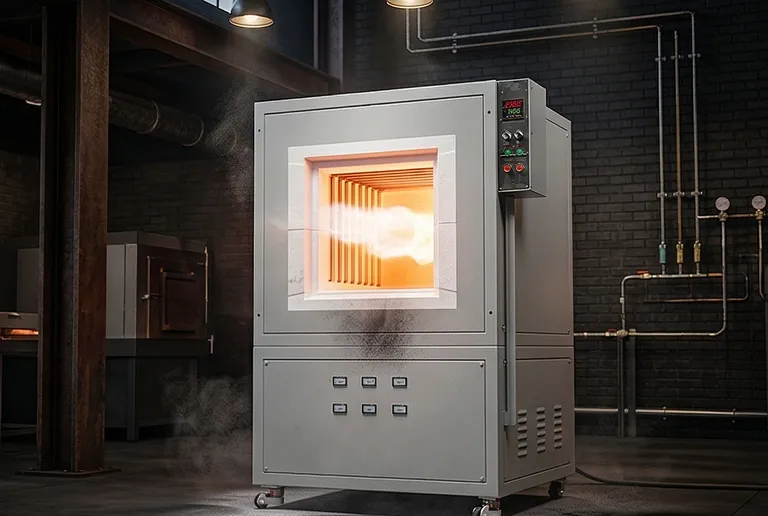
The reason these common solutions fail is simple physics. Most temperature sensors are not designed for the violent, high-temperature reducing or inert atmospheres required for ferrovanadium nitriding or advanced ceramics.
In these reactions, temperatures can instantaneously exceed 2300°C. At this level, standard metallic sheaths melt, and the thermocouple wires themselves undergo rapid grain growth and chemical degradation. If your sensor cannot survive the maximum combustion temperature within the combustion wave, you cannot establish the relationship between temperature and nitrogen absorption. Without that data, optimization is impossible.
To solve this, you don't just need "a sensor"—you need a material combination that maintains its structural integrity and thermoelectric stability at the very edge of what solid matter can withstand.
The Solution: Precision Monitoring with W-Re Technology
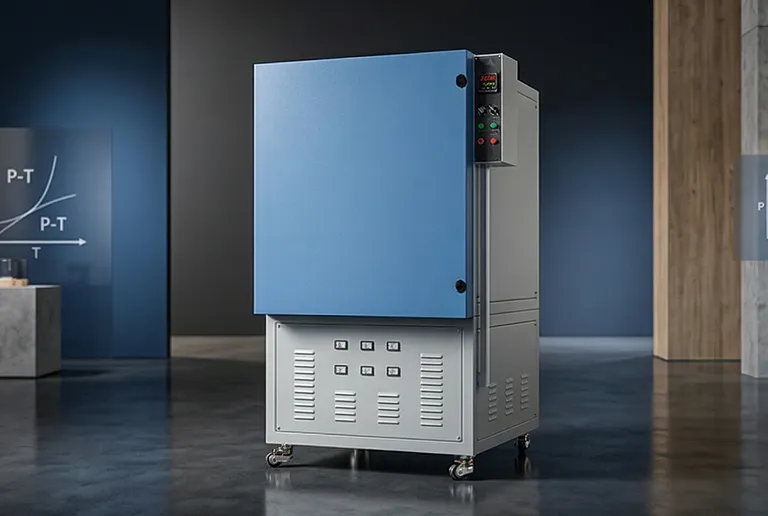
To pull back the curtain on these extreme reactions, industry leaders have turned to Tungsten-Rhenium (W-Re) thermocouples.
Unlike standard sensors, W-Re thermocouples (such as the W/Re-20) are engineered specifically for high-temperature limits in reducing or inert atmospheres. They provide the critical, real-time feedback necessary to monitor the extreme instantaneous temperatures generated during SHS.
At KINTEK, we design our high-temperature vacuum and atmosphere furnaces to integrate seamlessly with these high-precision sensors. Our systems aren't just "ovens"; they are controlled environments built to handle the unique demands of W-Re monitoring. By using W-Re technology, you gain:
- Real-time Kinetic Analysis: Capture the exact temperature distribution as the combustion front passes.
- Stability in Reducing Environments: Unlike platinum-based sensors, W-Re thrives in the specific atmospheres required for nitriding and carbon-loss analysis.
- Extreme Capability: Accurately measure temperatures exceeding 2300°C, ensuring you never miss the peak of the reaction.
Opening New Possibilities for Material Science
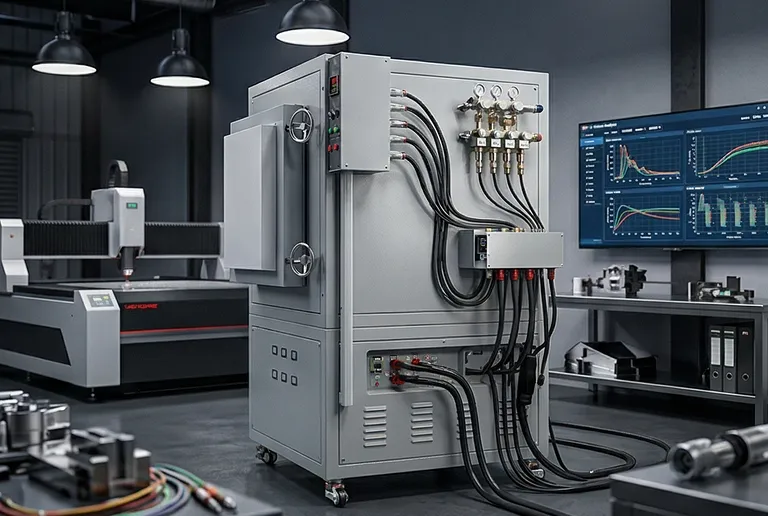
When you stop guessing and start measuring, the "Black Box" of high-temperature synthesis disappears. By accurately defining the P-T boundary and monitoring real-time feedback, you move from "trial and error" to "repeatable precision."
With this level of control, laboratories can explore more complex vanadium-content alloys with guaranteed nitrogen absorption. Manufacturers can accelerate their scale-up processes because the synthesis parameters are backed by hard, accurate data. Whether you are perfecting the phase composition of cubic boron nitride or optimizing a new nitriding process, the right tool turns a volatile reaction into a predictable science.
The challenges of ultra-high-temperature synthesis shouldn't be a barrier to your innovation. Whether you are dealing with inconsistent yields or struggling to monitor temperatures above 2000°C, our team at KINTEK can help you design a furnace system tailored to your specific technical requirements. Let’s move beyond the guesswork and bring precision to your most demanding high-temperature projects. Contact Our Experts.
Related Products
- Multi Heating Zones CVD Tube Furnace Machine for Chemical Vapor Deposition Equipment
- Multi Zone Laboratory Quartz Tube Furnace Tubular Furnace
- High Temperature Muffle Oven Furnace for Laboratory Debinding and Pre Sintering
- Vertical Laboratory Quartz Tube Furnace Tubular Furnace
- Laboratory Quartz Tube Furnace RTP Heating Tubular Furnace
Related Articles
- Beyond Heat: Mastering the Controlled Universe Inside a Tube Furnace
- Why Your Crystal Growth Experiments Are Failing: The Hidden Culprit in Your Tube Furnace
- Mastering the Void: How Tube Furnaces Forge the Atoms of Innovation
- Your Furnace Isn't Just a Heater: Why 'Good Enough' Equipment Is Sabotaging Your Advanced Materials Research
- Control is Everything: The Tube Furnace and the Art of Atomic-Scale Engineering