The short answer: Without a post-deposition furnace treatment, your nickel-tin coating is a ticking time bomb of unstable phases. Electrochemically deposited Ni-Sn alloys naturally trap metastable intermetallic compounds—primarily Ni₃Sn₄—alongside more stable phases. Heating the coating in a controlled laboratory furnace (typically at 150°C and above) provides the activation energy for a diffusion-driven phase transformation that converts Ni₃Sn₄ into the thermodynamically stable Ni₃Sn₂ phase, while simultaneously purging absorbed moisture and volatile residues that would otherwise sabotage long-term performance.
The central insight: thermal treatment isn’t a nice-to-have finishing step; it is the critical switch that locks the coating’s atomic structure into its most stable, low-energy configuration. Without it, phase evolution during service will cause gradual structural degradation, mechanical instability, and unpredictable optical properties—exactly what a functional coating cannot afford.
The Fundamental Problem: As-Deposited Coatings Are Phase Mixtures
Electrodeposition is a rapid, non-equilibrium process. Atoms are driven onto the substrate by a current, not by the gentle push toward thermodynamic equilibrium. The result is a frozen-in snapshot of multiple crystalline phases.
Why Metastable Ni₃Sn₄ Forms During Plating
In the Ni-Sn system, the Ni₃Sn₄ intermetallic has a lower nucleation barrier than the equilibrium Ni₃Sn₂ phase under typical deposition kinetics. The system gets “trapped” in this metastable state because there isn’t enough thermal energy to overcome the activation barrier for transformation. Consequently, your as-plated coating is a patchwork of Ni₃Sn₄, Ni₃Sn₂, and possibly elemental Sn—a mixture that is thermodynamically destined to change.
The Instability That Destroys Functional Reliability
Left at room temperature—or worse, at the elevated temperatures of a solar collector—this phase mixture is not static. The metastable Ni₃Sn₄ will slowly decompose or react with surrounding tin, causing volume changes, micro-cracking, and delamination. The coating’s mechanical integrity degrades, and its precisely engineered optical performance (absorptance vs. emittance) shifts unpredictably. You lose the very property that made the bimetallic coating functional in the first place.
How the Furnace Treatment Resolves Phase Instability
A laboratory high-temperature furnace provides the controlled thermal energy that nature alone cannot deliver fast enough. This is where the coating transitions from a chaotic as-deposited state to a predictable, durable engineered surface.
Diffusion-Controlled Transformation to the Stable Phase
When the coating is heated (e.g., to 150°C or higher, often under an inert atmosphere), atomic mobility skyrockets. Tin and nickel atoms can now diffuse across phase boundaries. This drives the solid-state reaction that converts Ni₃Sn₄ into the equilibrium Ni₃Sn₂ intermetallic. The transformation erases the thermodynamic driving force for further change, locking the coating into a single, stable crystalline population that will not morph during high-temperature operation.
Eliminating Absorbed Moisture and Volatile Residues
Electrodeposited coatings trap not only unstable phases but also physical contaminants—adsorbed water, organic bath additives, and trapped hydrogen. In service, these volatiles can create internal pressure pockets, cause blistering, or promote oxidation. A controlled furnace ramp gently bakes them out, leaving behind a clean, solid-state structure with far superior adhesion and long-term mechanical stability.
Restoring Consistent Optical Absorption
For energy applications like solar selective absorbers, the phase stabilization directly governs optical performance. The final, stable dendritic microstructure—which forms as Ni₃Sn₂ grows—acts as a radiation trap, delivering high solar absorptance (~98%) and low thermal emittance (~10%). This performance is only reproducible when the phase composition is uniform and locked in; a furnace treatment ensures that every production run hits the same optical target.
Understanding the Trade-offs and Practical Pitfalls
Post-deposition heat treatment is powerful, but it is not a blind “more heat is better” operation. Executing it incorrectly can ruin the coating just as surely as skipping it.
The Oxidation Danger Zone
Ni-Sn alloys are sensitive to oxidation at elevated temperatures. If the furnace atmosphere is not properly controlled (e.g., using argon, nitrogen, or forming gas), you risk forming surface oxide layers that decimate optical properties and weaken interlayer bonding. The furnace must offer precise atmosphere control—a core reason for using a high-temperature lab furnace rather than a simple hot plate.
Temperature Precision vs. Throughput
The transformation window is relatively narrow. Too low a temperature, and the conversion from Ni₃Sn₄ to Ni₃Sn₂ is incomplete—leaving residual instability. Too high, and you may incite grain growth that reduces the dendritic light-trapping efficiency or promote interdiffusion with the substrate. A programmable laboratory furnace gives you the ramp profiles and soaking times needed to hit that sweet spot, but it also demands careful process development for every coating thickness and composition.
Making the Right Choice for Your Functional Coating
The necessity of thermal treatment is clear, but your implementation must align with your end goal. Use these guidelines to tailor the process.
- If your primary focus is long-term mechanical integrity: Prioritize complete conversion of Ni₃Sn₄ to Ni₃Sn₂. Soak the coating at a temperature above the transformation threshold (typically 150–200°C) under inert gas until microstructural analysis (XRD) confirms a single-phase stable structure.
- If your primary focus is maximizing and locking in optical performance: Use a precisely controlled ramp-and-hold profile that preserves the dendritic morphology while achieving full phase stabilization. Validate the final solar absorptance and emittance (α/ε ratio) post-treatment to ensure the coating is optically “frozen” in its optimal state.
- If your primary focus is preventing in-service degradation at high stagnation temperatures: The treatment must simulate a more aggressive thermal cycle, ensuring the coating does not evolve further during real-world operation. This often means a slightly higher end-temperature soak to eliminate any residual metastable phases that might otherwise nucleate later.
Thermal treatment is the bridge between a promising as-deposited alloy and a truly reliable functional coating—but only when executed with a lab furnace that gives you absolute control over temperature, time, and atmosphere.
Summary Table:
| Feature / Parameter | As-Deposited (Untreated) | Post-Furnace Treated (150°C+) |
|---|---|---|
| Dominant Phase | Metastable Ni₃Sn₄ | Equilibrium Ni₃Sn₂ |
| Thermodynamic State | High energy (Unstable) | Low energy (Stable) |
| Volatiles & Moisture | Trapped bath additives & H₂O | Fully purged / Baked out |
| Mechanical Integrity | High risk of cracking & delamination | Exceptional adhesion & structural durability |
| Optical Performance | Unstable; shifts during operation | Locked high absorptance (~98%) |
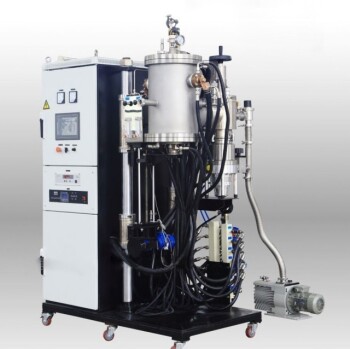
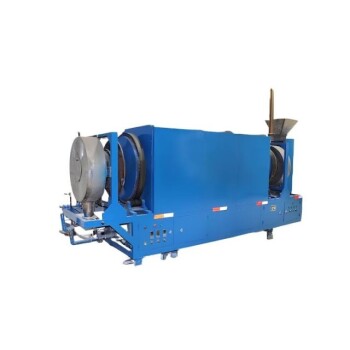
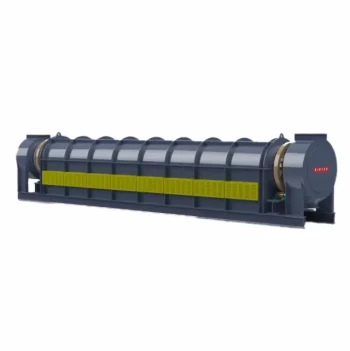
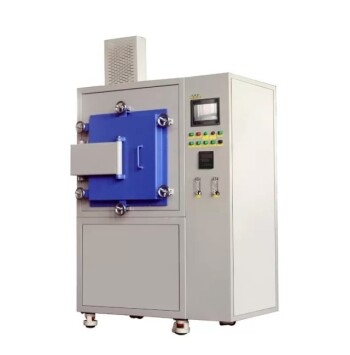
Ensure precise phase transformations and lock in maximum durability for your functional coatings with KINTEK. As specialists in laboratory high-temperature thermal equipment, KINTEK offers a comprehensive range of customizable muffle, tube, atmosphere, and vacuum furnaces designed to provide exact temperature profiling and atmosphere control to prevent oxidation. Protect your research and scaling efficiency — contact KINTEK today for a tailored furnace solution!
Related Products
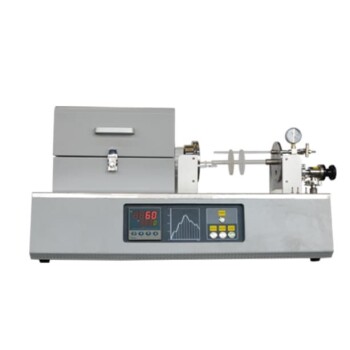
- Laboratory Quartz Tube Furnace RTP Heating Tubular Furnace
- Laboratory Muffle Oven Furnace with Bottom Lifting
- Laboratory Vacuum Tilt Rotary Tube Furnace Rotating Tube Furnace
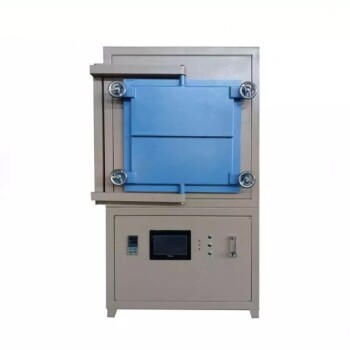
- 1200℃ Muffle Oven Furnace for Laboratory
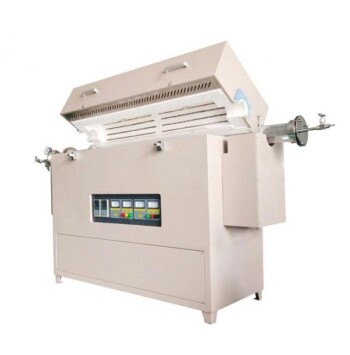
- 1400℃ High Temperature Laboratory Tube Furnace with Alumina Tube
People Also Ask
- What physical conditions does a laboratory Tube Furnace provide for SOEC? Precision Heat for Solid Oxide Characterization
- What are the main features and functions of a laboratory tube furnace? Unlock Precise High-Temp Control for Your Lab
- What role does a laboratory tube furnace play in geological and mineralogical research? Unlock Earth's Secrets with Precision
- Why is control of heating rate and gas flow in a lab tube furnace critical for EM wave absorption materials?
- What conditions do tube furnaces provide for Au-Seeded TiO2 nanowires? Master Precision Thermal Synthesis