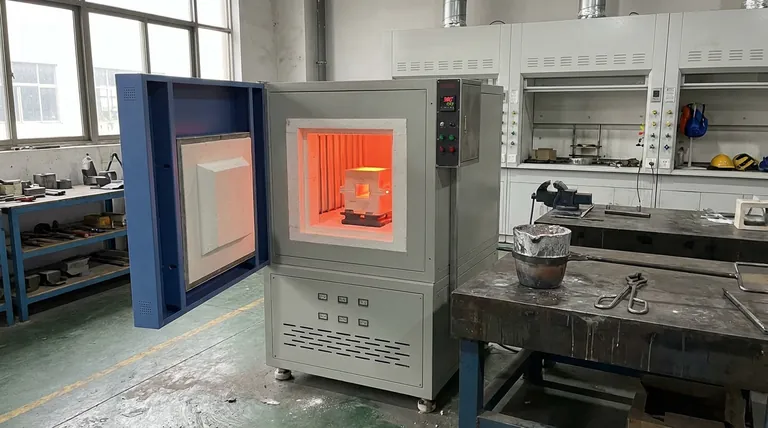
Preheating casting molds to 300°C is a critical thermal management strategy required to stabilize the interface between the molten recycled aluminum and the solid die. By utilizing precision heating systems to reach this specific temperature, you drastically reduce the thermal shock the metal experiences upon contact, ensuring the material behaves predictably during the solidification phase.
By minimizing the temperature gradient between the molten metal and the mold, preheating directly improves fluidity and structural integrity. This process is essential for preventing defects like hot tearing and for producing experimental samples that accurately mirror industrial gravity die casting standards.
The Physics of Thermal Interaction
To understand why 300°C is the target, one must look at how molten aluminum interacts with a cooler surface.
Reducing the Temperature Gradient
When molten aluminum touches a cold mold, it loses heat rapidly at the interface. This creates a steep temperature gradient.
Preheating the mold to 300°C narrows the gap between the temperature of the liquid metal and the mold wall. This creates a more gradual cooling curve rather than an immediate thermal shock.
Enhancing Mold-Filling Capacity
A smaller temperature gradient keeps the aluminum in a liquid state for a slightly longer duration as it enters the cavity.
This preservation of heat directly improves mold-filling capacity. It ensures the metal remains fluid enough to fill intricate details of the die before it begins to solidify, preventing incomplete casts.
Preventing Structural Defects
Beyond fluidity, the thermal state of the mold dictates the mechanical integrity of the final part.
Mitigating Hot Tearing
One of the most significant risks in casting aluminum alloys is hot tearing, which occurs when the metal contracts and cracks while still semi-solid.
A cold mold accelerates cooling unevenly, increasing the internal stress that leads to these tears. Preheating minimizes this risk by allowing for a more uniform solidification process.
Industrial Relevance
For researchers and engineers, the goal is rarely just to make a shape; it is to replicate a viable production process.
Simulating Real-World Conditions
Laboratory experiments are only valuable if they predict factory-floor performance.
Industrial gravity die casting operations inherently run with hot molds due to continuous cycling. Preheating your experimental molds to 300°C simulates these industrial conditions, ensuring your samples represent actual production quality rather than artificial laboratory artifacts.
The Risks of Inadequate Heating
While precision heating requires energy and control equipment, skipping this step introduces significant variables that undermine process reliability.
Compromised Sample Validity
If the mold temperature fluctuates or falls significantly below 300°C, the data derived from the sample becomes unreliable. You cannot distinguish between a failure caused by the alloy composition and a failure caused by improper thermal parameters.
Increased Defect Rates
Without the buffer provided by the preheated mold, the window for successful casting shrinks. You will likely observe a higher frequency of surface defects and internal cracks, rendering the recycled alloy parts unusable for structural applications.
Making the Right Choice for Your Goal
Whether you are testing a new recycled alloy composition or setting up a pilot production line, thermal control is non-negotiable.
- If your primary focus is Defect Reduction: Prioritize the 300°C preheat to minimize the thermal gradient, which is the leading cause of hot tearing in recycled aluminum.
- If your primary focus is Data Validation: Ensure your precision heating system is calibrated to 300°C to guarantee your experimental results are scalable to industrial gravity die casting environments.
Mastering the mold temperature is the single most effective way to transition from theoretical alloy design to practical, high-quality production.
Summary Table:
| Factor | Impact of 300°C Preheating | Benefit to Casting Quality |
|---|---|---|
| Thermal Gradient | Significantly reduced between molten metal and mold wall | Minimizes thermal shock and ensures predictable solidification |
| Metal Fluidity | Maintains liquid state longer during entry | Improved mold-filling capacity for intricate details and shapes |
| Structural Integrity | Promotes uniform cooling across the cast part | Prevents hot tearing and internal stress cracks |
| Process Simulation | Replicates continuous industrial gravity die casting cycles | Ensures laboratory experimental data is scalable and valid |
Elevate Your Casting Precision with KINTEK
Don't let inconsistent thermal management compromise your alloy research or production quality. Backed by expert R&D and manufacturing, KINTEK offers high-performance Muffle, Tube, Rotary, Vacuum, and CVD systems—all fully customizable to meet the precise 300°C preheating requirements of your specific application.
Our advanced high-temperature lab furnaces provide the stability and control needed to eliminate defects and simulate real-world industrial conditions. Contact us today to optimize your thermal processes!
References
- Heat Treatment Analysis and Mechanical Characterization of a Recycled Gravity Die Cast EN 42000 Alloy. DOI: 10.3390/met15070726
This article is also based on technical information from Kintek Furnace Knowledge Base .
Related Products
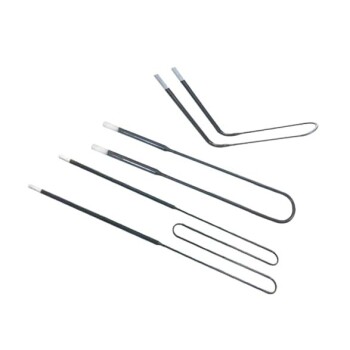
- Molybdenum Disilicide MoSi2 Thermal Heating Elements for Electric Furnace
- Molybdenum Vacuum Heat Treat Furnace
People Also Ask
- What are the typical application temperatures for molybdenum disilicide (MoSi2) heating elements? Master High-Temp Performance
- What is the primary use of molybdenum disilicide? Ideal for High-Temp Heating Elements
- What are the characteristics of molybdenum disilicide heating elements? Unlock High-Temp Performance
- What are the properties of molybdenum disilicide (MoSi2) that make it suitable for high-temperature applications? Discover Its High-Temp Resilience
- What are the applications of molybdenum disilicide heating elements? Achieve Extreme Heat Stability for Industrial Processes