
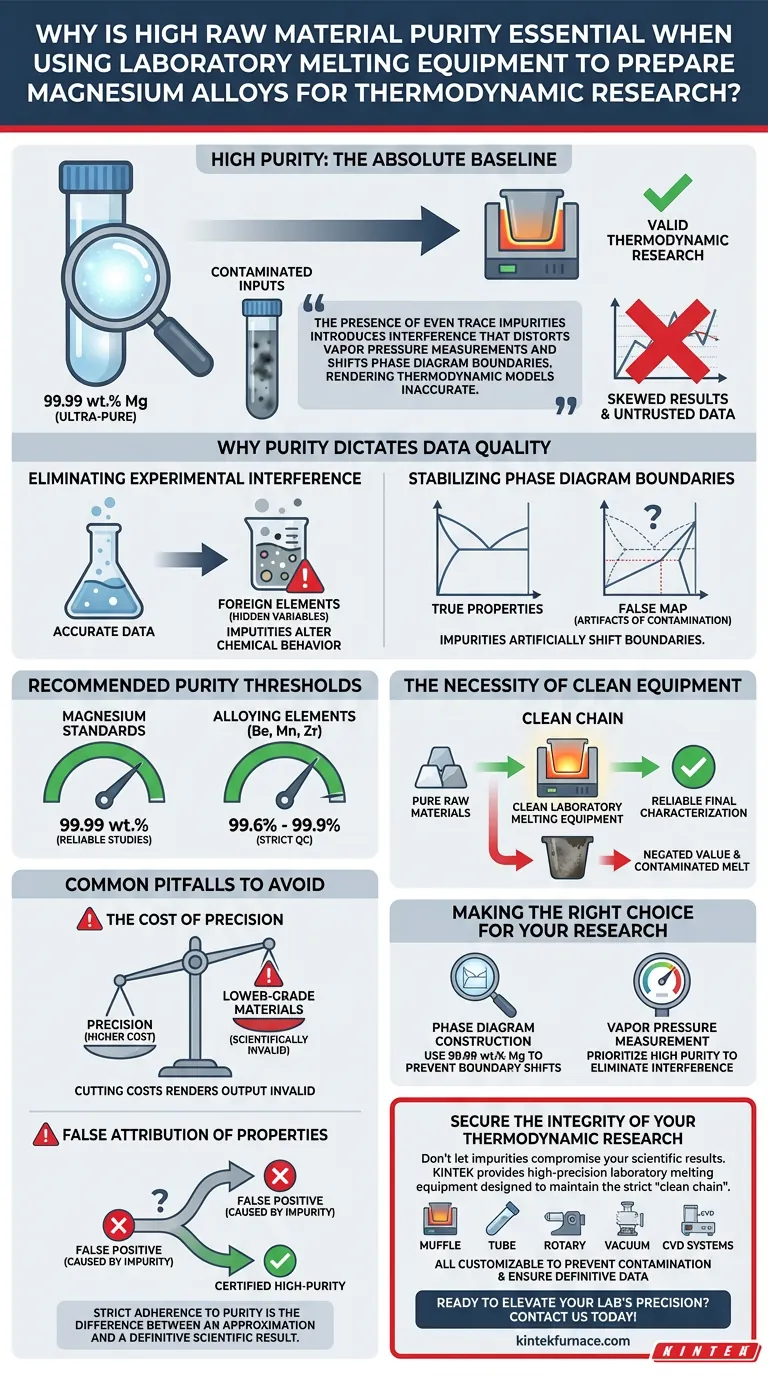
High raw material purity is the absolute baseline for valid thermodynamic research. When preparing magnesium alloys in laboratory melting equipment, using ultra-pure inputs—such as 99.99 wt.% magnesium—is essential to prevent contaminants from skewing experimental results. Without this strict standard, the resulting data cannot be trusted for scientific characterization.
The presence of even trace impurities introduces interference that distorts vapor pressure measurements and shifts phase diagram boundaries, rendering thermodynamic models inaccurate.
Why Purity Dictates Data Quality
Eliminating Experimental Interference
Impurities are not inert; they actively alter the chemical behavior of the melt. To obtain accurate thermodynamic data, you must remove these hidden variables from the equation.
If low-purity materials are used, the interference from foreign elements will mask the true properties of the alloy.
Stabilizing Phase Diagram Boundaries
Calculating phase diagram boundaries requires extreme precision. Impurities can artificially shift these boundaries, creating a false map of the alloy's material phases.
High purity ensures that the boundaries you observe are inherent to the alloy system, not artifacts of contamination.
Recommended Purity Thresholds
Magnesium Standards
For the base metal, a purity of 99.99 wt.% is the standard required to ensure reliability in thermodynamic studies.
Alloying Elements
Secondary elements also require strict quality control. Materials such as beryllium, manganese, and zirconium typically require purity levels between 99.6% and 99.9%.
The Necessity of Clean Equipment
Maintaining the "Clean Chain"
High-purity raw materials must be processed in clean laboratory melting equipment.
Introducing pure metals into a contaminated crucible or furnace negates the value of the raw material.
Ensuring Characterization Reliability
The combination of pure materials and clean equipment is the only way to guarantee the reliability of the final alloy characterization.
Common Pitfalls to Avoid
The Cost of Precision
Achieving these purity levels requires sourcing specialized, often more expensive materials.
While this increases upfront resource allocation, attempting to cut costs with lower-grade materials renders the research output scientifically invalid.
False Attribution of Properties
A common error in thermodynamic research is attributing a specific behavior to the alloy when it is actually caused by an impurity.
Using certified high-purity stock is the only method to rule out this "false positive" data.
Making the Right Choice for Your Research
To ensure your thermodynamic data stands up to peer review, align your material selection with your specific research goals:
- If your primary focus is Phase Diagram Construction: Use 99.99 wt.% magnesium to ensure that phase boundaries are not shifted by trace contaminants.
- If your primary focus is Vapor Pressure Measurement: Prioritize high purity to eliminate interference that can distort pressure readings.
Strict adherence to material purity is the difference between an approximation and a definitive scientific result.
Summary Table:
| Feature | Recommended Purity | Scientific Impact |
|---|---|---|
| Base Magnesium | 99.99 wt.% | Prevents phase boundary shifts and data artifacts |
| Alloying Elements | 99.6% - 99.9% | Ensures accurate vapor pressure measurements |
| Melting Equipment | Laboratory Grade | Prevents cross-contamination of ultra-pure melts |
| Research Goal | Phase Construction | Guarantees reliability for peer-reviewed characterization |
Secure the Integrity of Your Thermodynamic Research
Don't let impurities compromise your scientific results. KINTEK provides high-precision laboratory melting equipment designed to maintain the strict 'clean chain' required for sensitive magnesium alloy preparation.
Backed by expert R&D and manufacturing, KINTEK offers Muffle, Tube, Rotary, Vacuum, and CVD systems—all customizable to prevent contamination and ensure your research data is definitive.
Ready to elevate your lab's precision? Contact us today to find your custom furnace solution!
Visual Guide
References
- В. Н. Володин, Xeniya Linnik. Recycling of beryllium, manganese, and zirconium from secondary alloys by magnesium distillation in vacuum. DOI: 10.31643/2024/6445.42
This article is also based on technical information from Kintek Furnace Knowledge Base .
Related Products
- Magnesium Extraction and Purification Condensing Tube Furnace
- Vacuum Induction Melting Furnace
- High Temperature Muffle Oven Furnace for Laboratory Debinding and Pre Sintering
- 1400℃ Muffle Oven Furnace for Laboratory
- Small Vacuum Heat Treat and Tungsten Wire Sintering Furnace
People Also Ask
- What are the advantages of using a condensing tube furnace for magnesium extraction? Achieve High Purity and Efficient Metal Recovery
- What is the difference between a tube furnace and a box furnace? Choose the Right Tool for Your Lab
- Why use a tube furnace for TiO2–TiN/S heat treatment? Achieve Perfect Sulfur Infusion and Purity
- What are the common applications of tube furnaces? Unlock Precision in Material Processing
- How do tube furnaces contribute to transport reactions and crystal production? Master High-Purity Synthesis with Precision Control








