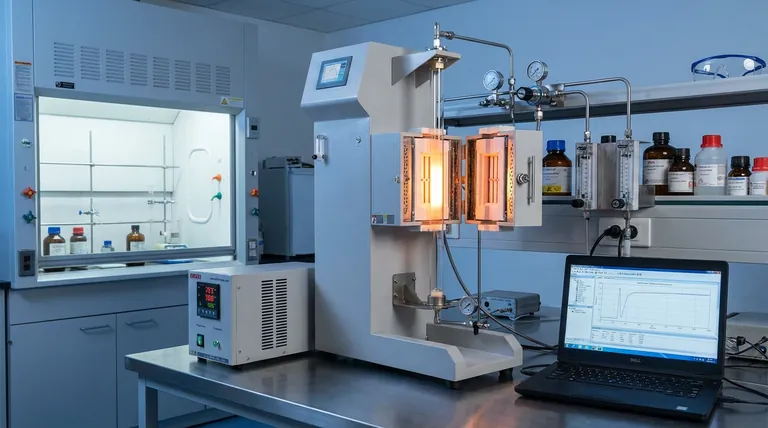
Laboratory electric heating devices serve as the primary external energy source required to drive the endothermic dehydrogenation process in solid-state hydrogen storage. Their specific function is to actively supply thermal energy to the storage container, compensating for the heat consumed during the reaction and strictly maintaining the operating temperatures necessary for effective hydrogen release.
Because solid-state hydrogen release is an endothermic reaction, the process naturally consumes heat and cools the system. Electric heating devices bridge this thermal deficit, ensuring the reaction does not stall while stabilizing the hydrogen release rate and system pressure.
The Critical Role in Dehydrogenation
Compensating for Reaction Heat
The fundamental challenge in solid-state hydrogen storage is that the dehydrogenation process is endothermic.
This means the chemical reaction that releases hydrogen absorbs heat from its surroundings. Without an external energy input, the material would cool itself down, potentially halting the release of hydrogen entirely. The electric heating device functions as a counterbalance, continuously injecting heat to offset this energy consumption.
Sustaining Operating Temperatures
Every hydrogen storage material has a specific temperature range required to break chemical bonds and release hydrogen gas.
Electric heaters are responsible for reaching and maintaining this specific thermal window. By providing a consistent heat environment, these devices ensure the storage material remains active and capable of discharging hydrogen.
Implications for System Performance
Controlling Release Rates
There is a direct correlation between thermal input and the speed of hydrogen production.
Precise heating control allows researchers to manipulate the hydrogen release rate. By modulating the power of the electric heating device, you can accelerate or decelerate the reaction to meet specific flow requirements.
Ensuring Pressure Stability
Temperature fluctuations in a closed or semi-closed system inevitably lead to pressure fluctuations.
The electric heater acts as a stabilizing agent. By maintaining a constant temperature, the device prevents dangerous or erratic pressure spikes, ensuring the mechanical integrity and safety of the storage container.
Understanding the Trade-offs
The Efficiency Balance
While heating is necessary, it represents a significant energy cost in the overall system.
The primary reference notes that precise control influences overall energy efficiency. The trade-off lies in supplying enough heat to maintain the reaction without overheating or wasting energy. An aggressively heated system may release hydrogen quickly but will suffer from poor net energy efficiency, as the energy input might approach or exceed the energy value of the hydrogen released.
Sensitivity to Control
The effectiveness of the system is heavily dependent on the precision of the heater's control mechanism.
Inaccurate heating does not just waste energy; it destabilizes the pressure and flow. If the heating device lacks fine-tuned control, the resulting fluctuations can render the data from thermal management research unreliable.
Making the Right Choice for Your Goal
When selecting or configuring heating devices for your hydrogen storage research, consider your primary objective:
- If your primary focus is High-Speed Release: Prioritize heating elements with rapid response times and higher power density to overcome the endothermic lag quickly.
- If your primary focus is Energy Efficiency: Focus on the precision of the control logic to supply only the exact amount of heat required to sustain the reaction, minimizing waste.
Ultimately, the electric heater is not just a heat source; it is the throttle that governs the speed, stability, and efficiency of the entire hydrogen release process.
Summary Table:
| Function | Description | Impact on System |
|---|---|---|
| Heat Compensation | Offsets the endothermic nature of hydrogen release | Prevents reaction stall due to self-cooling |
| Temperature Stability | Maintains specific thermal windows for chemical bond breaking | Ensures consistent and reliable hydrogen discharge |
| Rate Control | Modulates thermal input to adjust reaction speed | Allows for precise control over hydrogen flow rates |
| Pressure Regulation | Minimizes temperature fluctuations within the container | Prevents erratic pressure spikes for enhanced safety |
| Efficiency Optimization | Balances energy input against hydrogen energy yield | Determines the net energy efficiency of the storage system |
Maximize Your Hydrogen Research Precision with KINTEK
Advanced thermal management is the key to unlocking the future of solid-state hydrogen storage. KINTEK provides high-performance laboratory heating solutions—including Muffle, Tube, and Vacuum systems—specifically designed to handle the rigorous demands of dehydrogenation research.
Backed by expert R&D and manufacturing, our systems are fully customizable to your unique thermal requirements, ensuring the precise control necessary for stable pressure and optimal energy efficiency.
Ready to elevate your lab's thermal management capabilities? Contact us today to discuss your project requirements!
References
- Yaohui Xu, Zhao Ding. Research Progress and Application Prospects of Solid-State Hydrogen Storage Technology. DOI: 10.3390/molecules29081767
This article is also based on technical information from Kintek Furnace Knowledge Base .
Related Products
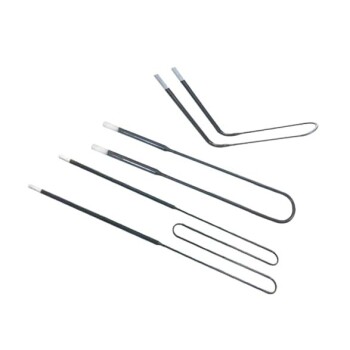
- Molybdenum Disilicide MoSi2 Thermal Heating Elements for Electric Furnace
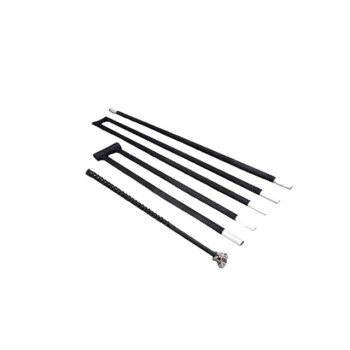
- Silicon Carbide SiC Thermal Heating Elements for Electric Furnace
People Also Ask
- What are the typical application temperatures for molybdenum disilicide (MoSi2) heating elements? Master High-Temp Performance
- What is the primary use of molybdenum disilicide? Ideal for High-Temp Heating Elements
- What are the characteristics of molybdenum disilicide heating elements? Unlock High-Temp Performance
- What are the properties of molybdenum disilicide (MoSi2) that make it suitable for high-temperature applications? Discover Its High-Temp Resilience
- What are the applications of molybdenum disilicide heating elements? Achieve Extreme Heat Stability for Industrial Processes