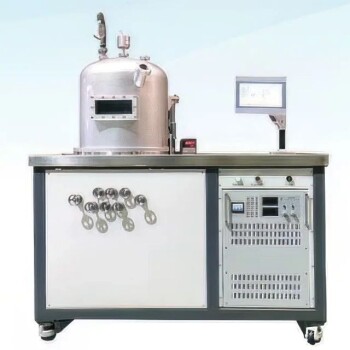
Graphite powder is the critical barrier that prevents permanent fusion during diffusion bonding. By acting as both a high-temperature isolation agent and a lubricant, it stops the copper foil from adhering to or diffusing into the stainless steel fixtures under extreme conditions. This ensures that the final sample can be removed without damage while simultaneously protecting the expensive mold surfaces from wear and chemical bonding.
The use of fine graphite powder creates a non-reactive interface that facilitates "demolding" and preserves the structural integrity of both the copper workpiece and the press equipment.
Preventing Material Inter-diffusion and Adhesion
The Role of an Isolation Agent
At the high temperatures required for diffusion bonding, atoms from the copper foil and the stainless steel fixtures become highly mobile. Without a barrier, these atoms would inter-diffuse, effectively welding the workpiece to the mold. Graphite powder acts as a physical block, preventing this unwanted surface-level chemical bonding.
Lubrication Under High Pressure
Hot-pressing requires significant mechanical force to ensure a solid-state bond. The graphite layer serves as a solid lubricant, reducing friction between the copper edges and the mold walls. This lubrication allows for slight thermal expansion and contraction without creating stress fractures in the sample.
Ensuring Smooth Sample Ejection
Once the bonding process is complete, the sample must be "unloaded" or ejected from the fixture. The graphite powder creates a "parting line" that allows the copper to slide away from the stainless steel easily. This prevents the sample from warping or tearing during the cooling and removal phase.
Maintaining Sample Integrity and Mold Longevity
Protecting the Tooling Surface
Stainless steel fixtures and graphite molds are precision-engineered and expensive to replace. Direct contact with softened metals at high temperatures can cause "pitting" or surface degradation. The powder layer acts as a sacrificial coating, absorbing the brunt of the thermal and mechanical stress to extend the service life of the fixtures.
Achieving Thermal Uniformity
Graphite is known for its excellent thermal conductivity. Applying a fine powder layer ensures that heat is transferred rapidly and uniformly across the entire interface of the copper foil. This prevents "hot spots" that could lead to inconsistent bonding or microstructural defects in the final product.
Preserving Geometric Precision
In vacuum hot pressing, the mold defines the final shape of the copper assembly. By preventing the metal from sticking to the mold walls, the graphite ensures the edges of the copper foil remain clean and sharp. This maintains the dimensional tolerances required for high-precision applications.
Understanding the Trade-offs
Risk of Surface Contamination
While graphite is an excellent isolation agent, excessive application can lead to carbon inclusion on the surface of the copper. If the powder is too coarse or applied unevenly, it may leave a residue that requires secondary cleaning or polishing to achieve the desired surface finish.
Consistency in Application
The effectiveness of the barrier depends entirely on the uniformity of the layer. An inconsistent coating can lead to "localized sticking," where small sections of the copper fuse to the mold. This can cause the sample to crack or bend during ejection, negating the benefits of the isolation agent.
How to Apply This to Your Process
When preparing your molds for copper foil hot-press diffusion bonding, consider your specific production goals to determine the best application method:
- If your primary focus is sample purity: Use a high-purity, ultra-fine graphite powder and apply it in a thin, electrostatic-like dusting to minimize carbon transfer.
- If your primary focus is mold longevity: Ensure a comprehensive, slightly thicker coating on all contact points of the stainless steel fixtures to prevent any metal-on-metal contact.
- If your primary focus is high-volume throughput: Integrate a standardized spray-on graphite lubricant to ensure consistent coverage and faster preparation times between bonding cycles.
The strategic application of graphite powder is the difference between a fused, damaged assembly and a precision-bonded copper component.
Summary Table:
| Key Role | Primary Benefit | Operational Impact |
|---|---|---|
| Isolation Agent | Prevents inter-diffusion | Stops workpiece and mold from welding together |
| Solid Lubricant | Reduces mechanical friction | Allows thermal expansion without stress fractures |
| Thermal Conductor | Rapid, uniform heat transfer | Eliminates hot spots for consistent bond quality |
| Surface Barrier | Protects precision fixtures | Prevents pitting and extends the lifespan of expensive molds |
| Parting Layer | Facilitates smooth ejection | Ensures clean edges and maintains dimensional precision |
Optimize Your Diffusion Bonding Process with KINTEK
Achieve unmatched precision and reliability in your material science research with KINTEK’s high-performance thermal solutions. As specialists in laboratory equipment and consumables, we offer a comprehensive range of high-temperature furnaces—including vacuum, atmosphere, muffle, and CVD models—all fully customizable to meet your unique diffusion bonding requirements.
Don't let material adhesion or mold degradation compromise your results. Contact KINTEK today to find the perfect high-temperature furnace for your laboratory!
References
- Michail Samouhos, P.E. Tsakiridis. Optimization of Copper Thermocompression Diffusion Bonding under Vacuum: Microstructural and Mechanical Characteristics. DOI: 10.3390/met9101044
This article is also based on technical information from Kintek Furnace Knowledge Base .
Related Products
- Multi Heating Zones CVD Tube Furnace Machine for Chemical Vapor Deposition Equipment
- Vacuum Hot Press Furnace Machine for Lamination and Heating
- High Temperature Muffle Oven Furnace for Laboratory Debinding and Pre Sintering
- Spark Plasma Sintering SPS Furnace
- Vacuum Hot Press Furnace Machine Heated Vacuum Press
People Also Ask
- What is the function of a multi-zone tube furnace in CVD synthesis? Master 2D In2Se3 Nanosheet Precision
- What role do multi zone tube furnaces play in new energy research? Unlock Precise Thermal Control for Innovation
- What temperature-related capabilities make multi zone tube furnaces valuable for research? Unlock Precision Thermal Control
- Why are multi zone tube furnaces particularly useful for nanomaterial research? Unlock Precise Thermal Control for Advanced Synthesis
- What environmental protection applications utilize multi zone tube furnaces? Unlock Precision in Waste Treatment and Green Tech