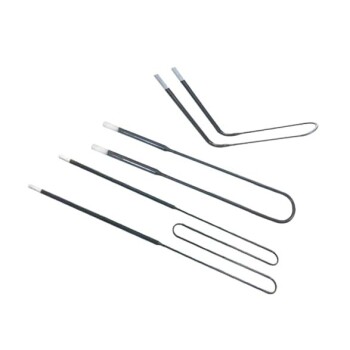
High-precision constant temperature heating equipment is required to maintain the mixing chamber within a strict thermal window, typically between 160°C and 170°C. This specific range is critical to ensure the polymer binders melt completely to coat the stainless steel powder without exceeding the temperature threshold where the polymers begin to degrade or oxidize.
Achieving high-quality 17-4 PH stainless steel composites requires balancing two opposing risks: insufficient melting and thermal damage. Precision equipment is the only way to navigate the narrow temperature range required to fully activate the binder without destroying its chemical integrity.
The Science of Binder Activation
Achieving Complete Liquefaction
The primary goal of the heating process is to reach the melting point of the binder materials, such as Polyoxymethylene (POM) and High-Density Polyethylene (HDPE).
To form a successful composite, these polymers must transition from solid to liquid completely.
Ensuring Uniform Powder Coating
Once melted, the binder acts as the vehicle for the 17-4 PH stainless steel metal powder.
The heating equipment ensures the viscosity is low enough for the binder to effectively coat every metal particle. This creates a homogenous mixture essential for the structural integrity of the final part.
The Risks of Thermal Instability
Preventing Thermal Degradation
Polymers like POM and HDPE are sensitive to excessive heat.
If the equipment allows the temperature to spike above the 170°C upper limit, the polymer chains can break down. This thermal degradation weakens the binder, leading to defects in the molded part.
Avoiding Oxidation
Beyond structural breakdown, excessive heat introduces the risk of oxidation.
High-precision control prevents the environment from becoming hot enough to facilitate chemical reactions that would compromise the purity of the polymer materials.
Understanding the Risks of Improper Heating
The Cost of Inconsistency
Using standard heating equipment often results in temperature fluctuations or "hot spots" within the mixing chamber.
While high-precision gear is a larger upfront investment, it eliminates the high recurring cost of scrapped batches caused by inconsistent binder behavior.
The "Goldilocks" Zone
The window for error is small—typically a variance of only 10 degrees (160°C to 170°C).
Equipment lacking precision sensors cannot reliably hold this variance, leading to a feedstock that is either clumpy (too cold) or chemically compromised (too hot).
Optimizing Your Production Quality
To ensure the successful preparation of 17-4 PH stainless steel composites, apply these principles to your equipment selection:
- If your primary focus is material homogeneity: Select heating elements with rapid feedback loops to maintain the lower end of the 160°C–170°C spectrum, ensuring full melting without overshoot.
- If your primary focus is chemical stability: Prioritize equipment with uniform heat distribution to prevent localized hot spots that trigger degradation or oxidation of the POM/HDPE binders.
Precision heating is not a luxury in this process; it is the fundamental requirement for transforming raw powder into high-performance composite material.
Summary Table:
| Feature | Requirement | Impact of Deviation |
|---|---|---|
| Temperature Range | 160°C - 170°C | < 160°C: Incomplete melting/clumping |
| Binder Types | POM, HDPE | > 170°C: Thermal degradation/oxidation |
| Heating Stability | High-Precision | Fluctuations: Inconsistent coating/weak parts |
| Key Outcome | Material Homogeneity | Poor Control: Scrapped batches/structural failure |
Elevate Your Composite Manufacturing with KINTEK Precision
Achieving the perfect 160°C–170°C thermal window is critical for the integrity of your 17-4 PH stainless steel composites. At KINTEK, we understand that even a 10-degree variance can be the difference between a high-performance part and a scrapped batch.
Backed by expert R&D and world-class manufacturing, KINTEK offers advanced Muffle, Tube, Rotary, Vacuum, and CVD systems. Our lab high-temperature furnaces provide the rapid feedback loops and uniform heat distribution necessary to prevent binder degradation and ensure perfect material homogeneity. All our systems are fully customizable to meet your unique production needs.
Don't compromise on precision. Contact KINTEK today to discover how our high-precision heating solutions can optimize your lab's efficiency and product quality.
References
- Development of 17-4 PH Stainless Steel for Low-Power Selective Laser Sintering. DOI: 10.3390/ma18020447
This article is also based on technical information from Kintek Furnace Knowledge Base .
Related Products
- Multi Heating Zones CVD Tube Furnace Machine for Chemical Vapor Deposition Equipment
- 2200 ℃ Graphite Vacuum Heat Treat Furnace
- 2200 ℃ Tungsten Vacuum Heat Treat and Sintering Furnace
- 1400℃ Muffle Oven Furnace for Laboratory
- 1700℃ High Temperature Muffle Oven Furnace for Laboratory
People Also Ask
- What is the function of a multi-zone tube furnace in CVD synthesis? Master 2D In2Se3 Nanosheet Precision
- What environmental protection applications utilize multi zone tube furnaces? Unlock Precision in Waste Treatment and Green Tech
- What role do multi zone tube furnaces play in new energy research? Unlock Precise Thermal Control for Innovation
- What temperature-related capabilities make multi zone tube furnaces valuable for research? Unlock Precision Thermal Control
- Why are multi zone tube furnaces particularly useful for nanomaterial research? Unlock Precise Thermal Control for Advanced Synthesis